The Price Tag at the Border
Marcus does not think about foreign policy when he turns on his coffee pot at 6:00 AM. He thinks about the noise coming from his truck's front left wheel. He thinks about his daughter’s dental bill.
He certainly does not think about Section 301 of the Trade Act of 1974.
Yet, as Marcus pours his morning coffee, a quiet shift in global trade is making its way straight to his kitchen table. The federal government has rolled out a fresh slate of tariffs targeting over 80 trading partners—from longstanding allies like Israel, Canada, and the European Union to economic rivals across Asia.
On paper, it looks like high-level statecraft. In practice, it works like an invisible national sales tax.
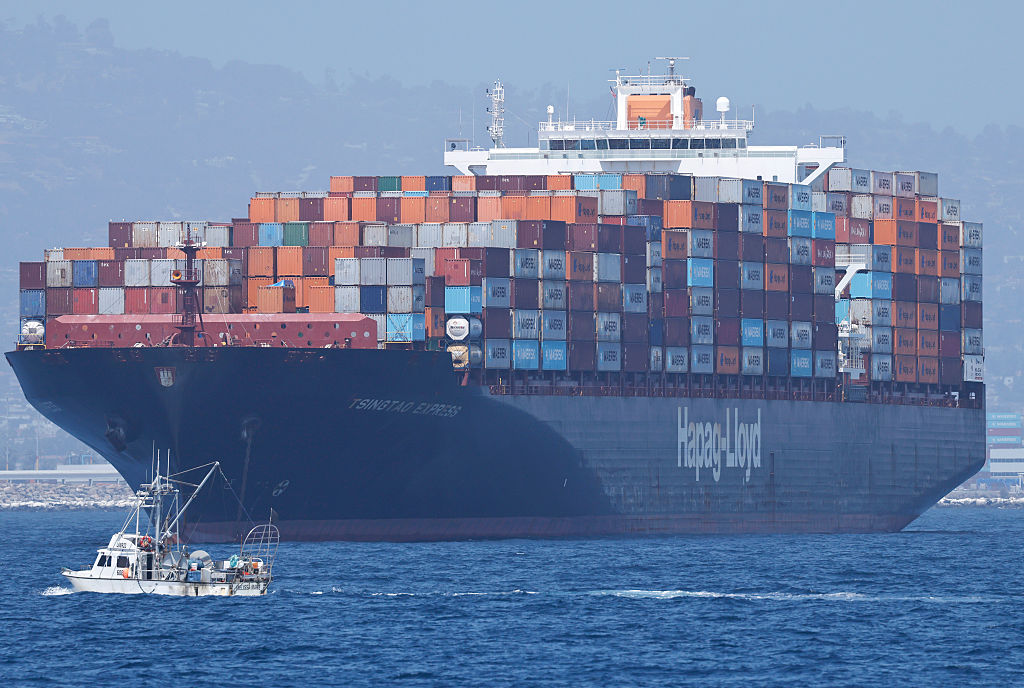
When a customs officer at the Port of Long Beach stamps an incoming shipping container, the foreign exporter does not hand over a check. The American company importing the container pays the border tax. To survive, that company raises its wholesale price. The distributor adds a margin. The retailer marks it up again.
By the time that container’s contents reach the shelf, the price tag has morphed. Marcus pays the difference at the register.
Economists at the Tax Policy Center estimate that these sweeping import duties will slice roughly $960 out of the average American household’s budget this year alone. It is not a bill that arrives in an envelope marked with an official government seal. It is a slow, quiet bleed—a few extra cents on a box of nails, twenty dollars more on a replacement appliance, a sudden markup on a child's bicycle.
The Legal Game of Musical Chairs
How did we get here? To understand the current wave of duties, consider what happened when the previous legal mechanism crumbled.
Earlier this year, the administration attempted to deploy sweeping international emergency powers to place blanket tariffs on foreign goods. The U.S. Supreme Court stepped in, ruling those emergency duties illegal and ordering the government to refund tens of billions of dollars collected from over 300,000 American businesses.
When one legal door slammed shut, Washington opened another.
To keep the duties active, policymakers temporarily pivoted to balance-of-payments statutes. When that timer expired, trade officials pivoted again—this time leveraging Section 301, the same authority historically used to address unfair foreign trade practices.
The rationale shifted too. The newest justification focuses heavily on forced labor enforcement, penalizing nations that lack strict import bans on forced-labor goods with duties ranging from 10% to 12.5%.
The official goal is clear: pressure trading partners to adopt tougher human rights standards while encouraging manufacturing to return home. But legal experts and trade analysts view the rationale as a strategic pivot to maintain a high-tariff environment after earlier broad-brush efforts hit brick walls in federal court.
It is a game of legal musical chairs. The statutory justifications change, the paperwork gets shuffled, but the destination of the bill remains unchanged.
Anatomy of an Everyday Shelf
Take a walk down the aisle of a hardware store. Abstract trade policy instantly becomes concrete.
Consider a simple power tool. The steel in its internal gears might face a 25% or 50% duty depending on where it was melted and poured. The aluminum casing carries its own levy. The wiring inside contains Chilean copper, which escaped the highest metal rates, but the plastic housing around the motor falls under general industrial duties.
[Raw Metal Imports] ➔ [Customs Border Duty] ➔ [Manufacturer Cost] ➔ [Retail Shelf Price]
Every link in the chain absorbs a fraction of the cost, passing the rest down the line.
- Primary Metals: Heavy industrial inputs like steel and aluminum bear the highest direct tariffs, sharply driving up costs for domestic builders and vehicle manufacturers.
- Derivative Products: Items manufactured primarily out of structural metals carry secondary duty rates, squeezing small manufacturing shops that rely on specialized imported parts.
- Consumer Goods: Electronics, home appliances, and daily household items face stacked markups as distributors hedge against sudden regulatory changes.
There are exceptions carved into the law. Crude oil, natural gas, agricultural fertilizers, and civilian aircraft parts were largely shielded to prevent immediate spikes in energy and food production. Certain generic pharmaceuticals also received temporary reprieves to avert sudden shocks in the healthcare system.
Yet, for thousands of everyday products that fill hardware store shelves, auto body shops, and retail stockrooms, no such carve-outs exist.
The Reshoring Gamble
The fundamental argument for broad tariffs rests on a bold promise: pain today, prosperity tomorrow.
By making foreign goods expensive, the theory goes, companies will be forced to rebuild factories on American soil. Millions of industrial jobs will return. The trade deficit will shrink. The nation will regain its industrial self-reliance.
It is an alluring vision. But building a modern factory is not like turning on a light switch.
A manufacturing plant takes years to plan, permit, and construct. It requires complex supply chains, specialized tooling, and a trained local workforce that cannot be assembled overnight. When a small business owner suddenly faces a 12.5% increase on imported components, they rarely have the capital to build a domestic factory to make those parts themselves.
Instead, they face three immediate choices:
- Absorb the loss and freeze hiring.
- Pass the costs directly to their customers.
- Cut back on operations entirely.
For many small enterprises operating on thin margins, the long-term promise of a reshored industrial base feels remarkably distant when next week's inventory shipment just spiked in price.
The Unnoticed Tax
We tend to measure economic impact in giant, sweeping headlines. We talk about GDP figures, quarterly tax revenues, and national trade deficits running into the hundreds of billions.
Those numbers are abstract. They exist on balance sheets and trading floors.
The true impact of trade policy lives in smaller, quieter moments. It lives in the contractor calculating whether he can afford to take on a new apprentice this season. It lives in the family deciding to patch up a seven-year-old washing machine rather than buy a new one. It lives in the daily calculus of ordinary people adjusting their lives to a world where everything costs just a little bit more than it did yesterday.
Marcus picks up his keys, steps out the door, and drives his truck toward the repair shop, unaware of the legal battles fought in Washington courtrooms. He only knows that when he pays for that new wheel assembly later this afternoon, the total will be higher than he remembered. He will adjust his budget, pay the bill, and drive home into the quiet evening.