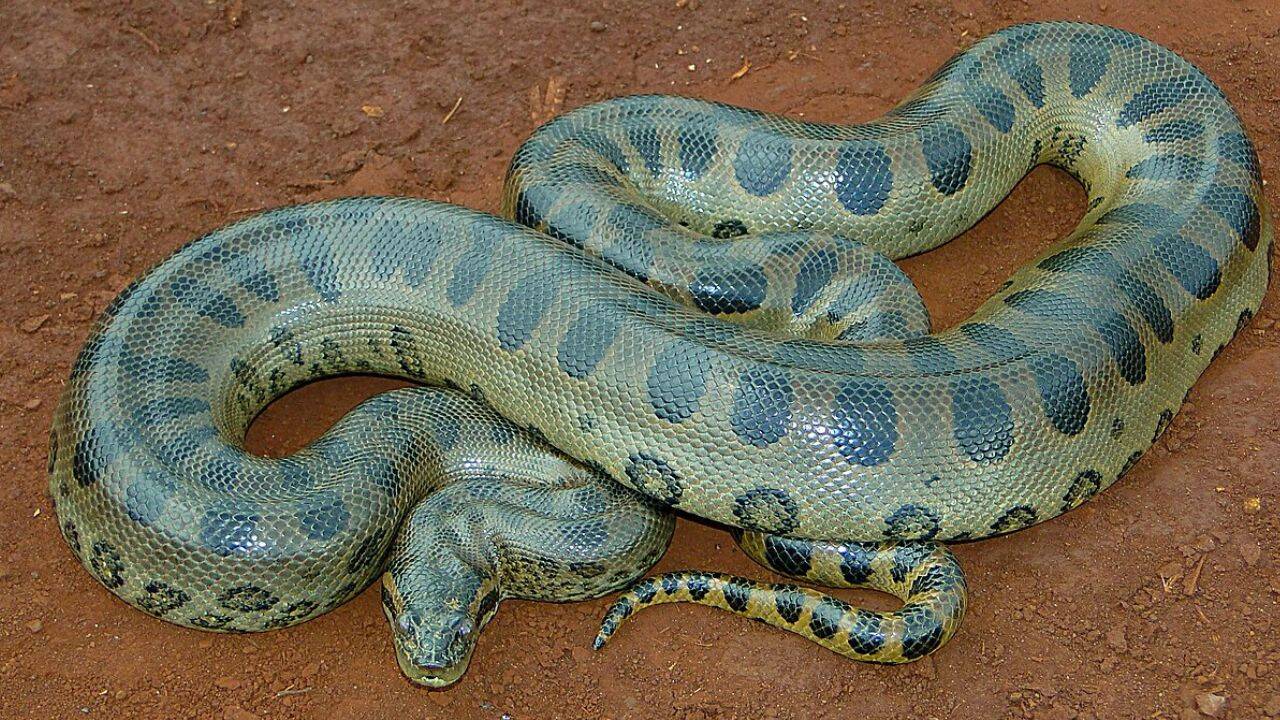
Imagine standing inches away from a creature weighing over two hundred pounds, yet seeing absolutely nothing. Hollywood loves to portray giant snakes as terrifying monsters crashing loudly through the brush, but reality tells a totally different story. A one-hundred-kilogram green anaconda can vanish entirely beneath Amazonian vegetation, leaving field researchers baffled even when standing right next to it.
Recent ecological studies in the western Amazon reveal just how effectively these giant constrictors use their natural camouflage. When you look at an anaconda's olive-green skin patterned with dark oval spots, you are looking at a masterclass in biological stealth. They do not need to hide in deep caves or run away from danger. They simply blend into the floating grass mats, leaf litter, and tangled log jams lining tropical riverbanks.
The Science Of Absolute Disappearance
Why are these massive reptiles so hard to spot? It comes down to where they spend their time and how they position their heavy bodies. Researchers tracking green anacondas in Peru found that the snakes were rarely visible unless they were actively basking.
Most of the time, an anaconda is submerged in shallow, slow-moving water with only its nostrils and eyes breaking the surface. Because their eyes and nasal openings sit right on top of their heads, they can breathe and watch for prey while the rest of their hundred-kilogram bulk stays hidden beneath murky water and dense aquatic plants.
When they move onto land, they stick close to floodplain forests. They wedge themselves beneath rotting logs, bury themselves in shallow mud and wet leaf matter, or drape across floating vegetation mats in oxbow lakes. In these environments, their skin pattern breaks up their silhouette completely. You can scan a riverbank three times and look right at a massive predator without realizing it is anything more than a pile of wet vegetation and shadows.
Misconceptions About Size And Visibility
People assume that anything weighing one hundred kilograms must stick out like a sore thumb. That assumption trips up tourists and even experienced travelers. Anacondas hold the crown for being the heaviest snakes on Earth, but their weight is distributed across a thick, muscular frame rather than a tall profile.
They hug the ground and the water. They compress their bodies against mudbanks and wrap themselves through tangled root systems. Instead of looking like a giant tree trunk, a resting anaconda looks like an irregular contour of the riverbank itself.
Older historical accounts often exaggerated anaconda sizes, creating myths of thirty-meter monsters. Modern field biology corrects this hype, but it reveals something much cooler: real anacondas do not need to be mythical monsters to dominate their ecosystem. Their true power lies in absolute invisibility. An ambush predator doesn't need to chase anything down when it can let prey walk right past its hiding spot.
Navigating The Flooded Forests
If you ever find yourself walking through the seasonal floodplains of the Amazon basin, understanding anaconda habitat use changes your perspective immediately. They rely heavily on specific micro-habitats during different parts of the year:
- Oxbow lakes: Permanent and temporary lakes provide calm water where floating grass mats offer prime hiding spots and elevated basking platforms.
- Log jams: Accumulations of fallen trees and debris along river bends act as natural shields, allowing large snakes to rest completely concealed from above.
- Floodplain forests: Over ninety percent of recorded sightings in recent Amazon studies occur in seasonally flooded forests rather than dry terra firma, proving their deep reliance on aquatic interfaces.
When water levels drop during dry seasons, these snakes adapt by burrowing into damp mud or retreating deeper into permanent water channels. They stay put, conserve their energy, and wait out the dry spell with their low metabolic rate.
Why This Cryptic Behavior Matters
This extreme stealth isn't just a neat evolutionary trick. It creates massive challenges for conservationists trying to track population numbers. If a hundred-kilogram apex predator can vanish in plain sight right next to a research boat, counting them accurately becomes nearly impossible. Protecting these animals requires protecting the messy, tangled, undisturbed riverbanks they rely on. Clear-cutting or altering these dense wetland edges destroys the exact cover that keeps them hidden and safe.
Respect the jungle's capacity to keep secrets. The Amazon holds enormous animals that you will never see, even if they are watching your every move from the shadows of a muddy bank.