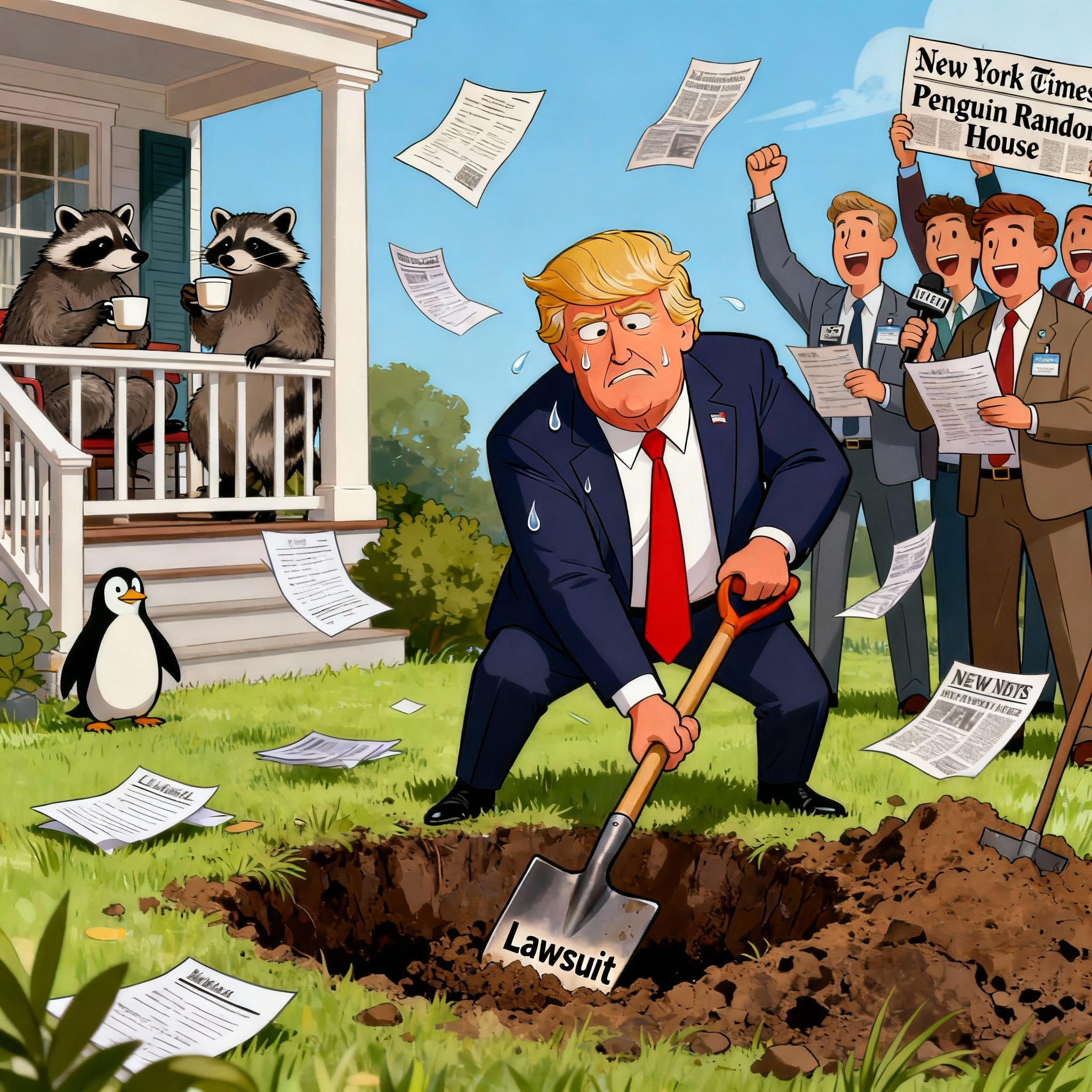
The federal government is currently attempting to wire $166 billion back into the accounts of corporate America, a staggering admission of legal overreach that has left the administration’s trade policy in tatters. On April 20, 2026, U.S. Customs and Border Protection officially opened the digital floodgates for businesses to reclaim duties paid under tariffs the Supreme Court recently deemed unconstitutional. While the CNBC crowd focuses on the immediate "mitigation" of geopolitical blowback, the reality is a much uglier scramble for survival. The administration isn't just trying to play nice; it is trying to keep the entire domestic supply chain from collapsing under the weight of its own chaotic litigation.
The Constitutional Wall
The crisis began when the Supreme Court ruled 6-3 that the White House had no authority to use the International Emergency Economic Powers Act (IEEPA) to impose sweeping, blanket tariffs. Chief Justice John Roberts made it clear: a 1977 statute intended for literal national emergencies cannot be used as a permanent piggy bank for protectionist trade policy.
This ruling effectively nullified the "Reciprocal Tariffs" that have hammered everything from Canadian timber to Mexican produce for over a year. For companies like FedEx, Toyota, and Nintendo, the portal launch isn't just a win—it is a survival line. These giants, alongside 3,000 other plaintiffs, have been operating in a state of financial suspension, paying billions into a system that the highest court in the land just branded as a legal fiction.
The Section 122 Pivot
Do not mistake this mass refund for a retreat into free trade. Instead, the administration has simply swapped its broken legal tools for more obscure ones. Within days of the Supreme Court ruling, the White House invoked Section 122 of the Trade Act of 1974, which allows the president to impose temporary 150-day tariffs to deal with "large and serious" balance-of-payment deficits.
This is the ultimate shell game. By the time the 150-day window on the new 10% global tariff expires, the administration hopes to have concluded its ongoing Section 301 investigations—a much more durable, albeit aggressive, legal mechanism.
Why the Pivot is Failing
The problem with this "wait-and-see" strategy is that America’s closest trading partners are no longer interested in waiting. Commerce Secretary Howard Lutnick recently dismissed Canada’s trade strategy as "sucking," mocking Prime Minister Mark Carney’s outreach to Beijing. But Carney’s move to China wasn't a snub; it was a hedge. When the U.S. proves it can no longer guarantee the stability of its own trade laws, its neighbors look for new markets.
The "blowback" isn't just a series of angry tweets or diplomatic cables. It is a fundamental shift in how the world views American credit. If a president can seize $166 billion only to have it snatched back by a court a year later, the "Trump Premium" becomes too expensive for international business to ignore.
The Corporate Cash Trap
While the $166 billion refund sounds like a windfall, the logistics are a nightmare. Customs officials had to build a payment infrastructure from scratch because the government, quite literally, had no mechanism to send money back to most importers at this scale.
Consider the hypothetical example of a mid-sized electronics distributor. For eighteen months, they absorbed a 15% duty on components. To stay solvent, they cut their workforce by 20% and delayed all capital R&D. Now, they are told the money is coming back—but only after they navigate a crashed digital portal and wait for a two-to-three-month processing window. The damage to their competitive edge is already done. The refund pays the bills, but it doesn't bring back the lost year of innovation.
The Hidden Inflation Hedge
Paradoxically, the only thing keeping the markets from a total freefall is a surprising dip in the Consumer Price Index. Even as tariffs shifted, headline inflation cooled to 2.7%. Some analysts argue the threat of tariffs forced domestic manufacturers to find efficiencies they previously ignored. Others, more cynically, point to the massive influx of tech investment—specifically in automated logistics—as the real reason prices haven't skyrocketed.
But this is a fragile peace. The IMF has already warned of a "spiral of escalation." If the U.S. continues to use Section 122 and Section 301 as bludgeons to replace the failed IEEPA duties, Europe and the "Global South" are prepared to retaliate with what they call a "trade bazooka"—targeted duties on U.S. tech and agriculture specifically designed to hurt in an election cycle.
The July Deadline
The real flashpoint is the looming July review of the U.S.-Mexico-Canada Agreement (USMCA). The administration has hinted it might let the deal "lapse" if it doesn't get its way on automotive rules of origin. This isn't just tough talk; it's a gamble that the $30 trillion U.S. economy can dictate terms to everyone else through sheer gravity.
But gravity works both ways. As the refund checks start hitting corporate bank accounts this week, the money is being used to shore up balance sheets rather than expand operations. CEOs are hunkering down. They have learned that in this trade environment, the law is a moving target, and a "win" in court is just a temporary reprieve before the next tariff reaches the border.
The strategy of "mitigation" is a myth. You cannot mitigate the total erosion of trade certainty. You can only survive it.