The Silence of the Vistula Lagoon
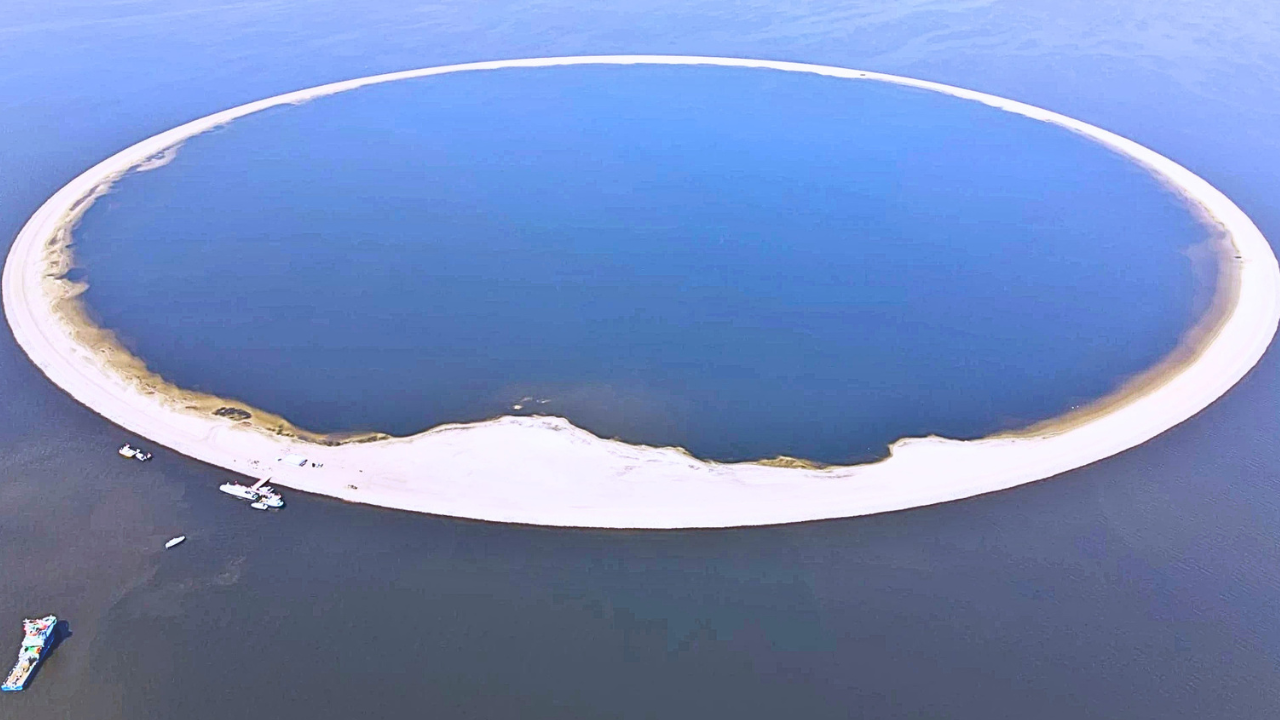
The water of the Vistula Lagoon is a restless, muddy grey, shifting under the weight of the Baltic winds. For decades, this stretch of water between northern Poland and the Kaliningrad Oblast was a place of heavy transit, the churning engines of cargo ships being the only consistent melody. But if you stand on the shore today, looking toward the horizon, you will see something that shouldn’t be there. It looks like a mirage—a perfectly elliptical sliver of land rising out of the waves.
It is called Estyjska. It is an island built from nothing but ambition, sand, and the desperate need to fix a mistake we didn't realize we were making until the skies went quiet.
Poland spent roughly 100 million PLN (about $25 million) to build this place. In a world of rising inflation and crumbling infrastructure, spending millions on a patch of dirt where no human is allowed to set foot sounds like a bureaucratic fever dream. There are no hotels here. No beach bars. No Instagram influencers posing against the sunset. If you tried to land a boat there, you’d be met with the cold indifference of conservation laws and a wall of sand.
This is not a park. It is a fortress for the fragile.
The Cost of a Shortcut
To understand why a nation would manufacture an island, you have to understand the cost of a shortcut. A few years ago, the Polish government began a massive project: the Vistula Spit cross-cut. They dug a canal through the narrow strip of land separating the lagoon from the open sea, allowing ships to bypass Russian waters. It was a move for sovereignty and commerce.
But nature doesn't care about borders or shipping lanes.
Every time a dredger bites into the seafloor, every time a massive hull displaces a million gallons of water, a local ecosystem feels the tremor. The birds that have used these waters as a migratory "truck stop" for millennia suddenly found their resting grounds disturbed. The noise, the silt, and the changing salinity were an eviction notice written in industrial ink.
Imagine you are a Sandwich Tern. You have flown thousands of miles. Your heart is a tiny, frantic engine. You need a place to land where a fox won't eat your eggs and a human won't crush your nest. For years, those places have been disappearing, swallowed by rising tides or paved over for "coastal development."
Estyjska was the apology.
Building a Sanctuary from Silt
The engineering of Estyjska is a marvel of circular logic. When you dig a canal, you end up with millions of tons of earth that nobody knows what to do with. Usually, this "spoil" is dumped or used for mundane filler. Instead, engineers used the very earth displaced by the canal to create the island.
They drove steel pilings into the lagoon floor, creating a massive, 190-hectare oval. Then, they filled it.
It was a slow, methodical birth. For months, the lagoon was a construction site, a cacophony of cranes and barges. But as the last of the sand was smoothed out, something strange happened. The silence returned.
The island is now a sanctuary for the "rare and the restless." We are talking about the Charadriiformes—an order of birds that includes plovers and gulls—that rely on the Baltic as a lifeline. These aren't just "pretty birds." They are the indicators of the planet's pulse. When they stop showing up, it means the machine is breaking.
The Human Element of an Empty Place
There is a specific kind of loneliness in a place built specifically to exclude us.
Consider the hypothetical life of a local fisherman named Marek. For forty years, Marek has seen the lagoon change. He saw the ships grow larger. He saw the fish stocks fluctuate. At first, he might have looked at the construction of Estyjska with a cynical eye. "Twenty million dollars for a bird sanctuary? While my village needs better roads?"
But then, Marek sees the return of the terns. He watches the sky fill with the chaotic, beautiful geometry of a flock in flight. He realizes that the island isn't just for the birds; it’s a buffer. By giving the wildlife a place to exist undisturbed, we prevent the total collapse of the lagoon's biological identity. If the birds leave, the ecosystem becomes a stagnant bathtub. If the ecosystem dies, Marek’s way of life dies with it.
We often view conservation as a zero-sum game: either humans win or the environment wins. Estyjska suggests a different narrative. Sometimes, the best thing humans can do for their own long-term survival is to build something and then stay away from it.
The Invisible Stakes
Why should you care about a pile of sand in Poland?
Because the world is becoming louder. Light pollution, noise pollution, and the physical encroachment of our "needs" are shrinking the silent spaces of the Earth. Estyjska is a prototype. It is a recognition that "wildlife conservation" can no longer just be about protecting what is left; it has to be about building back what we broke.
The stakes are invisible until they are gone. You don't notice the absence of a specific species of gull until the morning air feels thinner, or the insects they used to eat begin to swarm your crops. Poland’s investment wasn't just in birds; it was an investment in the stability of the Baltic coast.
A New Kind of Monument
We are used to monuments that celebrate ourselves. We build statues of generals, glass skyscrapers that pierce the clouds, and bridges that span impossible gaps. Estyjska is a monument to our restraint.
It is 190 hectares of proof that we can choose to be builders rather than just consumers. The sand is settling. The first pioneers—greenery and salt-tolerant grasses—are taking root, anchored by the droppings of the very birds the island was built for. It is a self-sustaining cycle, a slow-motion explosion of life in the middle of a shipping lane.
The island will never be a tourist destination. You will never buy a postcard on its shores. But as the sun sets over the Vistula Lagoon, casting long shadows across the water, the sight of that silent, sandy oval offers a rare kind of hope.
In a world where we have claimed almost every square inch of the map, there is something deeply moving about a place where we are finally, intentionally, unwelcome.
The birds have landed. The rest of us will just have to watch from the shore.