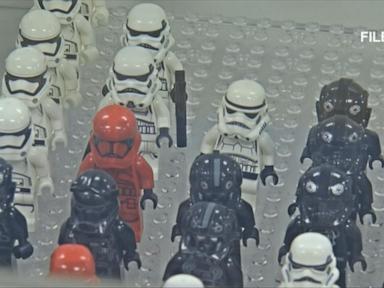
The plastic itself costs almost nothing to manufacture. It is acrylonitrile butadiene styrene, a common petroleum derivative molded into tiny, hollow bricks with circular studs on top. Left alone in a cardboard box, it has no intrinsic power. But when an eighty-three-year-old father spends thirty years carefully curating those specific bricks, clipping together miniature starships and cataloging over a thousand tiny, plastic galactic warriors, the plastic ceases to be a material. It becomes a life.
For Ed Mansell, the collection was a quiet, decades-long labor of devotion. For his son, Bryan, it was a legacy that could secure the future, intended to fund the college educations of the family's younger generation. It was an inheritance built on a universe far, far away, resting quietly in Salem-Keizer, Oregon.
Then, the bricks vanished into the machinery of corporate handovers, digital crusades, and shifting legal liabilities. What started as a simple handshake agreement to sell a private $200,000 LEGO Star Wars collection has transformed into a fractured, multi-state legal war involving small business failure, corporate restructuring, a rogue YouTube investigator, and a small army of furious internet commenters. It is a modern tragedy of asset conversion, proving that in the digital age, a private dispute can become an uncontainable wildfire overnight.
Consider how the chain broke. In 2023, Bryan Mansell walked into a local franchise of Bricks & Minifigs, a popular chain specializing in aftermarket LEGO sales. He struck a deal with Chrystal Law-Gorman, the store's operator. The terms seemed clear: the store would display and sell the massive collection—which featured rare items like a pristine, sealed 2003 Cloud City set worth upwards of $10,000—and keep a thirty-five percent cut of the gross profits. Bryan would receive a check by the fifteenth of every month. The contract had a hard expiration date of January 31, 2025. Any unsold inventory would come back home.
But a franchise is an illusion of unity. To the consumer, the corporate logo on the sign implies a singular, monolithically secure entity. In reality, it is a web of independent owners tethered to a corporate mothership by a piece of paper. When that paper tears, the individual pieces scatter.
By late 2024, Law-Gorman’s business was collapsing under the weight of alleged unpaid franchise obligations totaling nearly $200,000. In a chaotic handover that she later claimed was an illegal seizure under threat of police action, the corporate entity terminated her agreement and handed the keys to new operators, Brandon Best and Joshua Johnson.
During the frantic transition, the paperwork vanished. The records of what had been sold, what remained, and who truly owned the plastic spaceships sitting on the display shelves dissolved into a void of administrative negligence.
When Bryan Mansell sent a formal notice terminating his consignment agreement and demanding his remaining inventory back, he found himself staring across a corporate chasm. The new owners claimed they had no record of his contract. The corporate headquarters in Utah claimed that consignment deals were strictly prohibited under standard franchise rules and that they were never a party to the agreement.
To the corporate lawyers, it was an accounting discrepancy, a localized civil dispute over inventory value that they claimed was inflated, pegging the true worth closer to $60,000. But to a family watching thirty years of their lives locked behind a glass display case with a new lock, it felt like theft.
Enter the internet's courtroom. Frustrated by civil silence, Mansell connected with Benjamin Schneider, a thirty-year-old YouTuber known online as "Reckless Ben." Schneider does not practice law; he practices performance art masquerading as activism. He brought a digital sledgehammer to a complex contractual knife fight.
Schneider launched a guerrilla content campaign that rapidly garnered millions of views. He showed up at employees' doors, hung massive banners over corporate signage, and delivered a satirical award to the storefront honoring them for the "most Legos stolen." He tracked the new ownership across state lines to American Fork, Utah, attempting to serve legal papers while filming the confrontations for an audience hungry for vigilante justice.
The strategy was simple: create enough public embarrassment to force a resolution. It worked, but it also broke the machine entirely.
The digital crowd did not just watch; they weaponized. The internet operates without nuance. An avalanche of abusive, harassing phone calls inundated local police dispatchers in unrelated towns, clogging emergency lines and delaying actual crisis responses. Fearful franchise owners across the country, completely detached from the Oregon dispute, began receiving threats from anonymous accounts demanding justice for a collection of plastic toys they had never seen.
The retaliation from the corporate headquarters was swift and severe. They didn't just defend themselves; they counter-sued. Utilizing Utah's civil RICO statutes—laws originally designed to dismantle organized crime syndicates—Bricks & Minifigs filed a massive lawsuit against Schneider and Mansell, seeking over $300,000 in damages for defamation, stalking, trespass, and conspiracy. A judge issued a preliminary injunction order, forcing the removal of the viral videos.
The result is a landscape where everyone has lost. The Salem-Keizer storefront has permanently closed its doors, its windows dark. The franchise owners have mutually parted ways with corporate after being thoroughly lambasted by the online community. Schneider faces potentially ruinous legal actions. Corporate is left trying to salvage a reputation stained by viral vitriol.
And somewhere in the middle of the legal wreckage, trapped in storage locker boxes or sold off piece by piece without proper tracking, sits the collection. The tiny plastic Luke Skywalkers and Darth Vaders remain frozen in their perpetual galactic war, oblivious to the very real human casualties left in their wake.
Trust is a fragile construct, far easier to shatter than a block of molded plastic. Once it breaks, no amount of instructions can piece it back together.