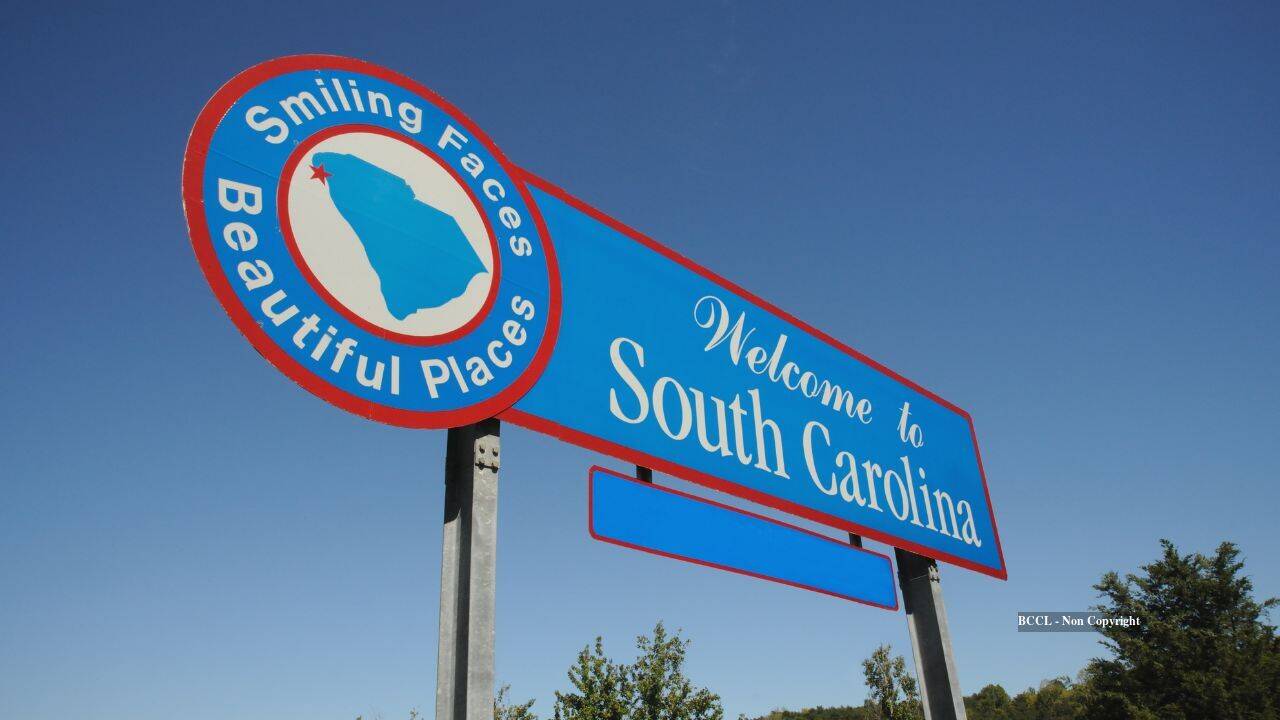
Nearly two thousand acres of Laurens County forestland have formally shifted into the public trust, transferred by The Nature Conservancy to the U.S. Forest Service to permanently expand the Sumter National Forest. This transaction blocks residential subdivision and commercial encroachment along the fast-growing Interstate 26 corridor, adding critical acreage to the Enoree Ranger District. Yet this acquisition is merely a single defensive maneuver in an escalating regional struggle over the American Southeast.
For decades, the rural acreage stretching between Greenville and Columbia has operated as a quiet sponge, absorbing carbon, filtering municipal watersheds, and maintaining contiguous wildlife corridors. That quiet is ending. Real estate developers eye these tracts not for their ecological value, but for their cost-per-square-foot metrics. When wooded parcels come up for sale, the capital backing multi-unit housing developments almost always outbids local conservation pools.
The mechanics of saving nearly two thousand acres require intricate financial stitching. The Nature Conservancy originally purchased a larger 2,281-acre holding for roughly $6.47 million. Portions of that acquisition were subsequently carved off, with Laurens County securing a smaller fraction for an equestrian park, while the bulk was held for federal integration. Federal agencies rarely possess the agile capital required to snap up land the moment it hits the market. Bureaucratic appropriations cycles move at the speed of legislation, whereas private developers move at the speed of wire transfers. Conservation groups function as interim financial shock absorbers, holding high-stakes properties in limbo until federal agencies can absorb them.
Consider a hypothetical example of how this plays out in municipal planning. A timber tract changes hands after a corporate merger. Without intervention, an investment trust subdivides the perimeter for low-density acreage housing, drives asphalt roads through old-growth canopies, and fragments contiguous wildlife habitats into isolated pockets. Once a forest is chopped into residential parcels, assembling it back into a coherent ecosystem becomes practically impossible. Property rights and entrenched infrastructure turn the clock backward on biodiversity.
The expansion of the Sumter National Forest halts that sequence for this specific Laurens County tract. Under federal management, the acreage falls into the Enoree district's 170,000-acre administrative footprint, opening the territory to public recreation like hiking, hunting, fishing, and canoeing. More importantly, it secures ecological permanence. Trees that would have fallen for timber framing or grading permits will instead complete their natural biological lifecycle.
Yet public ownership is not an absolute shield. National forests face chronic underfunding for maintenance, invasive species management, and boundary enforcement. The U.S. Forest Service operates under a massive backlog of deferred infrastructure and ecological restoration projects across the country. Simply changing the deed from private hands to federal oversight does not automatically guarantee ecosystem health. It merely stops the bulldozer. The long-term cost of stewardship falls upon an agency already stretched thin by wildfire suppression budgets and staffing shortages.
Furthermore, concentrating conservation victories around major interstate corridors highlights the disparity facing rural tracts without deep-pocketed organizational backing. For every two thousand acres successfully funneled into a national forest, thousands more slip quietly into private subdivision. Local tax structures frequently penalize landowners who choose conservation over development, driving aging family farmers to cash out when inheritance taxes loom.
The transaction in Laurens County proves that strategic land acquisition remains the most effective firewall against unmitigated sprawl. But it also exposes the vulnerability of a conservation model dependent on philanthropic timing and federal receptivity. As population migration patterns continue to redraw the map of the American South, protecting the next two thousand acres will require more than institutional partnerships. It will demand an entirely recalibrated economic framework that values standing timber and undisturbed watersheds higher than short-term municipal tax yield.