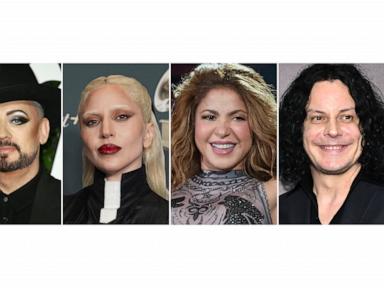
Every autumn, the Songwriters Hall of Fame drops its annual ballot, and entertainment outlets rush to publish the exact same breathless headline. They cherry-pick the three or four biggest arena headliners on the list—this time around, Lady Gaga, Shakira, Jack White, and Boy George—and frame the announcement as a triumphant celebration of pure songwriting craft.
It is lazy journalism. Worse, it is an active distortion of how the music business actually works.
When legacy institutions highlight mega-celebrities to generate press cycles, they reinforce a toxic misconception that hurts working creators and misleads fans. They conflate performing stardom with songwriting architecture.
Having spent fifteen years negotiating publishing splits, auditing mechanical royalties, and sitting in A&R rooms where catalogs are valued to the decimal point, I can tell you a hard truth: the Songwriters Hall of Fame does not have a pure-craft problem. It has a visibility addiction. And by celebrating the famous faces leading the 2027 nominees while ignoring the structural mechanics of how modern hits are built, the industry keeps burying the real story of who actually writes the soundtrack to our lives.
The Celebrity Bias in Songwriting Recognition
Let’s look at the names dominating the press coverage for the 2027 ballot: Lady Gaga, Shakira, Jack White, and Boy George. Nobody with functioning ears would deny that these four artists have shaped pop culture. Jack White’s stripped-back blues-rock minimalism changed alternative radio in the early 2000s. Boy George, alongside Culture Club, penned sleek, soulful new-wave standards that still move dance floors forty years later. Shakira’s bilingual lyricism and rhythmic phrasing broke down walls that Nashville and Los Angeles executives claimed were impenetrable. And Lady Gaga’s theatrical piano-driven pop melodies revitalized mainstream radio at the end of the 2000s.
Yet, when outlets lead exclusively with these four names, they fall straight into a trap set by the Hall’s own PR machinery.
The Songwriters Hall of Fame splits its ballot into two distinct buckets: Performing Songwriters and Non-Performing Songwriters. On paper, this is an equitable system designed to give behind-the-scenes architects the same prestige as front-of-house superstars. In practice, the media coverage—and often the voting public’s attention—skews overwhelmingly toward the performers.
Why? Because a headline about Lady Gaga gets clicks. A headline about the journeyman Nashville or Stockholm writer who spent ten years grinding out B-sides before landing a career-defining ballad does not.
I have watched catalog acquisition funds spend hundreds of millions of dollars over the last decade. When private equity firms like Hipgnosis or primary publishers like Sony Music Publishing value a catalog, they do not care who wore the meat dress at the VMAs or who headlined Coachella. They care about performing rights organization (PRO) distributions, mechanical royalty rates, and synchronization licensing velocity. They look at the Writer’s Share versus the Publisher’s Share on a split sheet.
When you examine the 2027 nominee pool through the cold, hard lens of a publishing executive rather than a pop culture blogger, the narrative flips entirely.
What the Press Misses About Co-Writing and Publishing Splits
The public still clings to the romantic nineteenth-century myth of the lone genius sitting in a garret with an acoustic guitar or a battered upright piano, bleeding onto a legal pad. Press releases around the 2027 Songwriters Hall of Fame nominations lean heavily into this mythology, painting superstar nominees as solitary auteurs.
That is rarely how modern commercial songwriting functions, particularly in the pop, dance, and R&B spheres.
To understand the reality behind these nominations, you have to understand the legal and creative anatomy of a modern split sheet. In Nashville, the gold standard has long been the three-way split: a lyricist, a melody writer, and a track guy (producer) sitting in a room on Music Row, dividing the copyright 33.33% each. In Los Angeles, London, and Stockholm, modern pop songwriting operates on a track-and-hook assembly model. A producer builds a beat or chord progression, sends it to a topliner who records vocal melodies and lyrics over it, and then a star artist enters the room at the eleventh hour to tweak a bridge, adjust a few pronouns to fit their personal brand, and claim 25% to 50% of the publishing.
Let’s be brutally clear about the four headliners of the 2027 press cycle:
- Jack White represents the traditional auteur model. Whether working with The White Stripes, The Raconteurs, or solo, his credits are overwhelmingly solitary or tight two-person collaborations rooted in riff-driven rock tradition.
- Boy George operated largely within a classic band-collaborative framework with Roy Hay, Mikey Craig, and Jon Moss—a dynamic where the vocalist brought the lyrical wit and melodic phrasing while the band built the harmonic bed.
- Shakira has functioned as a fierce, hands-on co-writer throughout her career, particularly during her foundational Spanish-language rock era (Pies Descalzos, Dónde Están los Ladrones?), before transitioning into global pop collaborations with heavyweights like Luis Fernando Ochoa and Lester Mendez.
- Lady Gaga emerged from the downtown New York club circuit as a trained pianist and vocalist, yet her commercial peak relied heavily on high-level collaborative pairings—most notably with RedOne, Fernando Garibay, and later Mark Ronson and Andrew Wyatt.
There is zero shame in collaboration. Some of the greatest songs in the American songbook—from Rodgers and Hammerstein to Holland-Dozier-Holland, from Lennon and McCartney to Max Martin and Shellback—were forged through friction between multiple minds.
The problem arises when media narratives erase the collaborators to canonize the celebrity. When you celebrate Lady Gaga or Shakira as "leading" a songwriting class without dissecting the collaborative ecosystems that birthed their biggest hits, you perpetuate the exact economic imbalance that is currently starving mid-tier professional songwriters.
The Economic Reality Behind the Hall of Fame Curtain
If you want to know why this matters beyond trivia night bragging rights, look at the bank accounts of non-performing songwriters in 2026.
Right now, the music industry is experiencing an unprecedented bifurcation. At the top, superstar performer-writers are selling their catalogs for nine-figure sums because their name recognition guarantees global streaming playlists, Peloton syncs, and Super Bowl commercials. Meanwhile, the pure non-performing songwriter—the person who does not tour, does not sell merch, and does not have forty million Instagram followers—is being crushed by streaming economics.
Under current mechanical royalty structures in the United States, even after the Copyright Royalty Board’s Phono IV rate increases pushed mechanical rates toward 15.35% of service revenue, a stream on Spotify or Apple Music pays fractions of a penny. A touring artist makes 70% to 80% of their income on the road through ticket guarantees and VIP packages. A non-performing songwriter makes zero dollars when their song is played in a sold-out stadium unless the venue’s PRO blanket license trickles down—a payout that amounts to pennies compared to the artist’s tour gross.
I have sat across from songwriters with multiple Billboard Hot 100 Top 10 hits who struggled to qualify for a mortgage because streaming micro-payments take nine to eighteen months to clear international collection societies.
This is why the Songwriters Hall of Fame’s institutional mission is supposed to be vital. Founded in 1969 by Johnny Mercer, Abe Olman, and Howie Richmond, the organization was created specifically to ensure that the people writing the songs were not treated as disposable hired hands by record labels and star vocalists.
Yet every time the Hall’s annual nominee list becomes a celebrity popularity contest in the press, that founding mission gets diluted. Voters—who are themselves Hall members and industry professionals—naturally gravitate toward names they recognize from forty years of Top 40 radio. A superstar performer enjoys massive name-recognition inertia. They do not have to campaign for votes; their catalog is played in every grocery store and sports arena on earth. A brilliant non-performing writer who penned twenty classics for five different artists has to rely on industry insiders remembering their name on a crowded ballot.
Dismantling the Common Myths About Songwriting Greatness
Whenever the annual nominee list drops, the same predictable questions flood music forums and search engines. Most of them are built on completely flawed premises.
"How many hits do you need to get into the Songwriters Hall of Fame?"
This is the wrong question entirely. Eligibility requires a writer to have a notable catalog of songs and to have had their first commercially released song at least twenty years prior to the year of induction (meaning the 2027 class requires a commercial debut on or before 2007).
Notice the phrasing: notable catalog, not chart positions. Chart metrics are a terrible proxy for songwriting durability. Plenty of songs hit Number 1 because a major label dumped three million dollars into radio payola and TikTok influencer campaigns, only to vanish from human memory eighteen months later. Conversely, songs like Leonard Cohen’s "Hallelujah" or Dolly Parton’s "I Will Always Love You" (in its original 1974 country release) were not immediate global pop chart juggernauts, yet they represent the pinnacle of structural songwriting. If you judge a nominee by Billboard peaks, you are judging marketing budgets, not craft.
"Why are pop stars who use co-writers nominated alongside solo rock writers?"
Because editing, curation, and vocal phrasing are legitimate songwriting skills. Purists love to gatekeep songwriting by demanding that a "real" writer play every instrument and write every syllable alone. That is musical snobbery divorced from reality.
Imagine a scenario where a producer hands a vocalist a brilliant chord progression and a rough dummy melody, and the vocalist rewrites the cadence, alters the emotional arc of the chorus, and delivers a phrasing hook that turns a forgettable album track into a generational anthem. That vocalist earned their writer’s credit. Boy George’s ability to float an aching, soulful vocal melody over a reggae-inflected synth groove on "Do You Really Want to Hurt Me" is just as much a songwriting feat as Jack White hammering out a blistering pentatonic riff on a 1964 Montgomery Ward Airline guitar. The medium differs; the architectural instinct is identical.
"Does induction actually change anything for a songwriter's career?"
For mega-stars like Lady Gaga or Shakira, a Songwriters Hall of Fame induction is a nice tuxedo night in New York and another line on a Wikipedia bio. It will not move their streaming needle by a single percentage point.
For a non-performing writer or a cult catalog creator, however, induction is a financial catalyst. It triggers immediate catalog re-evaluation by publishing buyers, boosts sync licensing fees by validating historical prestige, and puts their songs back in front of younger A&R executives looking for interpolation targets. When media coverage ignores the non-performing side of the ballot to obsess over celebrities, it actively robs working writers of the one tangible business benefit the Hall still provides.
The Uncomfortable Downside of Purist Gatekeeping
To be fair, there is a fatal flaw in taking the extreme purist stance and banning mega-celebrities from the Hall altogether.
If the Songwriters Hall of Fame nominated exclusively behind-the-scenes Nashville tuners, Brill Building veterans, and obscure indie poets, nobody outside of the music publishing trade press would cover the ceremony. The television broadcast deals would evaporate. The gala table sponsorships—which fund the Hall’s educational workshops, masterclasses, and emerging songwriter scholarships—would dry up overnight.
The institution needs the gravitational pull of stars like Lady Gaga, Shakira, Jack White, and Boy George to keep the lights on. Celebrity is the engine that funds the preservation of craft. That is the uncomfortable business reality of every arts institution on earth, from the Rock & Roll Hall of Fame to the Academy Awards.
Recognizing that economic necessity does not mean we have to swallow the PR narrative whole. We can acknowledge that celebrity brings eyeballs to the gala while still demanding higher critical standards in how we evaluate the ballot.
How to Actually Evaluate a Songwriter's Legacy
If you want to look at the 2027 Songwriters Hall of Fame nominees—or any catalog of music—like a seasoned publishing veteran instead of a passive consumer, stop looking at streaming numbers and Grammy trophies. Apply three ruthless tests to any songwriter’s body of work:
- The Acoustic Stripping Test: Strip away the 808 sub-bass, the Max Martin vocal layering, the stadium pyrotechnics, and the nostalgic production tricks of the era. Play the song on a single out-of-tune piano or an acoustic guitar. Does the melody still carry emotional tension? Does the lyric still land without a beat drop to rescue it? Songs like Lady Gaga’s "Speechless" or Boy George’s "Karma Chameleon" survive this test effortlessly because their melodic bones are bulletproof. Half the streaming hits of the last decade collapse into monotone spoken-word drivel the moment you mute the drum machine.
- The Cover Versatility Test: Great songs are elastic. They can survive radical genre translation without breaking. Look at how many different artists across wildly different genres have covered, sampled, or reinterpreted a writer’s catalog. When a blues-rock riff written in Detroit gets chanted by eighty thousand soccer fans in European stadiums—as happened with Jack White’s "Seven Nation Army"—that ceases to be a mere recording. It becomes folk architecture.
- The Zero-Context Lyric Test: Read the lyrics on a blank white page with zero music playing. Are there genuine turns of phrase, sharp metaphors, and narrative economy? Or is it just rhythmic filler designed to sound good phonetically over a dance beat? Shakira’s early Spanish lyricism passes this test with flying colors; her wordplay and internal rhyme schemes read like genuine literature before a single note is played.
The next time a major entertainment outlet runs a breathless headline announcing which pop stars are "leading" the Songwriters Hall of Fame nominees, look past the glossy red-carpet photos. Pull up the actual liner notes. Read the split sheets. Look at the names printed in tiny font beneath the boldface artist title—the co-writers, the arrangers, the non-performing architects who built the foundation while the superstar stood in the spotlight.
Fame gets you on the marquee, and fame gets you into the headlines, but the song itself is the only thing that survives when the stage lights go out.