Dawn in Victoria Harbour smells of salt, diesel, and old paper.
If you stand on the Star Ferry pier as the first bruised light breaks over Kowloon, you can watch the commuters push past. They move with an aggressive, rhythmic grace. Heads down, screens glowing, shoulders squared against the hum of a metropolis that has never learned how to sit still. This is a city built on the frantic energy of the five-minute turnaround. Trains arrive every two minutes. Contracts are signed over quick lunches. Fortunes are made and unmade in the span of a single market correction.
Hong Kong runs on adrenaline. But adrenaline has an expiration date.
Meet Marcus. (This is a hypothetical scenario to ground the architecture of our anxiety, though anyone who has managed a logistics firm in Kwai Chung or a tech incubator in Cyberport will recognize his shadow.) Marcus is forty-two. He is the operations director for a mid-sized supply chain firm that has weathered three major economic tremors. He is tired. Not the tired of a bad night's sleep, but the chronic, bone-deep exhaustion of a man who spends his entire professional life staring at five-year horizons that vanish the moment he reaches them.
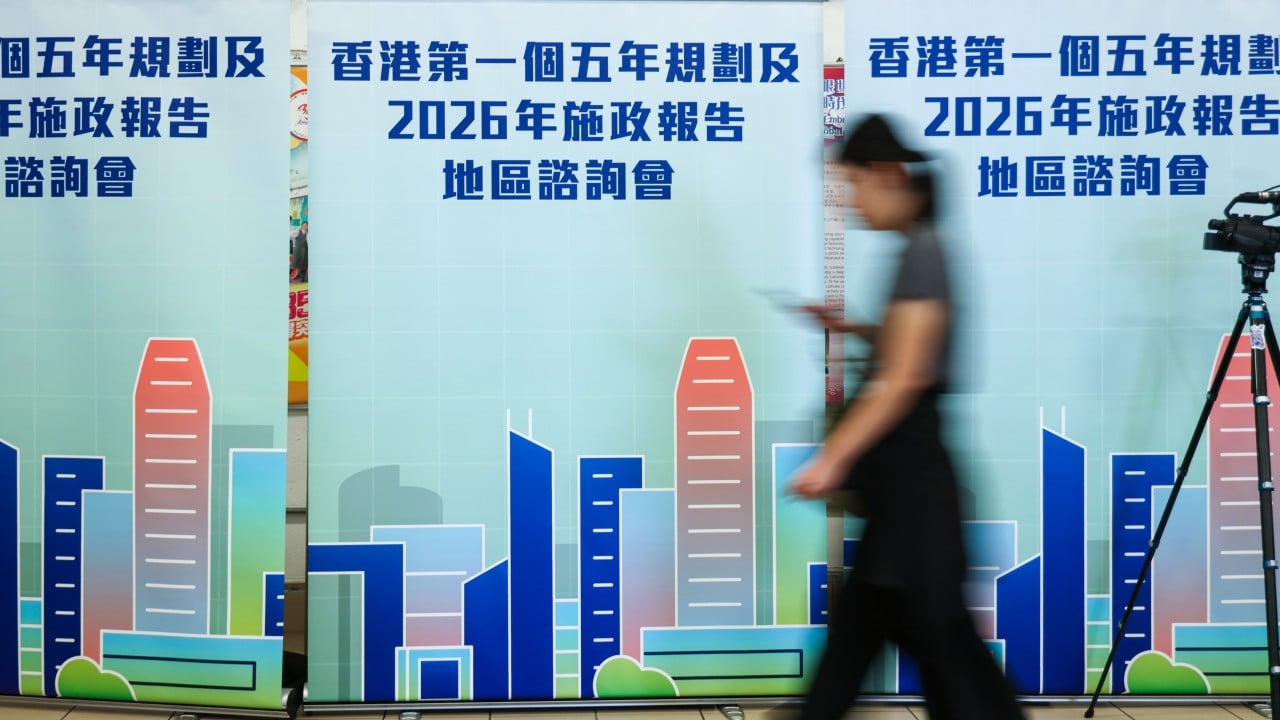
Every half-decade, the government issues its blueprint. A new cycle. New buzzwords. New grants for innovation, green tech, or financial integration. Marcus reads them all with a cup of bitter milk tea on his desk. He tries to align his hiring strategy, his software investments, and his warehouse leases to match the state-sanctioned tempo. Yet, halfway through each cycle, the ground shifts. Global supply chains fracture. Interest rates spike. Geopolitical weather patterns change overnight.
Marcus finds himself sprinting toward a finish line that keeps moving.
That is the quiet crisis eating away at the foundations of this remarkable territory. Hong Kong is a masterpiece of tactical execution, but it is starving for strategic destiny.
To understand why this matters, you have to look past the neon glow of Central and examine the machinery of survival. For decades, Hong Kong’s superpower was its agility. When manufacturing left, finance stepped in. When finance matured, logistics and trade bridged continents. It was a place defined by its ability to improvise. Give a Hong Kong entrepreneur a vacant room and three days, and they will build a bustling bazaar.
Improvisation is a survival tactic. It is not a future.
Look closely at the rhythm of the city's administrative planning. Five-year plans are neat. They fit into bureaucratic folders. They offer convenient milestones for politicians to cut ribbons and announce GDP targets. But the monumental shifts of the twenty-first century do not care about arbitrary political increments. Climate change does not wait for a medium-term review. Artificial intelligence does not pace its revolutions to match an election cycle. The integration of the Greater Bay Area is a generational tectonic movement that will take half a century to fully settle.
When you manage a city of seven million people using short-term tactical adjustments, you get a peculiar form of institutional vertigo. Everyone is moving at top speed, yet nobody knows exactly where the edge of the cliff is.
Consider what happens when a city loses its North Star.
Let us step into a classroom in Sham Shui Po. Imagine a sixteen-year-old girl named Chloe. (A hypothetical student, though her notebook is filled with the real dilemmas of her peers.) Chloe is brilliantly gifted in mathematics and coding. She wants to build neural networks that can predict urban flooding before it destroys coastal infrastructure. She asks her career counselor a simple question: Where should I aim? What will Hong Kong need from me in twenty years?
The counselor points to the latest policy address. It mentions artificial intelligence hubs and international innovation centres, yes. But it also emphasizes immediate housing quotas, short-term tax reliefs, and the urgent need to plug labor gaps in traditional sectors. The vision splinters. Chloe is told to be a visionary, but she is trained to be a cog in an urgent administrative machine.
She applies to universities abroad. Not out of malice toward her home, but because Singapore, London, and Toronto offer something Hong Kong struggles to articulate: a coherent, long-range story about what their societies will look like in the middle of the century.
That brain drain is not measured merely in departure statistics at the airport. It is measured in the quiet subtraction of ambition.
The year 2049 is not just a random date on a calendar. It marks the centenary of the founding of the People's Republic of China, carrying profound structural and symbolic weight for Hong Kong's integration, its autonomy, and its ultimate economic identity within the nation.
Yet, if you walk through the corporate boardrooms of Admiralty today, 2049 feels like science fiction. Ask a CEO what their company's carbon profile, talent pipeline, or regional positioning looks like in twenty-five years, and you will likely receive a nervous laugh. Most are struggling to survive the next two quarters of high rental costs and shifting regulatory winds.
This short-termism is a trap of our own making.
Cities that endure for centuries do so because they anchor themselves to unshakeable, generational missions. Think of Rotterdam planning its water defenses for a sea-level rise projected for the year 2100. Think of Vienna municipal housing initiatives designed to outlast political dynasties. These places do not abandon tactical agility; rather, they marry it to a stubborn, long-form narrative.
Hong Kong has all the raw ingredients to pull this off. Capital? Abundant. Talent? World-class. Geographic positioning at the heart of Asian trade? Unrivaled.
What is missing is the narrative architecture. We need a mission for 2049 that transcends spreadsheets and economic indicators. We need a shared understanding of what this territory is supposed to be when the children born today reach middle age.
Will it be a sterile transshipment hub of glass and steel, vulnerable to every global economic tremor? Or will it evolve into the intellectual laboratory of Asia—a place where climate resilience, biotechnology, and cross-cultural synthesis are not just discussed in policy papers, but engineered into the very streets?
Back on the Star Ferry, the morning rush is thinning out. The tourists are taking out their cameras, framing the skyline against the gray mist rolling off the Peak. To the casual observer, the city looks invincible. The towers pierce the clouds. The stocks are traded. The dim sum baskets keep arriving hot and fast.
Beneath that surface, Marcus is still sitting at his desk, staring at his spreadsheets, wondering whether to invest in a five-year tech upgrade that might be obsolete by year three. Chloe is still packing her bags, trying to decide if her future belongs to a place that plans in quarters rather than epochs.
A great city is ultimately a collective act of imagination. If we only imagine the next five years, we are merely managing a decline, no matter how glossy the veneer.
The real work begins the moment we stop asking what we must do by Friday, and start demanding to know who we intend to be when the century reaches its halfway mark. The horizon is out there, waiting. It is time to look up.