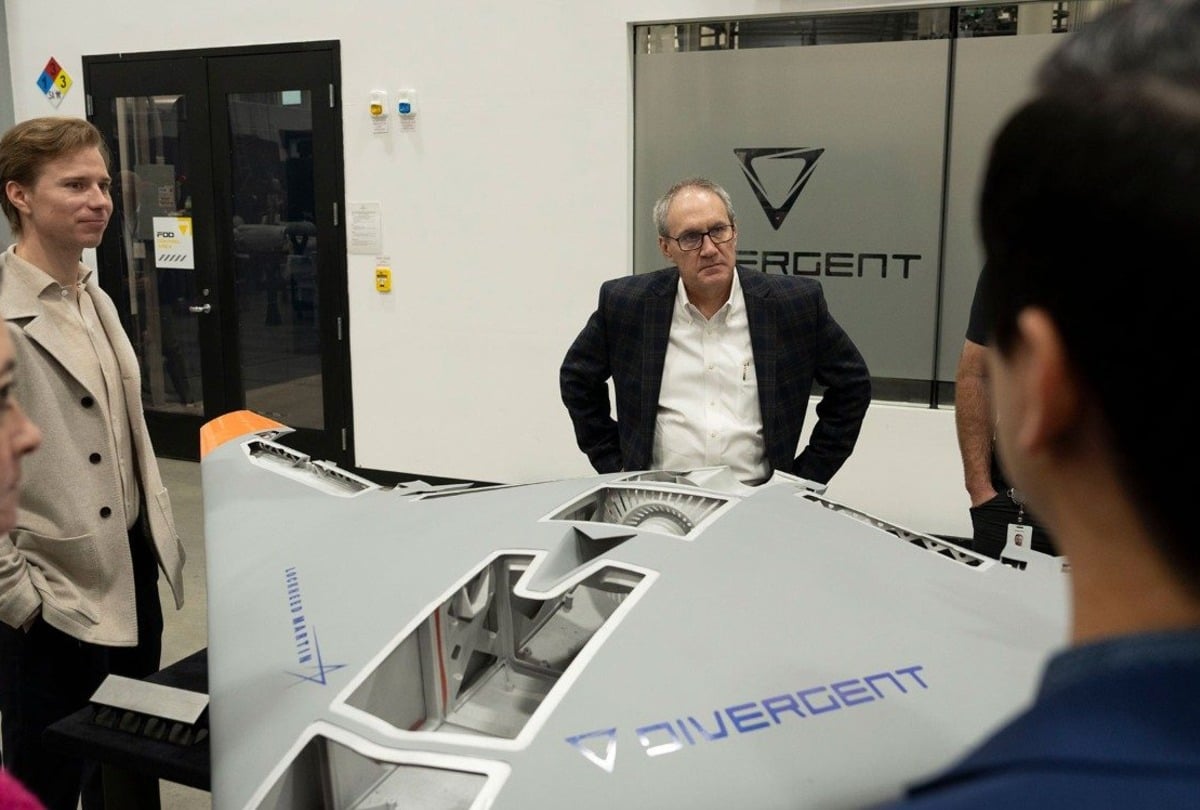
The defense industrial base is suffering from collective hypnosis. Every time a legacy prime contractor pumps out a press release claiming they "revolutionized manufacturing" by 3D printing a new Unmanned Aerial Vehicle (UAV), the tech press swoons. We saw it again with the recent coverage surrounding Lockheed Martin’s Skunk Works utilizing additive manufacturing for their latest drone prototype. The narrative is always identical: 3D printing is faster, it slashes costs, and it represents the absolute pinnacle of rapid prototyping.
It is a comforting story. It is also completely wrong.
Having spent fifteen years in defense procurement and advanced manufacturing pipelines, watching companies burn tens of millions of dollars on high-end sintering beds, I can tell you the reality. The mainstream consensus misses the entire point of military-grade production. Additive manufacturing (AM) is not a magic wand for scaling a fleet. In its current state, over-relying on it for structural drone components is a logistical liability wrapped in a public relations victory.
The Fallacy of the Cheap Printed Airframe
The core argument of the tech optimists is simple: 3D printing reduces tool-up time to zero, meaning you can iterate designs overnight and print wings on demand.
Here is what they leave out of the brochure: geometry is cheap, but material integrity is astronomically expensive.
When Skunk Works or any other high-tier aerospace outfit prints a structural component for a high-performance drone, they are not using the plastic filament printer sitting on a hobbyist's desk. They are using Direct Metal Laser Sintering (DMLS) or Electron Beam Melting (EBM) with advanced titanium or aluminum alloys.
Let’s look at the actual physics of a sintered part. Traditional CNC machining takes a forged billet of metal—which has a highly uniform, predictable crystalline structure—and cuts it away. 3D printing builds that structure micro-layer by micro-layer by melting metal powder with a laser. This creates tens of thousands of microscopic weld lines.
Every single one of those weld lines is a potential failure point.
Because of this, a printed aerospace part cannot just go straight from the printer bed onto the aircraft. It requires an exhausting, multi-step post-processing gauntlet:
- Hot Isostatic Pressing (HIP): Subjecting the part to extreme heat and pressure inside a specialized furnace to crush internal voids and gas pockets.
- Stress Relief Baking: Hours in an oven to prevent the part from warping due to the residual thermal stresses built up during the laser passes.
- Subtractive Finishing: High-tolerance mating surfaces, like where a wing spar bolts to a fuselage, still must be CNC machined anyway because printers cannot hit five-micron tolerances consistently.
- Non-Destructive Testing (NDT): Running X-ray computed tomography (CT scans) or ultrasonic testing on every single part to ensure it won’t shatter under 6Gs of aerodynamic load.
Imagine a scenario where a factory needs to scale production from five prototypes to five hundred operational field units. The printing process itself might take twenty hours. The post-processing, validation, and quality assurance take eighty hours. The printer is not a bottleneck solver; it simply moves the bottleneck further down the factory floor.
The Sourcing Nightmare Nobody Talks About
The tech press loves to talk about freeing ourselves from traditional supply chains. They claim that if you have a printer, you can manufacture anywhere. This completely ignores the raw material reality.
You cannot print without specialized precursor powders. These are not standard industrial commodities. Aerospace-grade spherical titanium powder requires highly specific gas atomization facilities to produce. The global supply of these high-purity powders is incredibly concentrated and highly vulnerable to disruptions.
If a conflict disrupts the supply of specialized spherical titanium powder, every advanced DMLS printer in the defense sector becomes an incredibly expensive paperweight. Conversely, traditional manufacturing can utilize standard plate, bar, and sheet stock, which are produced by dozens of mills globally and can be stockpiled with far fewer environmental storage restrictions.
Furthermore, we must address machine amortization. A top-tier industrial metal printer costs upwards of $1 million to $3 million. The lasers degrade. The powder filtration systems require constant maintenance. When you calculate the true cost per part—accounting for machine depreciation, specialized labor, Argon gas consumption, and scrap rates from failed builds—a 3D-printed structural bracket can easily cost five to ten times more than the same part carved out of a solid block of aluminum on a standard 5-axis CNC mill.
For a one-off experimental testbed under the Skunk Works banner, that cost is negligible. For a nation trying to build mass, attritable drone swarms to counter peer adversaries, it is economic suicide.
Redefining the Question: What Are We Actually Solving For?
When people ask, "How can 3D printing speed up drone deployment?" they are asking the wrong question. They are focusing on the airframe.
The airframe is the easiest part of a modern drone to build. It is just carbon fiber, aluminum, and fiberglass. If you want to build thousands of cheap, attritable drones quickly, you do not print them one by one in a high-tech kiln. You use century-old mass production techniques: stamping sheet metal, injection molding high-strength polymers, or using automated carbon fiber resin transfer molding. Look at automotive assembly lines; they do not print cars, because stamping a fender takes three seconds, while printing one takes three hours.
The real bottlenecks in drone warfare are things 3D printing cannot solve:
- Sensor suites: Long-lead times on micro-bolometers for thermal imaging and specialized optical lenses.
- Guidance systems: Global shortages of radiation-hardened microcontrollers and inertial measurement units (IMUs).
- Secure communications: Production capacity for anti-jamming GPS modules and encrypted software-defined radios.
- Propulsion: Scaling production of small, high-efficiency gas turbine engines or high-energy-density electric motors.
If an aerospace giant wants to impress the industry, they shouldn't show off a sleek, printed fuselage that looks great in a promotional video. They should show an automated assembly line that can churn out ten thousand solid, unsexy, stamped-aluminum drones a month using existing commercial supply chains.
Where Additive Actually Wins
To be entirely fair, additive manufacturing has a vital role, but it is completely misunderstood by the public. It does not belong in mass structural fabrication. It belongs in two very specific niches: exotic fluid dynamics and expeditionary maintenance.
Where printing genuinely excels is in creating geometries that are physically impossible to machine. For example, a rocket engine injector head or a drone's internal fuel routing block can be printed with complex, curved internal channels that optimize fluid flow and reduce weight. In these instances, the performance gain justifies the staggering cost and validation times.
The second valid use case is point-of-need repair. Instead of printing the entire drone, a forward-deployed military unit in a remote theater can use a ruggedized, containerized polymer or cold-spray metal printer to fabricate a single broken landing gear bracket or a custom camera mount on-site, saving weeks of shipping time for a spare part. This is where the flexibility of AM shines: low volume, high urgency, localized need.
The Brutal Reality of Mass Production
We must stop conflating rapid prototyping with rapid manufacturing.
Lockheed’s Skunk Works is phenomenal at prototyping. It is literally their mandate. They build the future in the shadows, creating small numbers of highly advanced, exquisite systems to prove a concept. 3D printing is a perfect match for that specific mission statement because it allows engineers to alter a wing profile between test flights without waiting six weeks for a new mold tool to be cast.
But do not confuse a brilliant engineering laboratory with a wartime production engine.
When the objective is mass, attritable saturation of the airspace, the artisan approach of high-end additive manufacturing fails completely. It creates an expensive, slow-moving pipeline dependent on hyper-specialized materials and arduous post-processing verification.
If the defense industry keeps treating 3D printing as the default answer to production velocity, we will end up with a boutique arsenal: incredibly advanced, beautifully designed, and entirely too few in number to win a prolonged war of attrition.
Stop printing the wings. Build the factories that stamp them out by the mile.