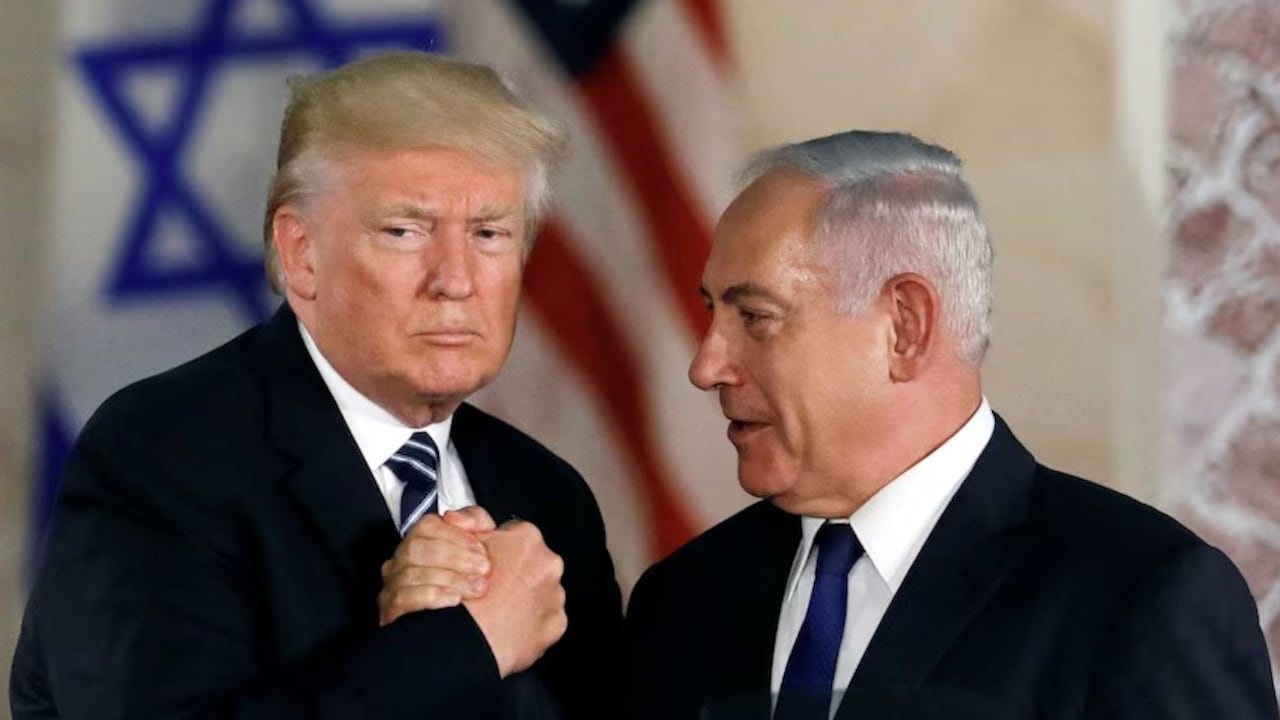
The annual $3.8 billion to $4 billion transfer of United States capital to Israel is frequently mischaracterized in mainstream political coverage as a direct cash wire. In reality, it is a closed-loop industrial subsidy structured through the Foreign Military Financing (FMF) program, governed by a ten-year Memorandum of Understanding (MOU) that expires at the end of fiscal year 2028. Any executive directive to terminate this allocation at a calendar year-end encounters immediate statutory, contractual, and macroeconomic friction across both Washington and Tel Aviv.
Understanding the operational reality of this aid requires dissecting the procurement architecture, the statutory power of the legislative branch over appropriations, and the downstream balance-sheet effects on American defense prime contractors.
The Architecture of Foreign Military Financing
To evaluate the impact of a proposed cessation of aid, one must first separate rhetorical policy announcements from the actual mechanisms of capital deployment. The core agreement currently in force—the 2016 U.S.-Israel Memorandum of Understanding—commits the United States to providing $38 billion over a ten-year period, spanning fiscal years 2019 through 2028. This breaks down into two distinct capital streams:
- Foreign Military Financing (FMF): $3.3 billion annually allocated for the acquisition of U.S. defense articles, services, and training.
- Missile Defense Appropriations: $500 million annually designated for joint research, development, and co-production of multi-tiered missile defense systems, including Iron Dome, David’s Sling, and the Arrow weapon systems.
The critical mechanism missed by superficial reporting is Offshore Procurement (OSP) phase-out. Historically, Israel was the sole recipient of FMF permitted to spend a portion of its allocation—previously up to 26.3 percent—on its own domestic defense industry. Under the terms of the 2016 MOU, this privilege is systematically declining to zero by 2028.
At present, the vast majority of these funds never leave the United States financial system. The capital is deposited into a U.S. Federal Reserve account and drawn down exclusively to pay American defense manufacturers—specifically Lockheed Martin, Boeing, Raytheon (RTX), and General Dynamics—for platforms such as the F-35 Lightning II, F-15IA fighters, CH-53K heavy-lift helicopters, and precision-guided munitions. Eliminating the $4 billion allocation does not create a $4 billion surplus for domestic American infrastructure; it directly removes $4 billion from the order backlogs of the U.S. defense industrial base.
Executive Authority Versus Statutory Appropriations
A statement indicating that aid will cease "from year end" runs directly into the separation of powers defined by Article I, Section 9 of the U.S. Constitution, commonly known as the Appropriations Clause, alongside the Impoundment Control Act of 1974.
The Mechanics of the Impoundment Control Act
An administration cannot unilaterally cancel funds already appropriated by Congress. Once Congress passes the annual Department of State, Foreign Operations, and Related Programs (SFOPS) appropriations bill and the National Defense Authorization Act (NDAA), the executive branch is legally obligated to execute the spending.
To halt a $4 billion transfer after funds are appropriated, the executive branch must pursue one of two narrow statutory pathways:
- Rescission: The President submits a special message to Congress requesting the permanent cancellation of previously enacted budget authority. Both the House of Representatives and the Senate must pass a rescission bill within 45 days of continuous session. If Congress takes no action, the funds must be released for obligation.
- Deferral: The President temporarily delays the expenditure of funds. Under the Impoundment Control Act, deferrals are strictly limited to providing for contingencies, achieving savings made possible through changes in requirements or greater efficiency of operations, or as specifically provided by law. Deferrals cannot be used to override congressional policy preferences.
The Timeline Mismatch
A "year-end" cutoff creates an acute accounting and legal mismatch because the U.S. federal fiscal year runs from October 1 to September 30, rather than following the Gregorian calendar year ending December 31. By December 31, the federal government is already three months into its fiscal cycle. Funds for that fiscal year are either already obligated under binding Letters of Offer and Acceptance (LOAs) via the Foreign Military Sales (FMS) system or are governed by a Continuing Resolution (CR) that maintains prior-year spending levels by default.
To legally terminate the aid, the administration would have to zero out the request in the President's Budget submission for the upcoming fiscal year and successfully lobby a bipartisan congressional majority to strip the earmark from the SFOPS and Defense appropriations bills. Given the historical voting margins on Israeli security assistance in both chambers, an executive-led defunding initiative faces severe legislative resistance.
The Industrial Base Cost Function
Evaluating the macroeconomic impact of halting FMF requires analyzing the unit economics of modern aerospace and defense manufacturing. Defense procurement operates on steep learning curves and high fixed-cost absorption rates.
When a foreign ally purchases advanced platforms like the F-35 Joint Strike Fighter using FMF dollars, those orders are bundled into Low-Rate Initial Production (LRIP) or Full-Rate Production lots alongside orders for the U.S. Air Force, Navy, and Marine Corps. This aggregation lowers the unit flyaway cost for the Pentagon by spreading research, development, tooling, and overhead costs across a larger volume of airframes.
Removing $3.3 billion to $4 billion in predictable annual demand introduces three immediate operational shocks to the U.S. defense sector:
- Unit Cost Inflation for the Pentagon: A reduction in total production volume forces prime contractors to amortize fixed facility and labor costs over fewer units, directly increasing the price the Department of Defense pays for its own hardware.
- Supply Chain Bottlenecks and Fragility: Tier-2 and Tier-3 subcontractors—specialized manufacturers of avionics, composite materials, and propulsion components—rely on multi-year FMF visibility to finance capital expenditures. Sudden order cancellations force workforce reductions and destabilize sub-tier supply chains that cannot be rapidly reconstituted during a crisis.
- Loss of Co-Production Intellectual Property: The $500 million annual missile defense allocation is not unilateral charity; it is a joint R&D contract. Under these agreements, U.S. firms like Raytheon co-produce Tamir interceptors (for Iron Dome) and Arrow-3 components in American facilities across Arizona, Alabama, and Arkansas. Terminating this funding severs the U.S. military's direct access to operational telemetry, real-world intercept data, and joint intellectual property generated by high-intensity air defense engagements.
Strategic Substitution and Bilateral Friction
If the U.S. terminates FMF, the second-order geopolitical consequence is the immediate erosion of End-Use Monitoring (EUM) and Qualitative Military Edge (QME) leverage.
Foreign Military Financing is accompanied by stringent compliance mechanisms under the Arms Export Control Act (AECA). Recipient nations must submit to intrusive U.S. inspections of sensitive technologies, adhere to strict third-party transfer prohibitions, and coordinate strategic doctrine with Washington. Furthermore, the U.S. maintains a veto over Israeli defense exports that incorporate American subsystems or intellectual property—a mechanism Washington has previously used to block Israeli defense sales to China and other strategic competitors.
The Shift to Cash Procurement and Alternative Suppliers
Israel’s economy, with a Gross Domestic Product exceeding $500 billion, is not dependent on the $3.8 billion subsidy for basic state solvency; the aid represents roughly 0.7 percent of Israeli GDP and approximately 15 to 20 percent of its total defense budget (excluding supplemental wartime expenditures).
If FMF is terminated, Israel’s Ministry of Defense faces a clear strategic substitution matrix:
- Transition to Direct Commercial Sales (DCS) and Cash FMS: Israel can continue buying American hardware using its own sovereign foreign currency reserves, which consistently exceed $200 billion. Doing so removes the procurement from the political leverage of annual U.S. congressional appropriations, transitioning the relationship from a patron-client dynamic to a standard commercial vendor relationship.
- Indigenization of Munitions Production: Without the MOU mandate requiring 100 percent of aid to be spent in the United States by 2028, Israel would immediately redirect capital back into its domestic defense primes—Elbit Systems, Israel Aerospace Industries (IAI), and Rafael Advanced Defense Systems. While this requires heavy upfront capital expenditure to build domestic heavy-bomb and artillery shell manufacturing lines, it eliminates sovereign vulnerability to foreign supply-chain embargoes.
- Export Diversification: Freed from the implicit political constraints of the MOU, Israeli defense firms would aggressively expand export partnerships in Europe, Asia, and the Middle East without factoring U.S. diplomatic preferences into their commercial calculus.
Limitations of Fiscal Leverage in Geopolitics
A common analytical error in foreign policy strategy is assuming a linear correlation between financial aid and diplomatic compliance. In practice, the elasticity of a state's national security policy with respect to foreign subsidies approaches zero when the state perceives an existential threat.
The historical record demonstrates that financial leverage is effective only when the marginal cost of compliance is lower than the value of the subsidy. For instance, the George H.W. Bush administration successfully used $10 billion in loan guarantees in 1991 to compel specific diplomatic concessions regarding settlement construction and participation in the Madrid Conference. In that scenario, the financial mechanism addressed an economic absorption crisis rather than an active military survival imperative.
Conversely, when aid is tied to active military operations or core deterrence posture, threatening a cutoff produces the opposite of the intended effect: it accelerates the recipient's drive for strategic autonomy. The target state discounts the long-term financial loss against the immediate security risk, absorbs the economic shock through sovereign debt issuance or domestic tax reallocation, and permanently alters its procurement doctrine to ensure the leverage cannot be applied a second time.
Strategic Execution for Institutional Stakeholders
For defense analysts, institutional investors, and policy practitioners evaluating the probability and impact of a sudden FMF termination, monitoring political rhetoric is an inefficient signal. Instead, track three concrete operational indicators:
- The President’s Budget Request (PBR) Green Book: Released annually in February or March, the State Department’s Congressional Budget Justification explicitly details FMF allocations by country. Until the line item for Israel is zeroed out in the PBR and mirrored in the House and Senate SFOPS subcommittee markups, the $3.8 billion pipeline remains legally intact.
- Defense Security Cooperation Agency (DSCA) Notifications: Track the statutory 15-day congressional notification window for major arms sales to Israel. A slowdown in DSCA notifications indicates an administrative pause in State Department licensing, which is the only mechanism the executive branch can unilaterally execute without violating the Impoundment Control Act.
- MOU Renegotiation Milestones (2026–2027): Because the current ten-year MOU expires at the end of FY2028, formal bilateral negotiations for the FY2029–FY2038 framework must occur well in advance to accommodate multi-year defense acquisition cycles. The true inflection point is not an arbitrary calendar year-end, but the structural terms—or absence—of the post-2028 agreement.