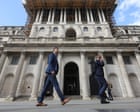
The commuter train smells of damp wool and stale coffee at 7:14 AM. For three years, it smelled of nothing at all except the clean hum of a refrigerator and the scent of toast popping up in a quiet kitchen.
Now, thousands of people are back on the train. And they are furious.
At Barclays, one of Britain's oldest banking titans, a quiet rebellion has spilt out into the open. Thousands of corporate employees, accustomed to the quiet rhythm of remote work, received a directive that felt less like a management policy and more like an eviction notice. Come back to the desk. Five days a week. No excuses.
The corporate response was immediate, loud, and organizational. Petitions circulated. Internal message boards lit up with grievances. The clash is not merely about office space or desk occupancy rates. It is a fundamental collision between two entirely different ways of understanding human value, time, and trust.
To understand why thousands of desk workers are willing to risk their standing with a major financial institution over a chair, you have to look past the spreadsheets and examine what actually happened to the modern professional during the great remote experiment.
For decades, the geography of white-collar work was simple. You lived where you could afford rent, and you traveled to a central hive to perform your digital labor. The commute was the invisible tax you paid for having a career. It consumed ten, fifteen, twenty hours a week—time carved out of sleep, family dinners, and quiet mornings.
Then came the spring of 2020.
For many, the initial panic of lockdown quickly gave way to a startling revelation. The work still got done. Spreadsheets balanced. Code compiled. Deals closed. Emails were answered at 9:00 AM without anyone needing to spend forty-five minutes on a crowded underground carriage breathing stale air.
People discovered something dangerous to the traditional corporate mindset: time.
They learned what it felt like to eat lunch with their children. They realized they could exercise before logging on, eliminating the exhaustion that used to claim their entire Sunday evening. They optimized their environments. They built lives that did not revolve entirely around the glass-and-steel monolith downtown.
When organizations like Barclays issue blanket return-to-office mandates, they are not just asking employees to sit in a different room. They are demanding the forfeiture of that reclaimed time. They are asking people to unlearn a lifestyle they spent years refining.
Consider a hypothetical employee named Sarah, a mid-level risk analyst at Canary Wharf. In 2021, Sarah moved an hour outside London to a small town where her money bought a garden instead of a cramped flat. Her productivity metrics remained in the top decile. Her team collaborated seamlessly via digital channels. When the mandate dropped, Sarah realized her employer was essentially asking her to spend two hours a day moving her physical body from one room with a laptop to another room with a laptop, at a personal cost of hundreds of pounds a week in rail fares and lost hours.
The math no longer made sense. And when math stops making sense to intelligent people, resistance follows.
The justification from leadership is always framed around culture, mentorship, and innovation. The argument goes like this: serendipity cannot happen over video calls. Great ideas are born at the coffee machine. Culture is forged in the hallways, not in a grid of muted Zoom windows.
There is a kernel of truth here. Spontaneous interaction has value. Junior employees do benefit from absorbing the unwritten rules of an institution by watching seasoned veterans navigate a crisis in real time.
Yet, treating physical presence as a proxy for dedication is a lazy substitute for effective management.
When a bank relies on forced proximity to manufacture culture, it usually reveals a deeper vacuum. If an institution's culture evaporates the moment people stop sharing the same air conditioning system, that culture was never strong to begin with. It was just captive compliance.
Furthermore, the modern corporate office has changed. The corner office with a mahogany desk is largely gone, replaced by the agile, hot-desking, open-plan floor. Employees arrive after a grueling commute only to sit in a loud, echoing room with poor acoustics, spending eight hours on video calls with colleagues who happen to be sitting in a different zone of the exact same building.
The absurdity of this setup is not lost on the workforce. When you commute for ninety minutes to sit on a Microsoft Teams call next to someone you could have messaged from your kitchen, the psychological contract between employer and employee fractures.
Resistance in the modern corporation rarely looks like the striking dockworkers of the twentieth century. There are no picket lines outside the glass doors of headquarters. Instead, the rebellion is digital, legal, and behavioral.
It looks like internal petitions signed by thousands of anonymous voices. It looks like quiet quitting—complying with the letter of the mandate while withholding the discretionary effort that used to define top performers. It looks like talent slowly, methodlessly drifting toward competitors who offer genuine flexibility.
Executives find themselves caught in a bind. They are under pressure from commercial real estate commitments, boardrooms steeped in traditional views of leadership, and a genuine anxiety about corporate cohesion. But the workforce has evolved past the era of mandatory centralization.
You cannot unring a bell. Once people know that their work can be executed with excellence from their own homes, forcing them back solely for the sake of optics feels less like leadership and more like management by nostalgia.
The tension at Barclays is a bellwether. It signals the end of the easy compromises of the post-pandemic transition. Organizations can no longer pretend that remote work was just a temporary glitch in the matrix. It was an evolutionary leap, and the workforce adapted.
The train at 7:14 AM is still full of tired people clutching paper cups. But many of them are wondering why they are there, staring out the window at the gray morning, calculating the cost of a desk they never asked for, in a city they no longer need to be in.