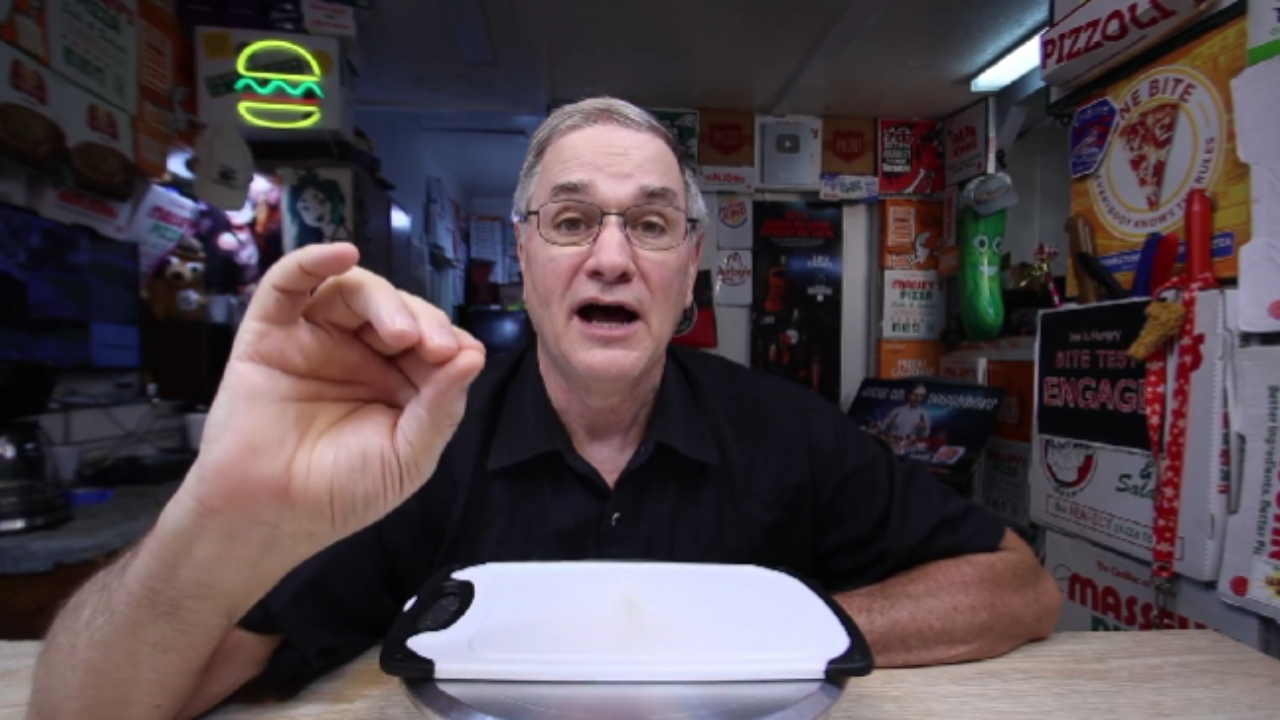
The Crunch Heard Round the Web
Joe was sitting in his parked car, holding a greasy cardboard box, when his phone started to blow up.
He didn't set out to make history. He wasn't backed by a PR firm, he didn't have a high-end camera crew, and he certainly hadn't spent weeks analyzing algorithmic trends to optimize his audience retention. He was just hungry. Specifically, he was a guy who went by the name "Joe Is Hungry" online, standing at the crossroads of an ordinary afternoon and a craving for fried chicken.
He picked up a piece of KFC Popcorn Chicken, held it up to his lens, took a bite, and spoke his mind.
That was it.
No explosive special effects. No dramatic background music. Just an honest reaction from a regular guy doing something millions of us do every single day. Yet, within hours, that short video began rolling downhill like a snowball on a steep slope, gathering momentum until it smashed straight through the noise of the internet.
Millions of views later, Joe found himself staring at his screen in genuine disbelief. He never expected a casual review of fast food to go viral. But the internet had other plans.
Why the Internet Starved for Realness
To understand why a bite of fast food transformed Joe into an overnight phenomenon, you have to look at the landscape of modern media.
We live in an age of hyper-polished content. Creators spend thousands of dollars on lighting rigs, hire editors to cut out every micro-pause, and script every joke to appeal to maximum demographics. It is slick. It is professional. And, frankly, it often feels completely hollow.
When everything looks like an advertisement, nothing feels real.
Enter Joe.
Imagine a hypothetical viewer named Sarah. Sarah finishes a ten-hour shift at work, sits on her couch, and scrolls through her feed. She sees polished influencer after polished influencer telling her about five-dollar coffees and luxury vacations. It feels distant. Then, Joe pops up on her screen. He’s sitting in his car. The lighting is just whatever the afternoon sun happens to offer. He opens a box of popcorn chicken, eats one, and tells her—without any fluff—exactly how it tastes.
For Sarah, and for millions like her, that moment feels like sitting next to a friend.
It wasn’t about the chicken. It was about the honesty.
The human brain is hardwired to recognize authenticity. Behavioral scientists often talk about how we pick up on micro-expressions and subtle shifts in tone—signals that tell us whether someone is selling us a line or just sharing a moment. Joe wasn’t trying to sell anything. He was just sharing a meal.
When creators remove the filter, the audience leans in.
The Mechanics of an Algorithmic Aftershock
While human connection provides the spark, the platform provides the oxygen.
How does a video actually go from a few hundred views to millions overnight? It comes down to a sudden, beautiful alignment between human behavior and lines of code.
When Joe posted his review, early viewers didn't just watch it; they finished it. In the world of online video, watch time is king. When an algorithm detects that people are watching a clip all the way to the end, it makes a simple mathematical assumption: this is worth showing to someone else.
Then came the comments.
- "Why am I watching a guy eat popcorn chicken at 2 AM?"
- "This man speaks the truth."
- "Now I need to go to KFC."
Every comment, every share, every replay added fuel to the fire. The algorithm took those engagement signals and pushed the video out of Joe's small subscriber base and directly onto the main feeds of millions of strangers.
Suddenly, a guy sitting in a sedan eating fried poultry was competing for attention alongside multi-million-dollar music videos and high-budget movie trailers.
And he was winning.
The Heavy Weight of Going Viral
Virality sounds like a dream until it actually happens to you.
For Joe, the shock was immediate. One moment, you are posting videos for a small, tight-knit community that feels manageable. You know the commenters by name. You reply to their messages while eating dinner. It’s cozy. It’s safe.
The next moment, the digital floodgates burst open.
Your notification drawer becomes a waterfall of numbers scrolling so fast you can't read the text. Thousands of messages pour in every hour. Media outlets start reaching out. Strangers dissect your expression, your voice, your car interior, and your choice of dipping sauce.
The pressure shifts in an instant.
Suddenly, every video you post after the big hit feels like a test. Will the next one get a million views? What if it only gets ten thousand? Did you lose the magic? Did you just get lucky?
This is the hidden cost of accidental fame. When success comes without a roadmap, building the next step requires navigating through thick fog. Many creators freeze under that spotlight. They try to recreate the exact conditions of their viral hit, churning out forced sequels that lack the initial spark.
Joe’s challenge wasn't getting people to watch once. It was figuring out how to stay true to himself when millions of extra eyes were suddenly watching every move.
What the Popcorn Chicken Review Taught Us All
There is a quiet lesson sitting at the bottom of that greasy box of chicken, and it extends far beyond food reviews or internet algorithms.
We spend so much time overthinking our passions. We plan, we polish, we wait for the perfect moment, the perfect camera, or the perfect strategy before we share our work with the world. We convince ourselves that unless something is flawless, it isn't worth putting out there.
Joe didn't wait for perfection. He just pressed record.
His story reminds us that audience connection isn't bought with expensive equipment or engineered with clever tactics. It is earned through raw, unvarnished presence. People don't fall in love with polished algorithms; they fall in love with human beings who aren't afraid to be themselves on screen.
Somewhere right now, another creator is sitting in a car, or at a desk, or in a kitchen, holding a phone and wondering if anyone cares about what they have to say.
The answer is simple.
They do. You just have to hit publish.