You can finally own the black bow tie, the pressure cookers, and the actual historic home of the man who turned fried chicken into a global empire.
For over fifty years, a single family protected an extraordinary cache of history in Shelbyville, Kentucky. Tommy and Cherry Settle bought Blackwood Hall and the adjacent Claudia Sanders Dinner House directly from Colonel Harland and Claudia Sanders back in 1974. They kept everything. Now, managed by The Menish Group Auction & Real Estate, that entire time capsule is hitting the block.
If you think this is just another run-of-the-mill celebrity estate sale, you're missing the point. This auction pulls back the curtain on how a roadside roadside hustler engineered one of the most recognizable corporate personas in human history.
Inside the Blackwood Hall Estate and Restaurant Lots
The headlining real estate lots include Blackwood Hall, the 5,000-square-foot home where the Sanders family lived for 21 years. This wasn't just a house. It functioned as an operational hub. The Colonel used the property to train early KFC franchise owners on his proprietary pressure-cooking technique, while Claudia packed the secret spice mixes.
Right alongside the home sits the Claudia Sanders Dinner House. Opened in 1968 after the Colonel sold the main corporation, this establishment let him serve chicken his exact way when corporate recipes started changing. Both iconic properties are up for grabs via sealed bids.
Real estate is only part of the story. The physical memorabilia tells the real tale of the man behind the white suit.
Personal Artifacts and the Legend of the 1964 Planner
Harland Sanders didn't just wake up wearing a white suit and a goatee. Bill Menish, the lead auctioneer handling the sale, points out that the persona was a carefully crafted marketing strategy.
"He didn't dress like that before he was starting to build Kentucky Fried Chicken. He adopted the colonel: the clothes, the bow tie, the glasses, the goatee."
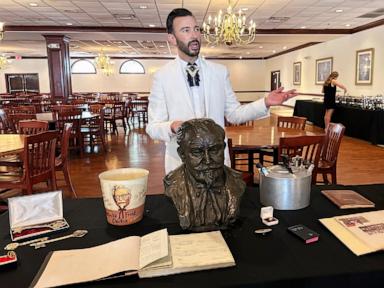
Bidders are fighting over items that capture that exact transition. You can bid on his personal watches, vintage cutlery sets, a bust sculpted by his own daughter, a commercial gas range from the residence, and an official birthday greeting sent by former President Richard Nixon.
The crown jewel of the memorabilia lineup? A brown leather daily planner from 1964. Inside, handwritten notes outline measurements for herbs and spices. Decades ago, corporate lawyers actually fought to keep its contents private before dropping legal actions. Whether it holds the ultimate commercial secret or just daily operational notes, collectors are treating it like holy writ.
Why This Collection Survived Intact
Most fast-food founders leave behind corporate archives controlled by boards of directors. Not Harland Sanders. Because he sold the company in 1964 and kept a personal relationship with the Settles, his domestic and entrepreneurial life stayed local.
The Settle family didn't toss out old receipts or clear out the kitchen. They maintained the cash registers, the Bibles, and the travel knife kits. That stewardship means buyers aren't getting replica props manufactured for a museum gift shop. They're getting grease-stained kitchen tools and worn leather datebooks touched by the man himself.
Bidding is happening live in Shelbyville, drawing international attention from fast-food historians and hardcore collectors alike. You might not walk away with Blackwood Hall or the 1964 planner, but the sheer scale of this auction proves that the myth of the Southern gentleman in the white suit remains as potent as ever.