The coffee in the paper cup had gone cold hours ago, but the chill that settled into the marrow of Harvey’s bones had nothing to do with the temperature of the room.
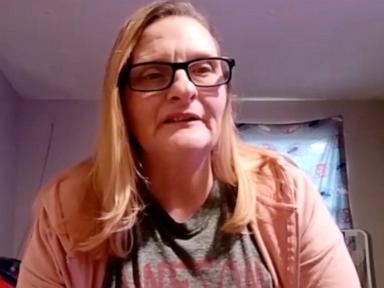
She was seventy-two years old. Her hands, worn by decades of folding laundry, tending to garden beds, and holding the small, soft palms of her grandchildren, now trembled slightly against the cold laminate of a folding table. Across from her sat strangers in uniforms, speaking a language composed entirely of acronyms and quiet certainty. They did not raise their voices. They did not need to. The machine had spoken, and in the strange, hyper-lit purgatory of a modern retail security office, the machine's word was scripture.
It had started with a mild Tuesday afternoon errand. A few groceries, a routine stop, the ordinary drift of an elderly woman moving through the hum of fluorescent lights. Then came the hand on the shoulder—or rather, the sudden, paralyzing pivot of reality from mundane to terrifying. Security guards, acting on an alert piped straight from a proprietary software pipeline, surrounded her. They spoke of stolen merchandise. They spoke of a match.
To the software running silently on a remote server, Harvey was not a person with a history, a family, or a soul. She was a vector of pixel coordinates. She was a set of distances between the inner corner of an eye and the bridge of a nose, translated into a string of numbers and checked against a database assembled from fragments of public and private surveillance. Somewhere in that invisible digital ether, a threshold was crossed. A confidence score ticked past an arbitrary decimal. And just like that, a grandmother shopping for milk became a suspect in a ledger she had never agreed to sign.
We have built a world that worships speed and fears ambiguity. We have handed over the ancient, messy, deeply human art of judgment to algorithms that cannot blink, cannot hesitate, and—crucially—cannot explain themselves.
Consider how the illusion works. We are told that automated facial recognition is a shield, a silent guardian standing watch over our public spaces. We imagine a crystal-clear lens peering into the crowd, calmly distinguishing the innocent from the guilty with the icy precision of a movie villain’s supercomputer. The reality is far more fragile and far more terrifying. The cameras are often grainy, mounted at awkward, unflattering angles in the harsh glare of overhead lights. The lighting shifts. Shadows carve unexpected valleys across cheekbones. People age, gain weight, squint against the sun, or wear tired expressions that distort familiar features.
When a human security guard looks at a stranger, they bring a lifetime of contextual empathy. They notice the hesitant gait, the confusion, the startled look of an elder who has never been in trouble a day in her life. They read the room.
An algorithm reads only math. And math has no heart.
When Harvey’s case spilled out into the open—when the lawsuit was filed, laying bare the sheer absurdity of the accusation—it exposed a fracture line running straight through modern civic life. This was not merely a glitch in a piece of code. It was a collision between two incompatible philosophies of existence: one that sees human beings as complex, evolving mysteries, and another that reduces us to data points ripe for automated sorting.
The software company behind the technology will tell you that their systems are continually improving. They will talk about error rates dropping by fractions of a percent, about neural networks trained on millions of faces, about calibration and optimization. But statistics are cold comfort when you are the outlier. When you are the one false positive in a hundred thousand, the aggregate accuracy of the system matters very little. To you, the error rate is one hundred percent.
Error.
The word itself sounds clean, antiseptic, easy to fix with a quick patch or a reboot. But human lives do not reboot.
Imagine standing in a public corridor, your reputation instantly vaporized by a glowing alert on a guard's handheld device. Imagine the stares of strangers who do not know you, who do not care to know you, because the badge and the screen have already assigned you a narrative. The humiliation is not abstract. It burns in the chest. It dries the mouth. It makes the familiar streets outside feel suddenly hostile, as though the very air is watching you, calculating the statistical probability of your guilt.
What makes these automated profiling systems so insidious is their invisible authority. They wear the immaculate cloak of objectivity. We are culturally conditioned to believe that computers do not lie. Numbers do not have bad days. Algorithms do not harbor hidden prejudices. Yet, studies and real-world audits have repeatedly demonstrated that facial recognition systems carry deep, systemic biases. They misidentify people of color at staggering rates. They struggle with older faces, whose features have been softened and carved by time. They are built on skewed datasets, trained on images that do not represent the rich, messy tapestry of humanity in all its varied forms.
Yet, despite these known flaws, we deploy them everywhere. They slip quietly into airports, retail stores, transit hubs, and city streets, authorized by procurement contracts signed in quiet boardrooms far away from the citizens whose movements they track.
When Harvey stood up and decided to fight back through the courts, she was not just seeking compensation for a ruined afternoon and a fractured sense of safety. She was performing an act of radical reclamation. She was demanding that the architects of these surveillance loops look past their dashboards and confront the human collateral of their ambition.
There is a profound arrogance in the belief that we can automate human dignity. We act as though convenience and security are scales that must be balanced, and that if we throw enough privacy and civil liberty onto one side, we will somehow achieve safety on the other. But that is a false ledger. When you allow automated systems to accuse, detain, and label without meaningful human oversight or accountability, you do not create a safer society. You create a paranoid one.
The lawsuit winding its way through the legal system is a mirror held up to our collective complacency. It forces us to ask a question we have spent the last decade dodging: Who bears the burden of a machine's mistake?
Is it the multi-billion-dollar technology vendor whose software generated the false match? Is it the corporate retailer who chose to deploy the system without fully understanding its limitations or training its staff to question its infallibility? Or is it the seventy-two-year-old grandmother who simply wanted to buy groceries on a Tuesday afternoon, only to find herself treated as an anomaly to be resolved by a database?
The answer should be obvious, but the architecture of modern technology is designed to diffuse responsibility until it vanishes entirely. The vendor blames the camera angle. The retailer blames the vendor's software. The software blames the neural network's training weights. Everyone is responsible, which means no one is responsible.
Except for Harvey. She remembers every second of it.
The afternoon shadows are lengthening now across the porch. The world outside continues its relentless hum, buzzing with new notifications, software updates, and algorithmic prompts designed to make life frictionless and efficient. But out here, on the steps of an ordinary house, the silence carries a heavier weight.
The machine is still running somewhere, scanning a crowd, calculating distances, looking for a match. And somewhere out in the world, another human being is walking toward an invisible tripwire, completely unaware that the future has already decided who they are.