For decades, the rural contract was simple. You sold your milk to the regional processor, absorbed whatever price they dictated at the loading dock, and prayed the cows stayed healthy through a nor'easter. When a major corporate buyer like Walmart entered your orbit, offering guaranteed volume contracts, it felt like salvation. But corporate supply chains are fickle beasts. A procurement pivot, a supply agreement expiration, or a shift in sourcing strategy can leave an agricultural operation exposed overnight.
That vulnerability is precisely what drove a Massachusetts dairy farmer to walk away from a standard retail supply arrangement and lease acreage to a commercial solar developer instead. The resulting cash flow is roughly $1,000 a week in steady lease revenue. No feed costs. No fluctuating wholesale milk price checks. No veterinary emergencies at three in the morning.
Yet viewing this purely as an individual success story misses the structural transformation happening across the American countryside. Agrivoltaics—the dual-use practice of agricultural production and photovoltaic electricity generation on the same land—is rewriting the survival math for multi-generational farms.
The Anatomy of the Agricultural Squeeze
Farming has always been a margin trap. Equipment costs scale exponentially while commodity prices remain flat or volatile. When a mid-sized dairy operation loses a major commercial contract, the capital reserves rarely stretch far enough to pivot. Traditional liquidation means selling off the herd, auctioning iron, and watching land get subdivided into suburban cul-de-sacs.
The industrial food complex encourages perpetual expansion. Farms must grow larger to survive, which requires heavier debt loads, which in turn demands higher output. It is a treadmill with no off switch.
Leasing land for solar development introduces a radically different economic model. Instead of extracting value through biological growth—milk, corn, or beef—the land generates value through real estate and energy infrastructure. A dependable lease payment provides a financial floor. It insulates the farm owner from drought, bad harvest years, and predatory processor pricing.
Critics often decry the loss of agricultural land to solar panels, arguing that energy production should not compete with food production. That perspective ignores how dual-use installations actually operate.
Grazing Beneath the Panels
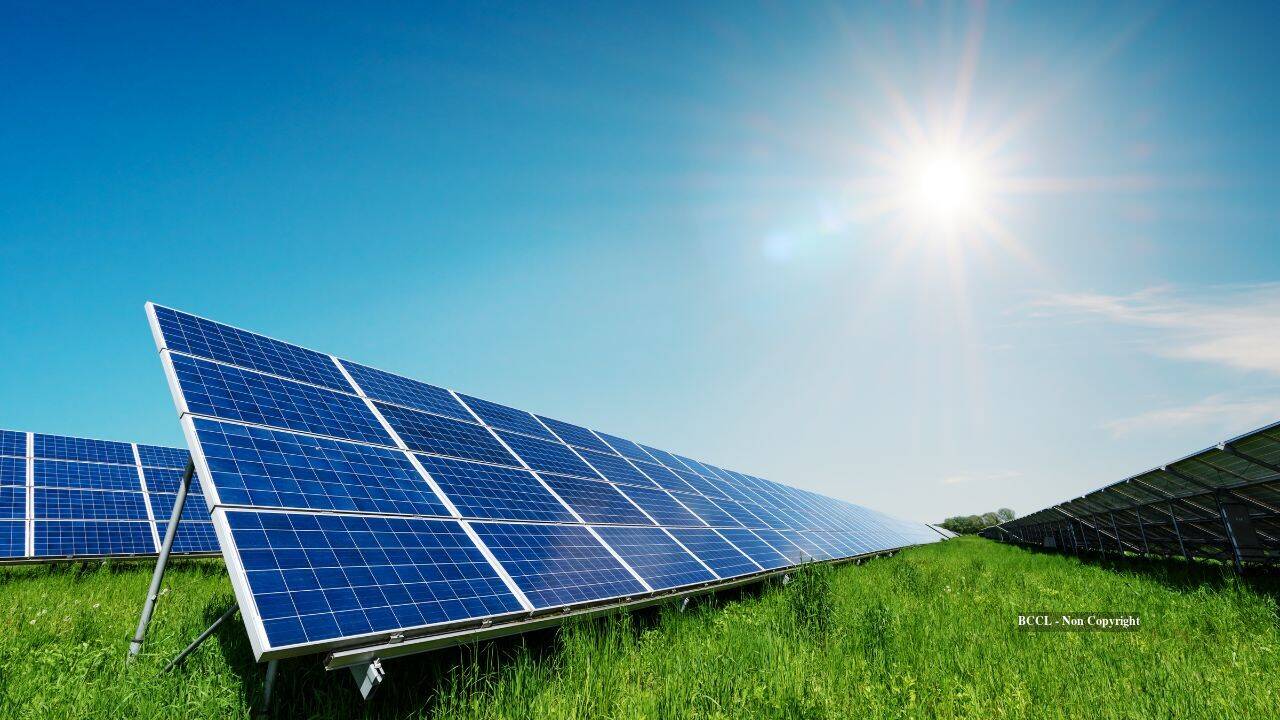
Modern agrivoltaic design does not require paving over a pasture or turning fertile soil into a dead zone. The solar arrays are mounted on elevated steel piles, high enough to clear farm machinery or allow livestock to graze directly underneath.
Sheep are the primary beneficiaries of this arrangement. They are ideal groundskeepers for solar installations. They keep the grass trimmed short enough to prevent shading on the panels, they do not chew on wiring the way goats might, and they thrive on the semi-shaded forage beneath the structures.
For a dairy farmer looking to diversify or transition away from fluid milk, integrating livestock under solar arrays creates a secondary revenue stream. The farmer collects the land lease from the energy company while simultaneously running a profitable sheep or meat-processing operation on the exact same acreage.
The shade provided by the panels can also benefit certain crops and pasture grasses during punishing summer heatwaves. Evapotranspiration decreases when soil is shielded from direct, brutal afternoon sunlight. Moisture retention improves. Pastures stay greener longer into the dry months.
The Regulatory and Grid Bottlenecks
If solar leasing is such an obvious financial lifeline, why isn't every struggling agricultural operation converting tomorrow?
The answer lies in the painfully bureaucratic and capital-intensive reality of interconnection queues. Generating electricity is only half the battle. You have to get that power onto the local grid. In many rural regions, the existing electrical infrastructure was built decades ago to serve modest local demand, not to inject megawatts of decentralized solar generation back into the transmission lines.
Upgrading local substations and distribution lines can cost millions of dollars. Utilities often place the burden of these grid upgrades entirely on the developer, creating years-long delays and killing projects before a single pile is driven into the earth.
Furthermore, local zoning boards frequently push back. Town meetings become battlegrounds between preservationist residents who want their views untouched and farmers desperate for alternative revenue streams to keep their property taxes paid. The friction between historic preservation and renewable energy infrastructure is real, and local ordinances often restrict agricultural land conversion even when the farming operation itself is on the brink of bankruptcy.
Beyond the Dairy Check
When a single agricultural parcel generates steady, recurring income independent of weather and market crashes, the psychological weight on the land owner shifts. The constant anxiety of seasonal survival gives way to long-term stewardship.
This financial stability allows farmers to invest in regenerative techniques on their remaining acreage. They can afford to experiment with cover crops, no-till methods, and soil health improvements that require time to pay off because they are no longer living paycheck-to-paycheck on the fluid milk market.
The Massachusetts dairy operator who traded a Walmart-dependent supply chain for a solar lease did not abandon agriculture. They modernized their business model. They recognized that land is the ultimate asset, and in the twenty-first century, harvesting sunlight can be far more profitable than milking cows at a structural loss.
The future of the family farm will not be secured by trying to out-scale industrial agribusiness. It will be secured by diversification, grid integration, and finding ways to make the sun work just as hard as the soil.