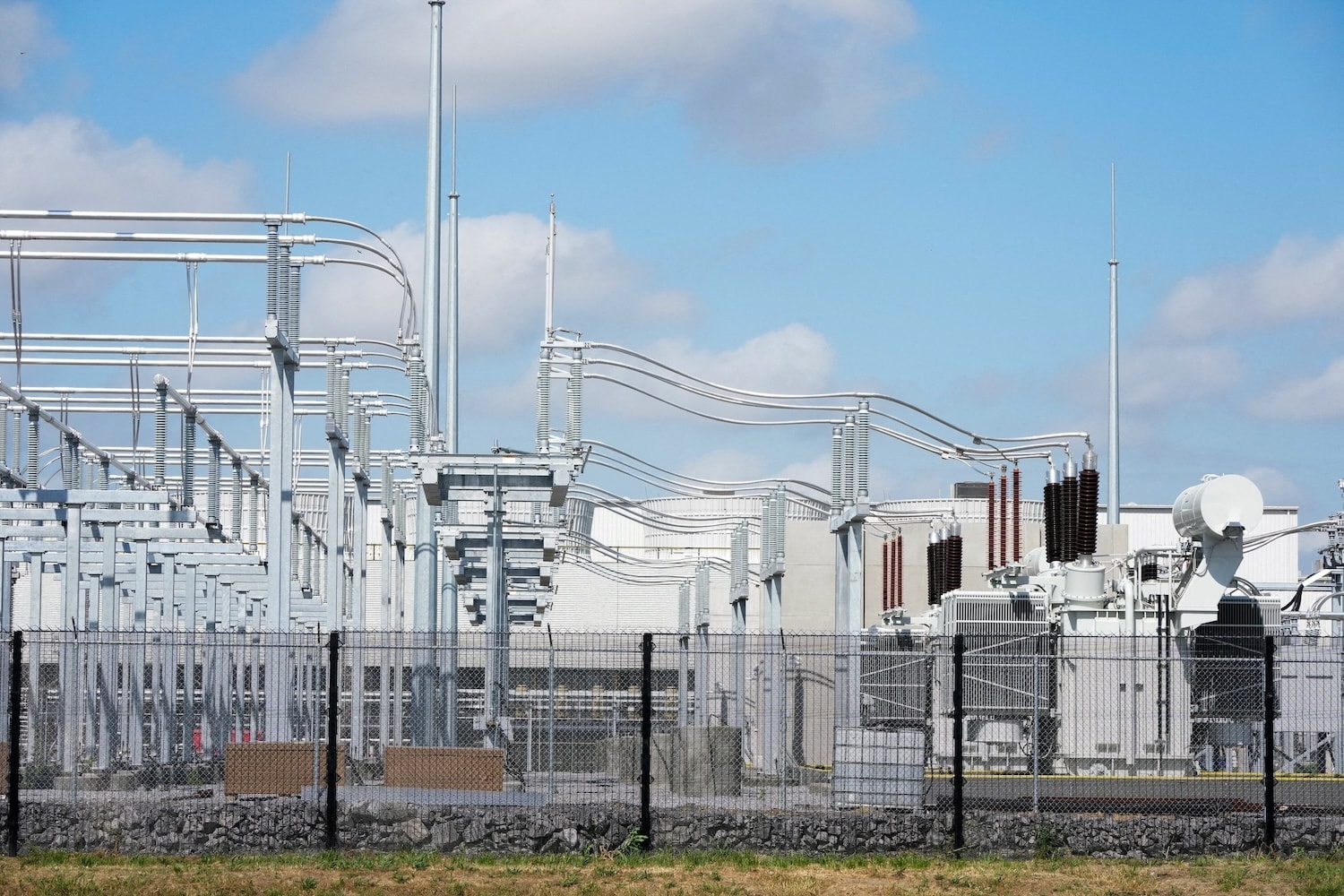
A federal class action lawsuit filed on June 9, 2026, in the Northern District of Mississippi reveals the explosive hidden cost of the global artificial intelligence arms race. More than 10,000 residents living near Southaven, Mississippi, have sued Elon Musk’s xAI, its parent company SpaceX, and subsidiary MZX Tech. The federal court filing alleges that a massive on-site power plant generating electricity for xAI’s nearby Colossus data center cluster has turned the region into an unlivable nightmare of continuous, jet-engine-like noise and low-frequency vibrations.
This litigation exposes a structural crisis facing the entire tech industry. Artificial intelligence models require an unprecedented amount of electricity to train and operate. Because local electrical grids cannot scale fast enough to meet these demands, tech giants are forced to deploy makeshift, industrial-scale fossil fuel generation directly into residential neighborhoods. In Southaven, this localized energy crisis has boiled over into a full-scale legal battle over public nuisance, collapsing property values, and environmental justice. Recently making headlines recently: The Macroeconomics of Kinetic Interception: Deconstructing Ukraine's Decentralized Anti-Ballistic Architecture.
[Image of hydrogen fuel cell]
The Forty Seven Turbine Wall of Sound
The conflict centers on a former vacant power plant in Southaven, located just south of the Tennessee state line. To power the Colossus 1 and Colossus 2 data center complexes in South Memphis, xAI bypasses the local utility grid by running an extraordinary fleet of temporary mobile gas-fired turbines. What began last year as an eighteen-turbine deployment has aggressively multiplied. By May 2026, state regulatory filings confirmed that xAI had escalated the operation to 47 active turbines on the site. Further information on this are detailed by TechCrunch.
[Image of the human digestive system]
A single industrial gas turbine produces substantial acoustic and environmental impact. Multiplying that footprint by nearly fifty creates a permanent wall of sound. The federal complaint states that the resulting noise is omnipresent and inescapable, easily penetrating the walls of residential homes and shattering the peace of the community. Residents report that the constant mechanical hum and deep structural vibrations have induced severe emotional distress and degraded their physical health.
In an attempt to quiet the public outcry, xAI previously installed a 7 million dollar sound barrier wall around the Southaven facility. According to the plaintiffs, this mitigation effort has done virtually nothing to stop the low-frequency vibrations that rattle windows and shake foundations around the clock.
Exploiting the Temporary Mobile Loophole
The legal vulnerability for Musk’s corporate empire stems from how these turbines were deployed. Under Mississippi environmental regulations, portable or temporary generators are permitted to operate for up to one year without a permanent stationary air permit. The tech firm utilized this clause by mounting its natural gas turbines onto flatbed trailers, classifying them as temporary mobile installations.
This legal maneuver is facing severe pushback from multiple fronts. The recent noise lawsuit follows a separate federal action filed in April 2026 by the NAACP and the Southern Environmental Law Center. That lawsuit accuses xAI of open violations of the federal Clean Air Act, asserting that the company operated 27 of its methane gas turbines between August and December 2025 before receiving any formal state air authorizations. By continually adding more trailer-mounted turbines under the guise of temporary equipment, the company has managed to evade the rigorous air-quality monitoring normally mandated for a permanent power plant of this scale.
The Clean Air Act lawsuit carries immense financial stakes, with statutory penalties reaching up to 124,426 dollars per day for each individual violation. When multiplied across dozens of unpermitted turbines over months of continuous operation, the potential liabilities quickly scale into tens of millions of dollars. The legal pressure intensified further when the United States Department of Justice signaled its intent to intervene in the environmental case, recognizing that the Southaven dispute represents a critical policy bottleneck for national AI infrastructure.
Corporate Restructuring Meets Environmental Liability
The inclusion of SpaceX as a primary defendant in this class action highlights a critical corporate shift. During the first quarter of 2026, SpaceX completed an internal restructuring that transformed xAI into a wholly owned subsidiary of the aerospace giant. This consolidation unified Musk’s most capital-intensive enterprises under a single corporate umbrella, ahead of a highly anticipated SpaceX public offering.
| Corporate Entity | Role in Southaven Dispute | Legal Exposure |
|---|---|---|
| xAI | Operates the Colossus data center cluster | Primary target for public nuisance and environmental claims |
| SpaceX | Parent company following Q1 2026 acquisition | Inherits full financial and operational liability of subsidiaries |
| MZX Tech | Operational subsidiary managing power infrastructure | Co-defendant in noise and Clean Air Act lawsuits |
This corporate integration means that the financial fallout from the Southaven power plant directly impacts SpaceX's balance sheet. With valuation estimates hovering near 1.8 trillion dollars, the aerospace firm cannot easily dismiss a federal class action representing over 10,000 plaintiffs. The litigation threatens to disrupt the operational timeline of the Colossus data centers, which serve as the computational backbone for Musk’s AI ambitions. If the federal court grants a preliminary injunction to halt the turbines, the processing power of one of the world's largest AI clusters could be severely throttled.
A Growing National Backlash
The crisis in Mississippi is not an isolated incident. It is the latest flashpoint in a widening nationwide revolt against the physical footprint of artificial intelligence infrastructure. Across the United States, local communities are discovering that the virtual cloud requires massive, noisy, and polluting physical factories to exist.
- Missouri: In Festus, a fierce public backlash against a proposed 6 billion dollar AI data center project resulted in a political uprising, where voters successfully recalled four city council members who had approved the development.
- Michigan: Local resident coalitions have successfully stalled major data center expansion plans linked to tech giants Oracle and Microsoft, citing concerns over massive grid strain and localized cooling noise.
- Utah: State regulators implemented stringent new oversight mechanisms targeting AI developments, following public pushback over the immense water and energy resources required to sustain large-scale computing hubs.
This mounting resistance has reached the federal level. Lawmakers have introduced the AI Data Center Moratorium Act in Congress, a legislative push aimed at temporarily halting the construction of new data centers nationwide until comprehensive environmental and grid-impact studies can be completed.
The tech industry's underlying problem is fundamental physics. Training advanced frontier models demands a level of continuous baseload power that modern green energy grids cannot instantly provide. When tech firms bypass public utilities by running massive banks of localized fossil fuel generators, they shift the environmental and acoustic costs entirely onto the surrounding communities. The Southaven class action demonstrates that the public is no longer willing to accept that trade-off silently. The outcome of this federal case will dictate the regulatory constraints for AI infrastructure deployment for the next decade.