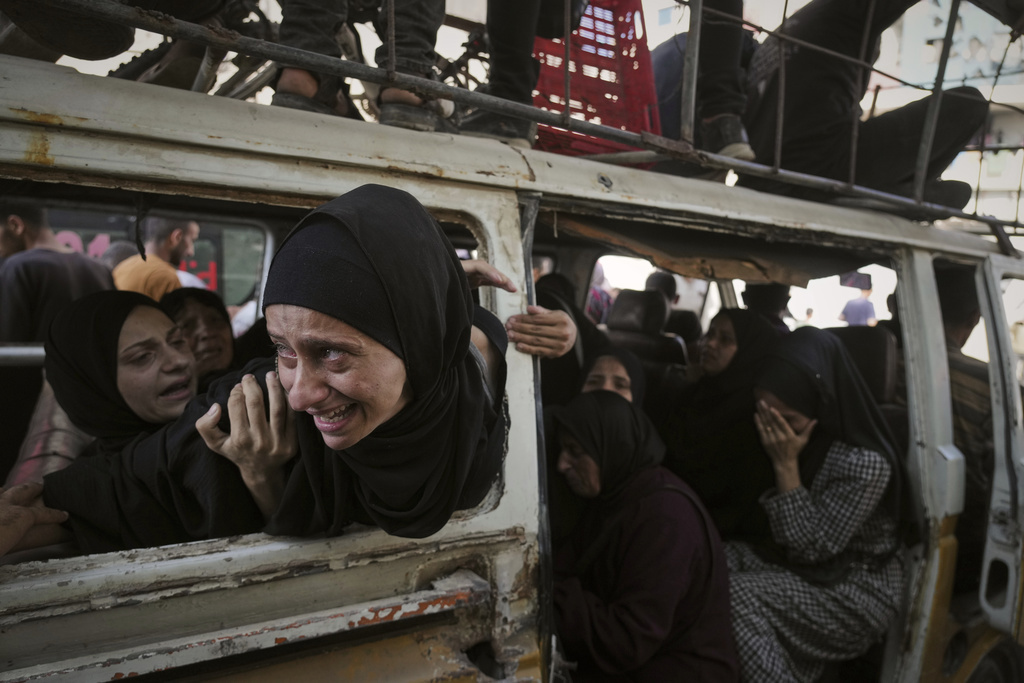
The narrative surrounding the humanitarian catastrophe in Gaza has solidified into a comfortable, predictable consensus. Media outlets run heartbreaking profiles of international aid workers sharing their meager rations, watching their local colleagues waste away, and lamenting a systemic failure of supply lines. The villain is always external—bureaucratic blockades, military choke points, or geopolitical cruelty.
This diagnosis is lazy. It misses the fundamental, structural rot within the multibillion-dollar humanitarian industrial complex.
I have spent fifteen years embedded in logistics operations across active conflict zones, from South Sudan to the Levant. I have watched legacy NGOs burn through hundreds of millions of dollars while delivering pennies on the dollar to the actual victims. What we are witnessing in Gaza is not just a blockade. It is the spectacular, inevitable collapse of an outdated, risk-averse, top-heavy aid architecture that prioritizes institutional self-preservation over actual distribution.
The harsh reality is that even if every border crossing opened fully tomorrow, the current humanitarian framework would still fail. The system itself is broken.
The Myth of the Supply Chokepoint
Every mainstream report focuses entirely on the number of trucks crossing the border. This is a flawed metric that legacy organizations use to shield themselves from accountability. They treat the border crossing as the finish line. In reality, the border crossing is barely the starting line.
The real disaster occurs in the logistical vacuum of the post-entry zone. Aid agencies rely on a centralized warehousing model designed for peaceful, predictable environments. They pile supplies into massive, high-profile hubs that become instant targets for looting, black-market diversion, and military strikes.
Consider the mechanics of a standard supply chain. In any corporate logistics framework, a high-risk delivery zone requires "decentralized staging"—breaking bulk cargo into tiny, agile, decentralized networks immediately upon entry. Instead, the UN and major international NGOs insist on massive, slow-moving convoys that require complex security clearances and hours of bureaucratic signaling.
They are running a 1990s logistical playbook in a 2026 warfare environment.
When a convoy gets blocked or looted, the legacy agencies issue a press release blaming external forces. What they do not tell you is that their own internal risk-management policies prohibit them from using alternative, informal distribution networks. They would rather a warehouse sit full and inaccessible than risk the insurance liability of using non-traditional local actors to move the food.
The Aid Worker Martyr Complex Protects the C-Suite
The current media strategy of major aid organizations is to put their starving field staff on camera. It is a powerful emotional play, but it masks a deeper institutional cowardice.
The field workers—the local drivers, logisticians, and nurses—are indeed enduring horrific conditions. But they are being used as human shields for the reputational risk of their employers. International NGOs operate under strict compliance mandates dictated by Western donors. These mandates require immense paperwork, biometric tracking of recipients, and vetting procedures that are completely impossible to execute in an active combat zone.
Imagine a scenario where a local logistics coordinator realizes they can bypass a blocked checkpoint by paying off a local actor or partnering with an unvetted neighborhood committee. Under current USAID or European framework agreements, doing so would instantly void their funding and trigger an international audit.
So what does the organization do? They tell the coordinator to stand down. The food rots. The staff goes hungry. The organization retains its clean compliance record and uses the resulting tragedy to launch a new fundraising campaign.
The institutional incentive structure is entirely warped. The system rewards compliance over delivery, and it rewards victimhood over innovation.
The Flawed Premise of "People Also Ask"
If you look at what the public is asking about the crisis, the disconnect becomes even more obvious. People want to know: Why can't the UN just drop food from planes? Or, Why isn't there enough funding for Gaza?
These questions are fundamentally flawed because they accept the premise that the problem is a lack of resources or a lack of physical access.
First, let us address the funding myth. The humanitarian response for Palestine is one of the most heavily funded operations in human history per capita. Money is not the constraint. The constraint is the velocity of capital. The money is trapped in Geneva, New York, and Amman, paying for high-level coordination meetings, cluster-system consultants, and armored SUVs.
Second, the fixation on airdrops or maritime corridors misses the entire point of distribution mechanics. Airdrops are a logistical gimmick. They are wildly inefficient, incredibly dangerous, and deliver a fraction of what a functional ground network can move. They exist primarily for political theater—to show Western audiences that "something is being done"—while doing nothing to solve the distribution failure on the ground.
The real question we should be asking is this: Why are we still relying on centralized, Western-led institutions to manage a distribution network that requires hyper-local, decentralized agility?
Decentralize or Dissolve: The Only Viable Path Forward
The contrarian truth is that the legacy humanitarian system is unfixable in its current form. It cannot adapt to modern urban warfare because its entire operational model is based on the consent and stability of nation-states. When that consent vanishes, the system paralyzes.
If we want to stop the starvation of both civilians and field workers in Gaza, we have to bypass the legacy architecture entirely. This approach comes with massive risks, and it is a pill that western donors are terrified to swallow.
- Direct Cash Over Cargo: Stop sending physical trucks of food managed by international bureaucracies. Shift entirely to encrypted digital cash transfers directly to local markets and informal merchants. Even in the worst siege conditions, commercial markets are incredibly resilient. Smugglers and local merchants move goods faster and more efficiently than any UN convoy ever will. If you inject liquidity directly into the local population, the markets will adapt to meet the demand.
- Radical Localization: Strip international NGOs of their operational roles. They should function strictly as back-office financial guarantors. Turn over 100% of the operational control, logistics planning, and distribution mechanics to neighborhood committees, local bakery networks, and independent municipal workers.
- Accept Vetting Collateral Damage: Western donors must suspend anti-terror compliance laws that criminalize incidental contact with de facto authorities. You cannot deliver food to a starving population in a territory controlled by a hostile actor without interacting with that actor. Insisting on perfect compliance in a war zone is a logistical death sentence for the civilian population.
This approach is messy. It means accepting that a percentage of aid will be diverted, taxed, or mismanaged by bad actors. It means letting go of the illusion of Western control and accountability.
But the alternative is what we see right now: a perfectly compliant, highly audited, ethically pure system where the spreadsheets are immaculate, the donor reports are flawless, and the people are dead.
Stop romanticizing the struggle of the aid agencies. They are not just victims of this crisis; they are prisoners of their own design. It is time to defund the bureaucracy and fund the network.