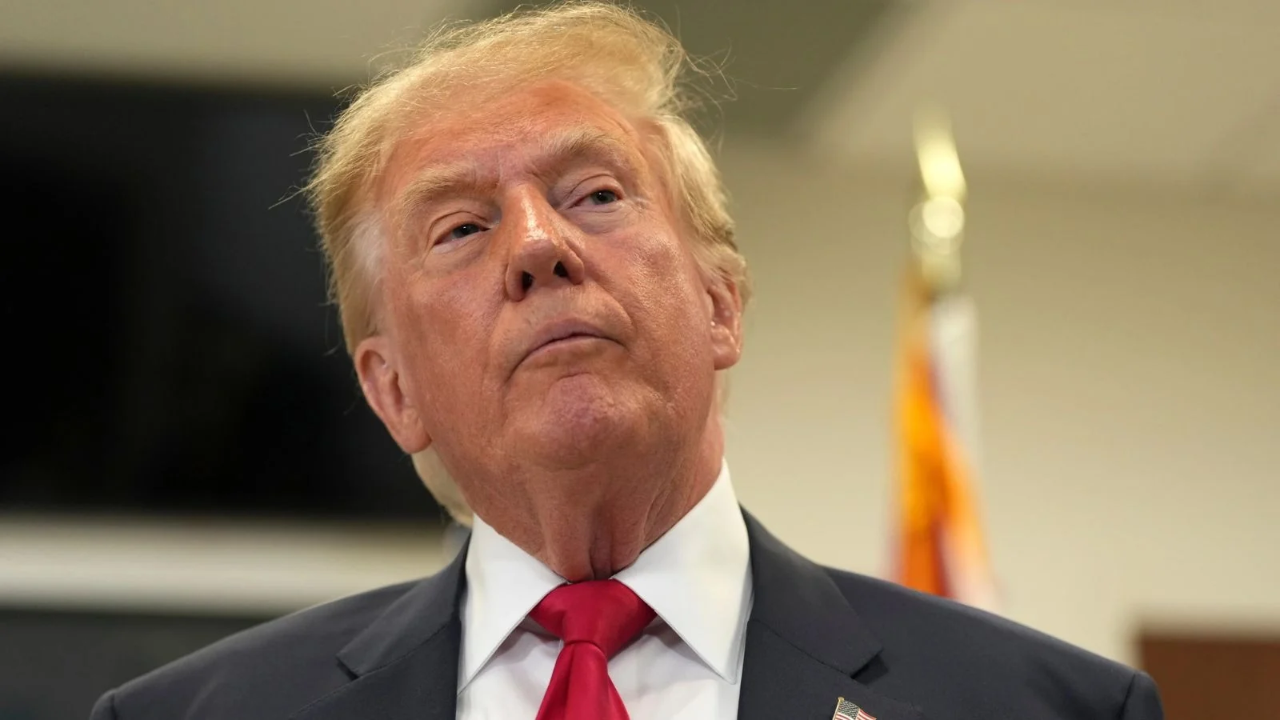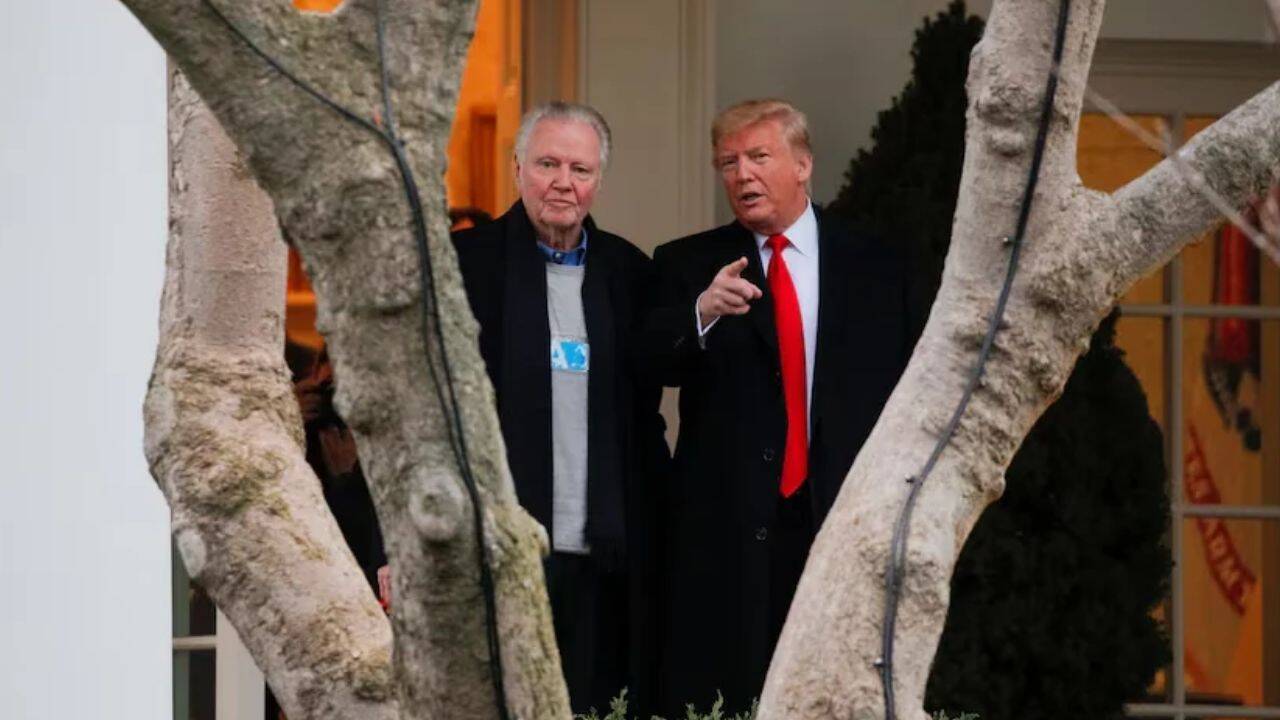
According to reporting from outlets including The Independent and The Hill, President Donald Trump met with actor Jon Voight at the White House during a period when severe flight disruptions and airspace closures stranded thousands of travelers across the United States. The juxtaposition drew sharp criticism from political commentators and stranded passengers who viewed the celebrity meeting as a stark contrast to the urgent logistical crisis unfolding at major American airports.
The optics were immediate. While aviation officials, airline executives, and federal regulators scrambled to untangle grounded fleets and cascading delays, cameras captured the Academy Award-winning actor—a longtime vocal supporter of the president—arriving at the executive mansion. For critics, the image became instant shorthand for misplaced priorities during a national infrastructure emergency. For defenders, it was simply business as usual in a presidency that never stops balancing multiple tracks at once.
The Anatomy of a Modern Aviation Shutdown
To understand why the US flight shutdown triggered such intense public frustration, you have to look at how fragile the American commercial aviation grid actually is. Unlike regional highway systems, where a closed interstate can be bypassed via local roads, the National Airspace System operates as a tightly synchronized network of hub-and-spoke dependencies.
When a major disruption hits—whether driven by a federal funding lapse, air traffic control staffing shortages, severe weather systems, or technical failures within the Federal Aviation Administration—the impact does not stay localized. A single ground stop in Atlanta, Chicago, or Newark ripples outward within hours. Aircraft end up in the wrong cities. Flight crews time out under strict federal rest mandates. Maintenance schedules collapse.
According to aviation analysts and industry tracking data from platforms like FlightAware, major systemic shutdowns routinely strand tens of thousands of passengers within a single 24-hour window. Once an airline's schedule breaks, recovery is rarely instantaneous. Even after airspace reopens or technical issues are resolved, airlines often need three to five days just to reposition planes and crews back to their baseline rotations.
During these windows, passengers sit on airport floors, miss medical appointments, lose business contracts, and watch rebooking queues stretch days into the future. Public patience evaporates quickly. Every move made by top federal officials is scrutinized through the lens of whether they are visibly working to get planes back in the air.
Why Jon Voight Was at the White House
Jon Voight is not a casual political acquaintance. Over the past decade, the Midnight Cowboy and Coming Home star has positioned himself as one of Hollywood's most outspoken conservative voices and a steadfast ally of Donald Trump.
Their relationship spans years of public endorsements, campaign appearances, and White House visits. In 2019, Trump awarded Voight the National Medal of Arts, praising his cinematic legacy and loyalty. Beyond ceremonial appearances, Voight has frequently served as an informal cultural emissary—someone who bridges the gap between Washington policy circles and conservative stakeholders inside the entertainment industry.
During Trump's second term, Voight's involvement took on a more defined policy angle. As reported by entertainment trade publications like Variety and The Hollywood Reporter, Trump named Voight—alongside fellow actors Sylvester Stallone and Mel Gibson—as special ambassadors to Hollywood. The stated goal was to examine why film and television production had increasingly migrated overseas to hubs in the United Kingdom, Canada, and Eastern Europe, and to explore federal incentives or tariff strategies to bring production jobs back to California and other American states.
Seen through that prism, a meeting between Trump and Voight was not necessarily an impromptu social call. White House schedules are booked weeks in advance, and meetings involving industry liaisons often proceed regardless of breaking domestic news.
The Optics Problem in Crisis Governance
In Washington, perception often carries as much political weight as policy execution. Decades of political history show that presidents rarely lose public trust because they failed to personally flip a switch at an air traffic control tower. They lose trust when their public schedule appears disconnected from the immediate pain of ordinary citizens.
Consider the historical precedents. When Hurricane Katrina battered the Gulf Coast in 2005, photographs of President George W. Bush looking down at New Orleans from Air Force One became an enduring symbol of administrative detachment, regardless of the federal briefing calls happening behind closed doors. In 2021, when a winter storm collapsed the Texas power grid, Senator Ted Cruz faced bipartisan backlash for flying to Cancun while millions sat in freezing homes.
The Trump Jon Voight White House meeting stepped directly onto that same political landmine.
Opposition lawmakers and cable news pundits seized on the timing. Democratic strategists argued in television interviews and social media posts that meeting with a movie star while travelers slept on terminal carpets demonstrated a lack of urgency regarding domestic infrastructure and consumer protection. Transportation advocates pointed out that federal leadership sets the tone for crisis response, and high-profile meetings with Department of Transportation officials or airline CEOs would have projected direct engagement.
The Counter-Argument From White House Defenders
Supporters of the administration push back hard against what they characterize as manufactured outrage over White House scheduling.
From their perspective, the modern presidency manages dozens of simultaneous policy tracks every single day. The Department of Transportation, the Federal Aviation Administration, and the Department of Homeland Security maintain dedicated operational command centers specifically built to manage aviation emergencies. A president does not need to cancel every pre-scheduled meeting on the West Wing calendar for federal aviation controllers to do their jobs.
Furthermore, conservative commentators note that the discussion with Voight touched on economic issues—specifically domestic job retention in the American film industry—that align directly with the administration's broader "America First" manufacturing and labor agenda. Canceling a scheduled briefing with a designated special envoy because of an operational transportation disruption, allies argue, would allow news cycles to dictate executive governance.
There is also the reality of how Trump operates politically. Throughout his political career, Trump has consistently leaned into high-visibility meetings with loyal allies, media figures, and cultural personalities, often viewing those interactions as a direct way to communicate with his base regardless of prevailing media narratives.
What Actually Solves an Airspace Crisis
Stripping away the partisan commentary reveals an uncomfortable truth about American aviation: neither a canceled celebrity meeting nor a televised presidential press conference puts a grounded Airbus back into cruising altitude.
Real recovery during a US flight shutdown depends on structural mechanisms that operate far below the Oval Office:
- Air Traffic Control Staffing and Modernization: The FAA has struggled for years with chronic shortages of certified air traffic controllers at critical facilities like the New York Terminal Radar Approach Control (TRACON). Aging radar and communications infrastructure further compounds vulnerability to system-wide outages.
- Airline Crew Scheduling Algorithms: Major carriers rely on complex optimization software to match pilots and flight attendants with aircraft. When weather or airspace closures break those pairings, manual intervention is often required, slowing recovery to a crawl.
- Consumer Compensation Enforcement: Under federal rules enforced by the Department of Transportation, airlines are required to issue automatic cash refunds for canceled flights when passengers choose not to travel, though disputes over hotel vouchers and meal reimbursements during "controllable" versus "uncontrollable" delays remain a persistent friction point.
For the thousands of travelers watching departure boards turn red, the gap between Washington politics and terminal reality feels vast. While pundits debated the symbolism of Jon Voight walking past the West Wing press corps, gate agents across the country were still trying to find available seats on Tuesday flights for passengers stranded since Sunday.