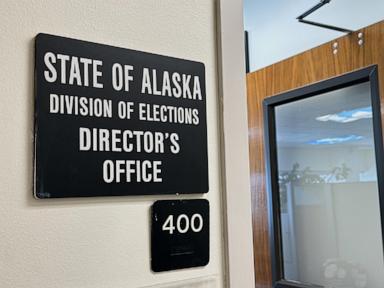
Alaska election officials are facing a high-stakes legal challenge that cuts to the core of state sovereignty and digital privacy. Two conservative-leaning groups, the Alaska Voter Integrity Project and the Gavel Project, have filed a lawsuit alleging that state officials unconstitutionally shared sensitive voter data with the U.S. Department of Justice (DOJ). The crux of the complaint is simple. Plaintiffs argue that the Division of Elections bypassed state law and ignored the privacy rights of Alaskans by handing over voter rolls to federal authorities without proper authorization or a clear legal mandate. This isn't just a local procedural spat. It is a fundamental clash over who owns your data and whether a state can act as a silent conduit for federal surveillance.
The Breach of Trust in Juneau
The lawsuit names Alaska Lieutenant Governor Nancy Dahlstrom and Division of Elections Director Carol Beecher as defendants. At the heart of the filing is the claim that the state’s participation in federal data-sharing initiatives violates the Alaska Constitution’s right to privacy—one of the most stringent privacy clauses in the nation. While the DOJ often seeks voter data to monitor compliance with the Voting Rights Act or to investigate potential civil rights violations, the plaintiffs contend that the transfer of "full" voter files—which can include birth dates, partial Social Security numbers, and residential histories—exceeds the scope of routine administrative cooperation.
In Alaska, the law is specific about how and when voter information can be distributed. The state is permitted to share data for election management, but the lawsuit alleges that the current administration treated the DOJ as an unchecked partner rather than a separate entity with distinct legal boundaries. When a state agency hands over a digital master key to the federal government, it isn't just sharing a list of names. It is handing over the biographical blueprint of its citizenry.
The Mechanics of Federal Data Integration
To understand the "how" of this data transfer, one must look at the technical infrastructure connecting state capitals to Washington D.C. Federal agencies often use the National Voter Registration Act (NVRA) as a lever. This law requires states to maintain accurate voter rolls and, in some interpretations, grants federal oversight bodies the right to audit those rolls. However, the plaintiffs argue that "oversight" has morphed into "integration."
They point to a specific memorandum of understanding or informal agreements that allow the DOJ to access the state’s voter database. The technical reality of modern data management means that once this data moves from a state-controlled server to a federal one, the state loses the ability to audit how that data is used, who sees it, or how long it is stored. There is no "undo" button for a data transfer of this magnitude.
The Right to Privacy as a Shield
Alaska is unique. Unlike many other states, the Alaska Constitution explicitly protects the right of the people to be "secure in their persons, houses and other property, papers and office, from unreasonable searches and seizures." Courts in the state have historically interpreted this to mean that the government needs a compelling reason to infringe upon individual privacy.
The lawsuit argues that the Division of Elections provided no such compelling reason. If the DOJ wanted to investigate a specific instance of voter suppression, it could have requested targeted data. Instead, the state allegedly provided a bulk dump. This "dragnet" approach to data sharing is what the plaintiffs find most offensive. They view it as a violation of the social contract between Alaskans and their local government.
The Shadow of Executive Order 14019
While the lawsuit focuses on the Alaska Division of Elections, the political backdrop is a controversial 2021 directive from the White House. Executive Order 14019, titled "Promoting Access to Voting," instructed federal agencies to expand their roles in voter registration and participation. Critics, including the groups suing in Alaska, see this as an attempt to federalize elections—a power that the U.S. Constitution largely reserves for the states.
The plaintiffs suspect that the data sharing in Alaska is a direct result of federal agencies scrambling to comply with this executive order. By turning federal departments like the DOJ, or even the Department of Agriculture, into voter registration hubs, the administration has created a massive demand for state-held data. This creates a friction point. On one side, you have federal mandates for "modernization" and "access." On the other, you have state laws designed to protect the individual from a centralized database of every adult citizen.
The Sovereignty Argument
If the state of Alaska is forced to comply with federal data requests that contradict its own privacy laws, does the state still have sovereignty over its elections? This is the question that keeps constitutional lawyers awake at night. The U.S. Constitution’s Elections Clause gives states the primary authority to determine the "times, places and manner" of holding elections.
The lawsuit posits that by allowing the DOJ to dictate the terms of data access, Alaska officials have effectively abdicated their constitutional duty. They are no longer the gatekeepers of the election process; they have become the junior partners of a federal bureaucracy. This loss of control is particularly sensitive in a state like Alaska, where a "leave us alone" attitude is baked into the political DNA of the population.
The Risks of a Nationalized Voter Database
The danger of bulk data sharing isn't just theoretical. It creates a single point of failure. If the federal government maintains a comprehensive, centralized mirror of every state’s voter roll, that database becomes the ultimate target for foreign intelligence services and domestic hackers.
Centralization is the enemy of security. In a decentralized system, a hack in one state only affects that state. In a system where the DOJ holds the keys to fifty different state databases, a single breach could compromise the identity and voting history of every American. The plaintiffs in the Alaska case argue that the state has a duty to minimize this risk by keeping data local and only sharing the bare minimum required by law.
Counter-Arguments and the State’s Defense
The Division of Elections has yet to provide an exhaustive public defense, but their likely path is clear. They will argue that the federal government has a supreme right to ensure that elections are being conducted fairly and that no one is being disenfranchised. Under the Supremacy Clause of the U.S. Constitution, federal laws like the Voting Rights Act can often override state privacy concerns if there is a conflict.
The state will also likely claim that the data shared is "public information" anyway. In many states, name, address, and party affiliation are available to anyone who pays a small fee for a voter list. However, there is a massive difference between a political campaign buying a list for a mailing and a federal law enforcement agency integrating that list into a permanent, searchable database with administrative back-door access.
The Paper Trail and Lack of Transparency
A major grievance cited in the legal filings is the lack of transparency surrounding the data transfers. The plaintiffs claim they were forced to file the lawsuit because the state refused to provide clear answers about exactly what data was shared and what legal counsel approved the move. This "black box" approach to election administration breeds distrust.
In an era where election integrity is under a microscope, any move that appears secretive is bound to ignite a firestorm. Whether or not the data sharing was technically legal, the optics are disastrous for an agency that relies on the public’s trust to function.
The Potential Impact on Future Elections
If the court rules in favor of the Alaska Voter Integrity Project, it could set a massive precedent. It would signal to the DOJ and other federal agencies that they cannot simply demand bulk data without meeting a high legal threshold. It would reinforce the idea that state privacy laws are not merely suggestions that can be ignored in the name of federal "cooperation."
Conversely, if the state wins, it could embolden the federal government to further integrate its systems with state databases. We would see a move toward a truly nationalized voter registration system, managed from D.C., with states serving as little more than data entry clerks.
Technical Vulnerabilities and the Human Element
Beyond the legal arguments, there is the human element. When voters learn their data is being funneled to federal agencies without their consent, some choose to opt-out of the system entirely. They stop voting. They cancel their registration to protect their privacy.
This creates a paradox. In an effort to "promote access" and "ensure fairness," the government may actually be driving people away from the polls. The lawsuit highlights a growing segment of the population that views the government not as a protector of their rights, but as a data harvester.
The Path Ahead for the Alaska Judiciary
The Alaska Superior Court now has a monumental task. It must balance the administrative needs of the state and federal governments against the explicit privacy rights of the individual. This is not a case that will be resolved quickly. It will likely climb the ladder to the Alaska Supreme Court, and potentially even the U.S. Supreme Court, as it touches on the fundamental division of power in our republic.
The legal team representing the plaintiffs is leaning heavily on the "non-delegation doctrine"—the idea that the state cannot delegate its sovereign powers to a federal entity without clear, legislative permission. They are asking the court to stop the data flow immediately and to order an audit of what has already been sent.
Reasserting the Local Gatekeeper
The battle in Alaska is a warning shot to every election official in the country. The era of quiet, back-room data sharing is over. As technology makes it easier to move massive amounts of information, the legal and ethical barriers to doing so must be made stronger, not weaker.
States that value their independence must audit their own data-sharing agreements before they are forced to do so by a process server. If Alaska’s officials are found to have overstepped their bounds, it won't just be a legal defeat; it will be a permanent stain on their record of public service. The voters of Alaska deserve to know that their personal information isn't being used as a bargaining chip in a game of federal outreach.
The only way to restore trust is through absolute transparency and a return to the principle that the state serves the voter, not the federal bureaucracy. If the Division of Elections cannot prove it had the legal right to share this data, the court must act to shut down the pipeline before the next election cycle begins.