Burying rivers underground seemed like a brilliant idea to mid-century city planners. If water got in the way of asphalt, you simply shoved it into a concrete tube and pretended it didn't exist. Albany learned the hard way that you cannot cheat hydrology forever.
Back in 2002, city officials tucked a 1,500-foot stretch of Patroon Creek into a massive underground pipe to clear space for local development. It felt clean, tidy, and modern. Eighteen years later, reality caught up with the blueprints. In 2020, Albany crews ripped out the culvert inside the 72-acre Tivoli Lake Preserve. They dragged Patroon Creek back into the open air. You might also find this similar article useful: The Night the Victorians Brought Us the Ghosts in the Attic.
This process, known as stream daylighting, is changing how cities handle stormwater. It is messy, expensive, and completely necessary if we want urban centers to survive heavy rainstorms without turning into swimming pools.
The Cost of Hiding Water
Putting a living stream into a smooth, narrow pipe creates hidden ticking clocks for municipal budgets. When heavy storms hit, water rushes through concrete culverts at breakneck speeds. It creates severe bottlenecks downstream and strips oxygen from the water. As discussed in latest coverage by Refinery29, the implications are worth noting.
When Patroon Creek went underground in 2002, it instantly triggered ecological decline. By that same year, the state officially added the waterway to the Clean Water Act impaired waters list due to rock-bottom dissolved oxygen levels. Aquatic life struggled. The system was choked off from the atmosphere.
Worse yet, the old pipe had a strict limit. Early engineering studies calculated its absolute maximum capacity at 500 cubic feet per second. Anything above that threshold meant water backing up directly into surrounding residential streets. Cities love concrete fixes until nature delivers a storm that breaks the math.
Engineering a Return to Nature
Fixing this mess took more than just grabbing a shovel. The Albany Water Board, backed by state environmental funding including a $1 million Clean Water Act grant, completely redesigned the corridor.
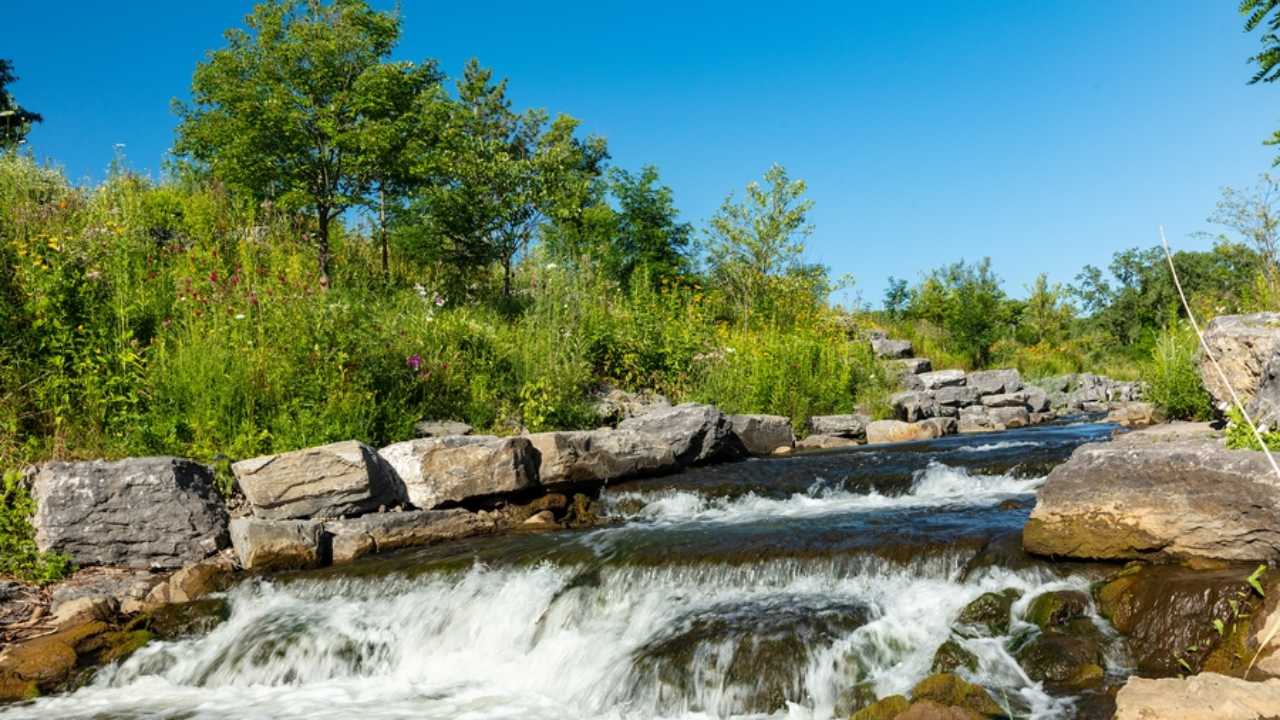
Instead of a straight concrete chute, engineers carved out a wide, winding earth channel. They lined the banks with over 7,000 native plants and strategic rock structures. This design transforms how water moves through the Tivoli Lake Preserve:
- Slowing the flow: Rocks and winding bends act as natural speed bumps, preventing aggressive bank erosion.
- Reintroducing oxygen: Shallow pools, riffles, and mini waterfalls force air back into the water column.
- Expanding floodplains: During major downpours, the creek can now spill safely into restored wetlands rather than threatening homes.
The numbers speak for themselves. Data from the United States Geological Survey and the EPA shows that in three of the five years following completion, peak flows at the site surpassed that old 500 cubic feet per second ceiling. Under the old configuration, those surges would have flooded nearby neighborhoods. The open channel absorbed the pressure and handled the volume safely.
Justice for Neglected Neighborhoods
Urban environmental projects often ignore the people living right next to them. That did not happen here. The restored section of Patroon Creek flows directly past the historic Arbor Hill and West Hill neighborhoods. Both are designated Environmental Justice communities that spent decades dealing with the brunt of industrial pollution and asphalt-heavy planning.
Unearthing the creek turned an ignored utility corridor into a functioning green space. It forms a critical puzzle piece in the larger Patroon Creek Greenway initiative, a project designed to link the Albany Pine Bush Preserve all the way to the Hudson River waterfront. Residents now have walking trails, outdoor education access, and a living ecosystem instead of a buried mystery.
If your city is still treating urban streams like plumbing fixtures, look at what happened in Albany. Stop fighting water with concrete. Give it room to breathe, and let the landscape do the heavy lifting.