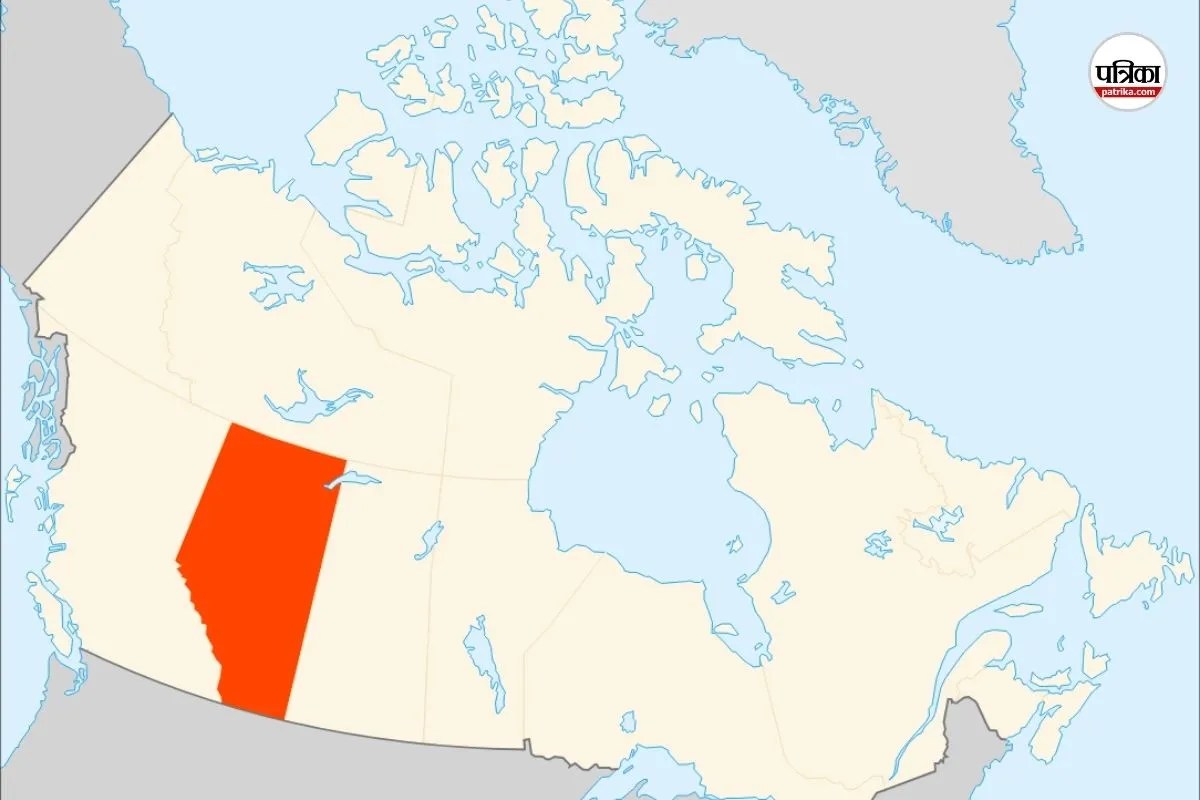
Sensational headlines asking whether Canada is about to break apart confuse constitutional theater with operational mechanics. Alberta's October 19, 2026 referendum did not decide provincial secession; it placed ten questions on the ballot—including Question 10 on whether to initiate a path toward a future binding separation vote—while simultaneously testing a manual counting system born from a ban on electronic vote tabulators.
A standard breaking-news report treats voting delays and separation anxiety as a single dramatic cliffhanger. That framing misses the causal chain. Separation sentiment in Alberta operates inside strict legal, fiscal, and administrative constraints, and ballot-counting delays were largely a predictable consequence of legislative choices around ballot volume, manual tallying, and station-level sorting rules rather than proof of an imminent constitutional collapse.
Deconstructing the Competitor Narrative
Coverage that frames a non-binding provincial ballot question as an immediate threat to Canada's survival conflates three distinct layers of political reality:
- Constitutional Thresholds vs. Ballot Proposals: Asking voters whether a province should pursue steps toward a future binding referendum is not the same as declaring independence, amending the Canadian Constitution, or settling jurisdictional disputes over land, treaties, and federal obligations.
- Aggregate Grievance vs. Majority Consent: Polls and early counts showing roughly a quarter to just over a third of Albertans sympathetic to separation or demanding a harder push against Ottawa reflect real friction over resource policy, fiscal transfers, and federal-provincial authority, yet fall far short of a majority mandate.
- Administrative Friction vs. Political Crisis: Slow counts after polls close often trigger conspiracy theories or crisis narratives when results do not arrive overnight. In Alberta's October 2026 vote, delayed openings at polling sites, ten separate ballots per voter totaling more than 20 million ballots across the province, mandatory hand counting, and local box-sorting mistakes explain the timeline far better than political drama.
Separating grievance from constitutional mechanics is essential before evaluating what the referendum actually settled and what it left unresolved.
The Three Pillars of Alberta Separation Dynamics
To analyze whether western alienation can translate into statehood, treat the question as a three-part system rather than a single mood swing.
Constitutional and Legal Friction
Even a hypothetical vote favoring independence faces steep legal and institutional hurdles inside Canada's federal system. Under Canadian constitutional jurisprudence—most notably the Supreme Court's 1998 reference on Quebec secession—a clear majority on a clear question creates a duty to negotiate rather than a unilateral right to exit overnight. Negotiations would have to address federal debt allocation, treaty obligations with Indigenous nations, national infrastructure, currency, and trade access. Furthermore, provincial legislation places statutory cooling-off or repeat-ballot rules on unsuccessful referendum proposals, meaning a decisive "no" vote resets the political clock rather than leaving separation permanently on the immediate agenda.
Economic and Trade Interdependence
Landlocked economies rely heavily on cross-border corridors, regulatory predictability, and capital confidence. Economic modeling—such as research cited from the University of Calgary—has indicated that even a relatively smooth separation scenario would weigh on Alberta's GDP over its first several years due to transition friction, trade and border adjustments, and investment uncertainty. Major export infrastructure like pipelines and trade diversification projects depend on long-horizon capital commitments; prolonged constitutional ambiguity raises risk premiums and slows capital allocation.
Political Coalitions and Regional Divides
Alberta is not a monolith. Urban centers such as Edmonton and Calgary have distinct demographic, economic, and political profiles compared with rural ridings, and views on immigration, constitutional authority, and provincial autonomy diverge sharply between rural and urban voters. Within governing coalitions, provincial leaders also face a strategic trade-off between appeasing hardline separatists and holding together a broader pro-Canada coalition capable of winning mainstream electorates and maintaining working leverage with Ottawa.
The Cost Function of Ballot Friction
The operational delays around the referendum illustrate a straightforward administrative cost function:
$$\text{Counting Time} \propto \frac{\text{Total Ballots} \times \text{Questions per Voter} \times \text{Verification Steps}}{\text{Staffing Throughput} \times \text{Automation Factor}}$$
When a government bans electronic vote tabulators and mandates hand counting across ten separate referendum ballots, total ballot volume balloons past 20 million individual pieces of paper. Multiplying unit volume by manual batching, recounts, and strict reporting rules by voting area rather than voting place turns a routine post-election night into a multi-day marathon.
Consider what happens at a single busy polling station when workers try to save time by combining ballot boxes across voting areas instead of keeping sets separate per area. Upfront, combining boxes feels faster. Downstream, once the polls close and ballots must be reported by voting area, election staff have to untangle mixed ballots—checking officer signatures and sorting by area—before final tallies can be reconciled. Add delayed morning openings at over a hundred polling stations due to staffing and equipment logistics, plus high volumes of mail-in and special ballots, and missing a 48-hour unofficial reporting window becomes an arithmetic outcome rather than a mystery.
Known Facts vs. Working Hypotheses
Rigorous analysis requires keeping verified facts separate from interpretation:
- Known Facts: Voters cast ten referendum ballots in Alberta's October 2026 vote, including Question 10 on pursuing a future binding separation referendum. Electronic tabulators were banned prior to the vote, requiring a hand count of more than 20 million ballots. Elections Alberta missed its initial 48-hour unofficial results target, completing unofficial counts days later after addressing mail-in volume and procedural sorting errors at a small number of locations, ahead of official results scheduled for late October. Early and unofficial tallies showed strong majority support to remain part of Canada rather than initiate separation steps.
- Working Hypotheses: Debates over hand counting versus tabulators will carry directly into upcoming municipal and provincial electoral cycles, shaping public trust in election administration. Similarly, while a majority vote against separation steps reduces acute secession risk in the near term, underlying grievances over federal policies, fiscal balance, and economic competitiveness will persist and resurface in intergovernmental negotiations.
Operational Lessons for Election Administration and Policy
For election administrators and policymakers managing high-stakes ballots under tight statutory timelines, four practical lessons stand out:
- Match Mandate to Capacity: If legislation requires hand counting multiple ballots across dozens of electoral divisions, statutory reporting windows must reflect realistic human throughput per hour, including fatigue, verification, and recount buffers.
- Design Foolproof Physical Workflows: When rules require sorting by voting area within a multi-area voting place, color-coded bins, pre-labeled station kits, and clear physical separation reduce the temptation for staff to take shortcuts that create massive downstream rework.
- Audit Front-End Readiness Early: Delayed site openings from missing furniture or late staffing cascades directly into late closures and delayed tabulations. Pre-dawn readiness checks and reserve staffing pools protect chain-of-custody schedules.
- Separate Ballot Complexity from Core Questions: Packing ten complex questions onto a single voting event magnifies voter confusion and administrative load simultaneously. Fewer, clearer questions improve both public comprehension and tally speed.
These operational fixes have clear limits. Better box labels and realistic deadlines cannot resolve deep philosophical disagreements over federation, energy policy, or provincial jurisdiction, nor can they eliminate human error during high-volume events. Electoral mechanics only govern how accurately and transparently preferences are measured; they do not manufacture political consensus.
Strategic Play for Stakeholders
Treat the referendum outcome as confirmation that Canada is not breaking apart on a near-term horizon, while treating the counting delay as a warning light on election logistics. Provincial leaders and business decision-makers should shift capital and policy focus toward concrete economic levers—market access, pipeline and infrastructure execution, workforce skills, and intergovernmental negotiation—while election officials overhaul manual counting workflows and boundary-transition plans well ahead of the next provincial election cycle.