The Strategic Blueprint
A roughly 76 percent vote in favor of remaining in Canada during Alberta's October 2026 nonbinding sovereignty referendum—versus roughly 24 percent backing a process that could lead toward separation—did not eliminate western alienation; it shifted the conflict from an acute secession crisis into a longer-term bargaining contest over fiscal autonomy, export pipelines, and party alignment. Prime Minister Mark Carney framed the outcome as a decisive endorsement of national unity and shared purpose, yet standard event coverage treats headline vote shares as a permanent resolution rather than a snapshot under specific external pressures.
To evaluate what actually changed, this analysis maps the core claims of standard coverage onto four operational mechanisms:
- The Referendum Threshold and Option Design: A nonbinding vote on initiating a path toward separation tests sentiment rather than executing constitutional exit, raising or lowering turnout incentives depending on how voters perceive downstream consequences.
- The External Threat Multiplier: Trade friction and annexation rhetoric from Washington alter risk calculations for resource-dependent provinces, changing whether voters view Ottawa or cross-border disruption as the primary hazard.
- The Pipeline and Federalism Bargain: Infrastructure approvals and intergovernmental coordination between Ottawa and Edmonton directly affect perceived economic trade-offs of staying inside the federation.
- The Minority Bloc and Coalition Fractures: A roughly quarter-share minority voting for a separation pathway signals durable grievances that can pressure provincial leadership and party coalitions even in defeat.
Deconstructing Standard Coverage Logic
Conventional news reports on the referendum follow a predictable sequence: report the preliminary projection around three-quarters for remaining and one-quarter for leaving, quote Prime Minister Mark Carney praising unity and cooperation, add brief reactions from other premiers or party figures, and note that separatist organizers vow to continue. That structure is useful for fast orientation, but it leaves three analytical gaps that obscure strategic risk.
First, standard coverage conflates a vote against starting a separation process with settled political equilibrium. In political economy, voter support for status-quo federalism reflects a comparison between two risky states: staying inside a known fiscal and legal system versus entering an uncertain exit path with undefined trade, currency, and border terms. A voter can reject separation today while still demanding structural concessions tomorrow.
Second, standard coverage treats federal-provincial cooperation as a moral choice rather than an incentive structure. Carney's remarks emphasize choosing to build together and take care of each other. In practice, durable coalitions depend on aligning concrete payoffs—such as market access for Alberta bitumen outside a single export buyer and predictable rules on resource and regulatory authority—against the transaction costs of grievance politics.
Third, standard coverage underweights asymmetric persistence. A majority coalition can relax once an immediate vote passes, whereas a committed minority often treats a loss as a mobilization baseline. Separatist voices after the vote explicitly framed the outcome as part of a multi-year effort rather than a closed chapter.
Known Facts Versus Analytical Hypotheses
Separating verified developments from analytical interpretation keeps risk models grounded. Known facts from the October 2026 referendum cycle include the following:
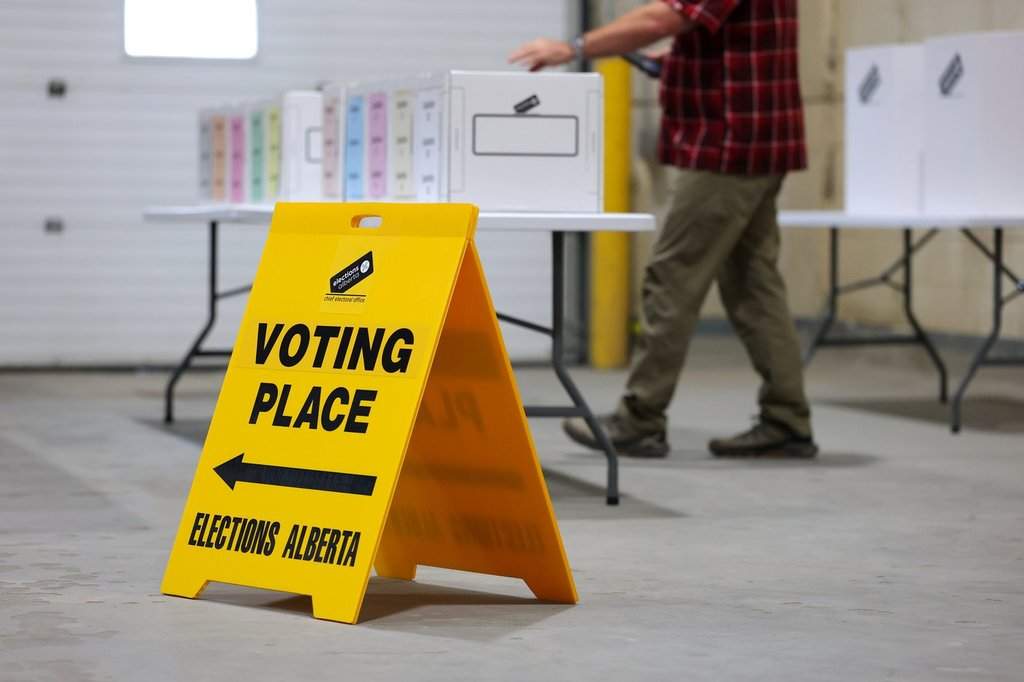
- Preliminary Vote Split: Early returns and projections showed roughly three in four Albertans voting to remain in Canada and roughly one in four voting to begin a process that could lead to separation, following heavy advance and special ballot activity and polling-hour extensions at over 100 locations.
- Federal and Provincial Engagement: Prime Minister Mark Carney—who grew up in Edmonton—welcomed the result as a choice for unity, noted speaking with Alberta Premier Danielle Smith, and has pursued an export pipeline initiative aimed at expanding oil shipments beyond the United States.
- Geopolitical Pressure Context: The vote took place amid U.S.-Canada trade tensions and renewed U.S. annexation rhetoric ("51st state" remarks), which federal leaders and voters cited as raising the stakes of internal division.
- Post-Vote Separatist Posture: Pro-independence figures argued that roughly a quarter of the electorate reflects deep dissatisfaction with how Alberta is treated and stated they intend to continue organizing over the long term.
Beyond these established facts, three hypotheses explain the underlying dynamics, though final audited turnout and riding-level breakdowns are required to test their full weight:
- Risk-Aversion Hypothesis: External trade and sovereignty threats from the United States likely raised the perceived downside of constitutional uncertainty for swing voters, converting latent frustration into a "remain" vote without converting underlying grievances into pro-Ottawa enthusiasm.
- Infrastructure-Credibility Hypothesis: Visible federal movement on non-U.S. oil export infrastructure may have lowered the perceived cost of staying in Canada compared to periods when export bottlenecks felt permanent.
- Coalition-Pressure Hypothesis: Even a losing referendum share near a quarter of votes gives hardline factions leverage inside conservative politics to demand stricter confrontation with Ottawa or push for organizational splits.
Cause-and-Effect Chains Standard Reports Miss
How External Geopolitics Reshapes Domestic Secession Math
Secession movements rarely rise or fall in a vacuum. When a neighboring superpower applies tariff pressure or floats territorial rhetoric, the outside option for a landlocked or export-reliant region becomes far more hazardous. An independent or transitional Alberta facing simultaneous friction with both Ottawa and Washington would confront acute trade, regulatory, and security exposure.
This creates a two-stage effect. In the short term, external pressure acts as a unifying anchor that boosts "remain" totals. Over the medium term, however, if trade disputes strain Alberta's energy and agricultural exporters while federal policy fails to relieve bottlenecks, economic pain can rebound against Ottawa unless the federal government visibly shares the burden of market diversification.
Why Nonbinding Referendums Act as Bargaining Instruments
A nonbinding question on initiating a separation process carries lower immediate legal irreversibility than a final constitution-altering vote, yet it still functions as a high-salience signal. Voters who are unhappy with federal fiscal transfers, regulatory rules, or regional representation can use or reject such ballots to register protest or discipline leaders.
For Ottawa, the strategic trap is misreading a high "remain" percentage as a blank check. If federal officials treat a roughly 76 percent remain figure as proof that western grievance has evaporated, they risk under-investing in concrete deliverables. Conversely, if separatist organizers treat roughly 24 percent as proof of imminent momentum, they risk overestimating their ceiling when voters weigh concrete economic risks.
How Party Coalitions Absorb or Splinter After a Referendum
Referendums cut across established party lines. Premier Danielle Smith and the United Conservative Party operate in an environment where moderate conservatives, pragmatic resource voters, and committed separatists all compete for voice. When a sovereignty vote fails decisively, hardline activists often blame incrementalism or leadership restraint, creating pressure for internal party battles or alternative vehicles.
At the federal level, a Liberal prime minister with personal roots in Alberta gains tactical credibility by engaging directly rather than governing purely from central Canada. Yet historical skepticism toward federal Liberal governments in Alberta means goodwill earned during a unity moment remains fragile unless backed by measurable execution.
Operationalizing Federal-Provincial Alignment
For policymakers, executives, and analysts tracking Canadian federalism and energy markets, treating the referendum as a closed file is an operational error. Managing the post-referendum window requires treating intergovernmental relations like a high-stakes joint venture with clear milestones, transparent trade-offs, and explicit risk controls.
The operational sequence should follow four steps:
- Audit Granular Turnout and Regional Variance: Once final official results are published, map support and abstention across urban centers, rural ridings, and resource corridors rather than relying solely on headline province-wide percentages. This isolates where dissatisfaction is concentrated versus where voters simply rejected constitutional disruption.
- Tie Unity Rhetoric to Concrete Export and Regulatory Deliverables: Pair public unity messaging with verifiable progress on non-U.S. pipeline and export capacity, clear regulatory timelines, and practical trade defense. Concrete infrastructure and market-access milestones reduce the economic argument for separation far more durably than speeches alone.
- Separate Routine Fiscal Disputes from Existential Constitutional Threats: Establish predictable channels for resolving energy, climate, and fiscal disagreements so routine policy friction does not automatically escalate into sovereignty crises. High-frequency, low-drama problem-solving starves grievance campaigns of oxygen.
- Stress-Test Scenarios Against U.S. Trade Escalation: Model provincial and federal fiscal exposure under continued tariff or border friction with Washington. Ensure emergency support and diversification mechanisms are pre-engineered so external shocks do not widen internal Canadian fault lines.
Limitations and Edge Cases
No institutional playbook eliminates structural tension in a large federation. Geography, resource concentration, and differing economic structures across Canadian provinces mean disagreements over energy transition rules, fiscal transfers, and trade priorities will recur regardless of who sits in Ottawa or Edmonton.
Furthermore, external shocks can cut in unexpected directions. If trade disputes with the United States ease, one source of cross-border anxiety recedes, but if bilateral friction deepens without timely export alternatives, economic strain on Alberta producers could reignite arguments for radical autonomy. Finally, nonbinding votes measure stated preferences on a specific day; shifting economic conditions, leadership changes, or demographic trends can alter those preferences faster than political commentators expect.
Strategic Play for Federal and Provincial Decision-Makers
Convert the referendum margin into durable structural alignment before the next economic or geopolitical shock tests it: Ottawa should prioritize fast-tracking non-U.S. export capacity and predictable regulatory execution in partnership with Alberta, while Edmonton should channel its roughly quarter-share protest vote into binding policy and infrastructure wins inside Canada rather than chasing a high-risk constitutional exit.