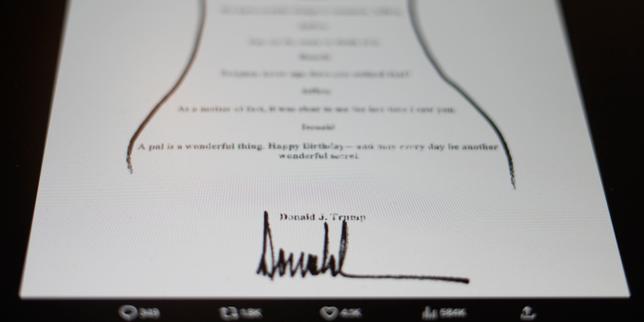
The permanent dismissal of Donald Trump’s $10 billion defamation lawsuit against The Wall Street Journal demonstrates a structural asymmetry in American media law: political leverage and astronomical damages claims cannot substitute for the evidentiary threshold of actual malice. On October 31, 2026, U.S. District Judge Darrin Gayles in Miami terminated the litigation with prejudice, barring the plaintiff from refiling the complaint in the same court after an initial rejection in April 2026 and an amended filing in May 2026. The ruling exposes the operational mechanics of Strategic Lawsuits Against Public Participation (SLAPP) when deployed by public officials against institutional press organizations operating under First Amendment protections.
The Structural Architecture of the Litigation
To evaluate why the complaint collapsed at the pleading stage before reaching discovery, the dispute must be separated into its underlying factual predicates and its procedural timeline. Standard news summaries treat the dismissal as a single political setback, obscuring the sequential legal failures that forced the court's hand. You might also find this related story useful: What Most People Get Wrong About the 320,000-Strong France Protests.
- The Underlying Publication Predicate (July 2025): The Wall Street Journal published an investigative report describing a sexually suggestive letter bearing Donald Trump’s name, compiled within a 2003 album celebrating Jeffrey Epstein’s 50th birthday. Crucially, the newspaper did not initially publish the physical image of the document. Rather, the report summarized the contents while explicitly notifying readers that Trump denied authoring the letter and labeled it a fabrication.
- Initial Filing and Escalation (July 2025): Trump initiated litigation seeking $20 billion in damages—later revised to at least $10 billion in the amended complaint—naming Dow Jones, parent company News Corp, Chairman Emeritus Rupert Murdoch, the chief executive, and the reporting team as defendants. Concurrently, the administration executed non-judicial pressure tactics, removing The Wall Street Journal from the presidential press pool during a July 2025 trip to Scotland.
- External Evidentiary Corroboration (September 2025): The House Oversight Committee subpoenaed Jeffrey Epstein’s estate and publicly released a redacted version of the 2003 birthday book containing the contested letter. While the White House maintained that Trump neither drew the accompanying illustration nor signed the document, the congressional release confirmed the physical existence of the artifact within the Epstein estate archives.
- First Dismissal Without Prejudice (April 2026): Judge Gayles dismissed the original complaint, ruling that the plaintiff came nowhere close to pleading facts sufficient to establish actual malice. The court granted leave to amend, giving the legal team an opportunity to cure the pleading defects.
- Amended Complaint and Terminal Dismissal (May – October 2026): Following a May 2026 refiling that sought to reframe the editorial process as defective, Judge Gayles issued a final order on October 31 dismissing the case with prejudice, concluding that the amended filing attempted to manufacture flaws in the newspaper's reporting rather than establish constitutional malice.
The Constitutional Filter of New York Times Co. v. Sullivan
The core bottleneck in any defamation action brought by a sitting president is the constitutional standard established by the U.S. Supreme Court in 1964 under New York Times Co. v. Sullivan. Under common law defamation, a private plaintiff generally needs only to prove negligence—that a publisher failed to exercise reasonable care in verifying a false statement. Public officials and public figures face a fundamentally different burden of proof designed to prevent self-censorship in public debate.
To survive a motion to dismiss under Rule 12(b)(6) of the Federal Rules of Civil Procedure, a public-figure plaintiff must plead plausible facts showing actual malice. In constitutional law, actual malice does not mean ill will, political hostility, or personal spite. Even if a newsroom despises a politician and actively hopes to damage their reputation, that animus is legally irrelevant. Actual malice is strictly an epistemological standard: the plaintiff must prove by clear and convincing evidence that the publisher had subjective knowledge of falsity at the moment of publication, or acted with reckless disregard for the truth—defined by the Supreme Court as entertaining serious doubts as to the truth of the publication or purposefully avoiding the truth. As extensively documented in recent coverage by The Washington Post, the effects are worth noting.
Judge Gayles’s ruling rested on the total absence of factual allegations supporting this state of mind. In defamation pleading, stating conclusory assertions—such as claiming a newspaper "knowingly published lies"—is insufficient under the Twombly/Iqbal federal pleading standards. A plaintiff must allege concrete operational facts: internal emails showing reporters doubted their sources, deviations from basic journalistic verification protocols, or reliance on a single, demonstrably unreliable informant without corroboration.
In this dispute, the inclusion of Trump’s denial directly inside the contested article functioned as a structural shield for the defense. Judge Gayles noted that the reporting explicitly informed readers that the president denied writing the letter and called it fake. In media law, accurately reporting both an allegation supported by documentary sourcing and the subject's categorical denial demonstrates transparency rather than reckless disregard. By presenting the dispute to the audience rather than concealing exculpatory context, The Wall Street Journal neutralized any inference that it sought to deceive readers about the existence of a factual controversy.
The Three Failure Modes of the Plaintiff's Legal Strategy
Analyzing the progression from the July 2025 filing to the October 2026 dismissal reveals three distinct strategic miscalculations by the plaintiff's legal team.
1. Conflating Denial with Falsity
The complaint relied heavily on the premise that because Trump denied authoring or signing the 2003 letter, the newspaper’s decision to publish a story describing the letter constituted actionable defamation. Legally, a subject's denial does not put a publisher on notice of falsity. If a denial alone were sufficient to trigger actual malice, any public official could veto investigative reporting simply by issuing a press release calling a document fraudulent. Publishers are entitled to weigh documentary evidence—such as an artifact housed in an estate archive later produced under congressional subpoena—against a subject's unsworn denial.
2. Asymmetric Damages Anchoring
Demanding $20 billion initially and $10 billion in the amended complaint served a public relations function rather than a legal one. In federal civil litigation, punitive and compensatory damages must bear a rational relationship to quantifiable economic or reputational harm. Because liability is a threshold question decided before damages are ever calculated, inflating the dollar figure in the caption of a complaint provides zero leverage against a motion to dismiss. Instead, an unsubstantiated multi-billion-dollar demand signals to a federal judge that the filing is designed for political signaling rather than remediating a cognizable legal injury.
3. The Amendment Trap
When a federal judge dismisses a complaint without prejudice and grants leave to amend, the court is issuing a specific diagnostic warning: the legal theory is failing on the facts pleaded. A disciplined litigation team uses that window either to uncover new, concrete evidence of actual malice or to negotiate a quiet exit. By refiling in May 2026 with recycled arguments that Judge Gayles characterized as grasping at straws and attempting to manufacture reporting flaws, the plaintiff invited a dismissal with prejudice. Once entered, a dismissal with prejudice acts as a final judgment on the merits under the doctrine of res judicata, permanently extinguishing the claim in the trial court and triggering potential liability for the defendants' attorney's fees.
Divergence Across Concurrent Media Litigation
A critical error in superficial commentary is treating all high-profile defamation suits brought by Trump during his second term as identical. Comparing the Wall Street Journal dismissal against concurrent lawsuits filed by the same plaintiff illustrates how slight variations in editorial conduct produce opposite judicial outcomes.
While Judge Gayles dismissed the Wall Street Journal suit with prejudice in Miami, separate federal judges allowed Trump’s $15 billion defamation lawsuit against The New York Times and Penguin Random House, as well as a $10 billion suit against the British Broadcasting Corporation, to survive initial motions to dismiss. In the New York Times litigation, U.S. District Judge Steven Merryday ruled that the plaintiff plausibly alleged actual malice regarding specific statements about tax practices because the publishers allegedly failed to obtain qualified expert opinions despite knowing their necessity—an omission the court classified as potential purposeful avoidance of the truth.
The contrast clarifies the precise boundary of First Amendment protection:
- Protected Reporting (The Wall Street Journal): The outlet relied on an existing physical artifact from a specific archive (later corroborated by a House Oversight Committee subpoena), described the document accurately without overstating its provenance, and included the subject's full denial. Result: Dismissed on the pleadings.
- Vulnerable Reporting (The New York Times): The outlet published interpretive assertions regarding complex financial practices while allegedly bypassing standard expert verification steps that would have tested those assertions. Result: Pushed into costly discovery.
The Cost Function of Lawfare and Fee-Shifting Mechanisms
When political actors use defamation litigation as an instrument of asymmetric pressure—often termed lawfare—the primary objective is rarely a final jury verdict. The true weapon is discovery. Forcing a media corporation to produce internal editorial communications, reporter notes, and confidential source records imposes massive financial overhead and operational disruption.
However, this strategy carries severe downside risk when a complaint fails at the Rule 12(b)(6) stage before discovery opens. Under Florida’s anti-SLAPP statute (Florida Statutes § 768.295) and federal procedural rules, defendants who prevail in dismissing meritless lawsuits targeting free speech on public issues are entitled to petition the court for mandatory attorney's fees and costs. Following Judge Gayles’s October 31 order, Dow Jones and News Corp are positioned to seek fee recovery directly from the plaintiff.
Furthermore, combining judicial action with executive retaliation—such as revoking press pool access for The Wall Street Journal, The Associated Press, CNN, MS NOW, and Politico—creates a secondary constitutional vulnerability. While a defamation plaintiff bears the burden of proof, excluding credentialed journalists from government press pools shifts the posture: the government becomes the defendant in First and Fifth Amendment viewpoint-discrimination lawsuits, where judicial scrutiny focuses directly on executive abuse of power.
Strategic Trajectory for Appellate Review and Newsroom Defense
Trump’s legal team has indicated an intent to appeal Judge Gayles’s dismissal to the U.S. Court of Appeals for the Eleventh Circuit. On appeal, the Eleventh Circuit will review the dismissal de novo, examining the amended complaint without deference to the district judge’s legal conclusions. Yet appellate prospects remain narrow. Because the House Oversight Committee’s September 2025 release placed the 2003 birthday book into the public record, any appellate argument claiming The Wall Street Journal fabricated the existence of the document faces an insurmountable evidentiary barrier. Unless the Eleventh Circuit departs from sixty years of Supreme Court precedent governing actual malice, the panel will affirm the dismissal.
For institutional media organizations and legal counsel managing high-stakes political coverage, the ruling establishes a clear operational standard for pre-publication risk mitigation:
- Anchor Reporting in Verifiable Artifacts: Ground sensitive investigative claims in physical or subpoena-able records rather than anonymous characterizations alone.
- Embed Contemporaneous Denials: Integrate the subject’s full denial directly into the primary narrative rather than relegating it to a post-publication update, neutralizing claims of reckless disregard.
- Avoid Editorial Overreach: State precisely what a document contains and where it was located without extrapolating beyond the four corners of the evidence.
- Enforce Fee-Shifting Immediately: Upon securing a dismissal with prejudice, move immediately for statutory anti-SLAPP attorney's fees to impose a direct financial cost on meritless litigation.
By adhering to strict evidentiary framing and forcing plaintiffs to confront the actual malice filter prior to discovery, publishers convert multi-billion-dollar intimidation suits into self-inflicted financial and reputational liabilities for the litigants who file them.
For a concise broadcast breakdown of the federal court's ruling and the legal reasoning behind the dismissal, watch Judge dismisses Trump's defamation lawsuit against Wall Street Journal.



