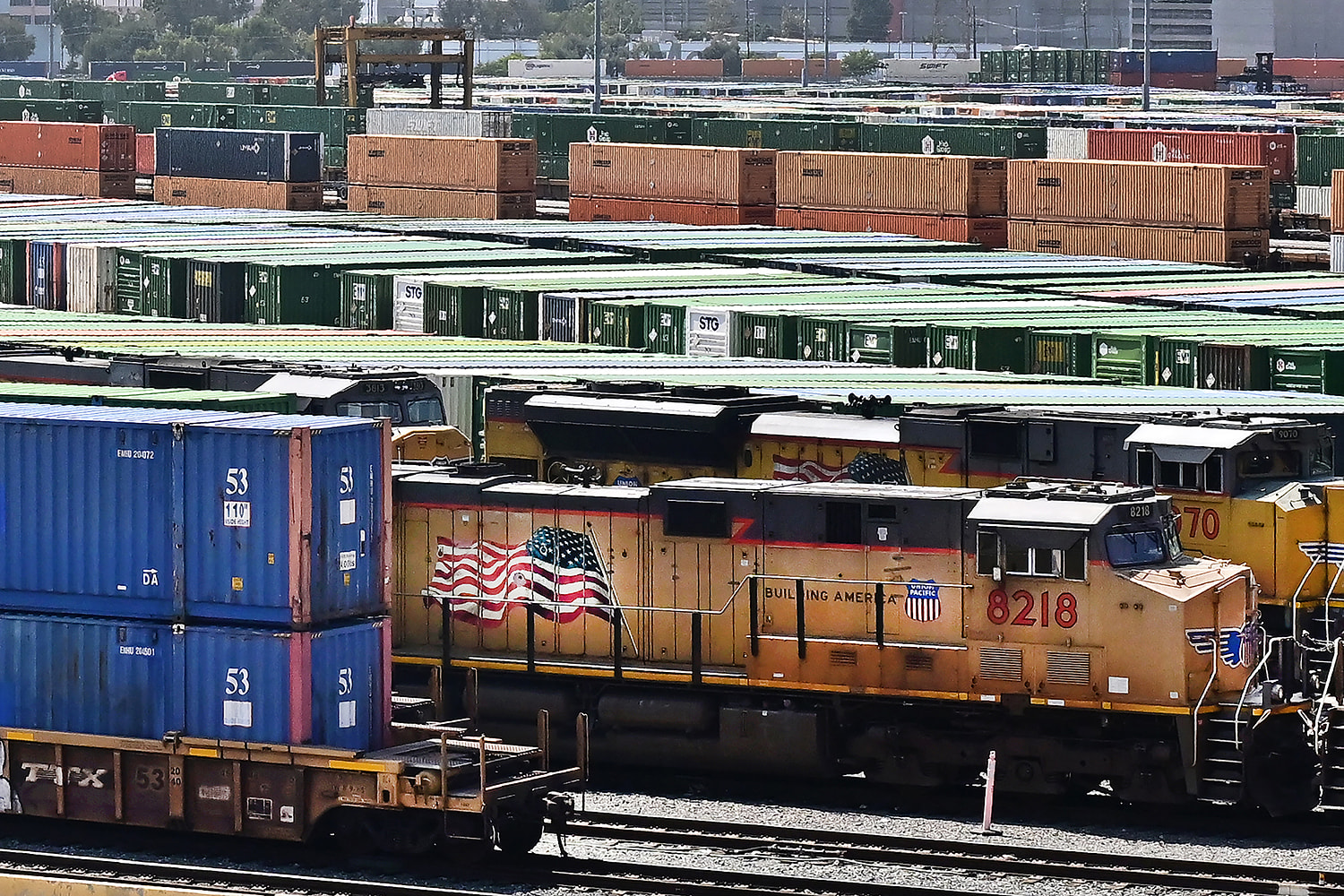
The theft of $22 million in footwear from freight trains is not an isolated failure of localized policing, nor is it an anomaly driven by opportunistic criminals. It is the predictable economic outcome of structural vulnerabilities built directly into North American intermodal supply chains. When organized theft rings extract high-margin consumer goods—specifically Nike and Crocs inventory—at an eight-figure scale, they are exploiting a precise intersection of physical rail geography, predictable transit bottlenecks, and asynchronous data visibility. Understanding this event requires stripping away the sensational framing of a "brazen heist" and examining the operational mechanics that make rail freight an asymmetric target for organized retail crime.
The Structural Vulnerability of Intermodal Freight
Intermodal shipping—the movement of standardized containers across ocean vessels, rail networks, and drayage trucks without unloading the cargo—is engineered for maximum throughput and minimum unit cost. Security is historically treated as a secondary constraint, subordinated to velocity and yard efficiency. This prioritization creates three distinct points of systemic failure. Don't miss our earlier post on this related article.
1. The Geography of Forced Deceleration
Freight trains do not maintain highway speeds continuously. They operate on fixed tracks subject to strict signaling blocks, grade crossings, switching yards, and siding delays. In major logistics corridors, particularly the routes connecting the Ports of Los Angeles and Long Beach to inland distribution hubs across the Mojave Desert and the Southwest, trains routinely decelerate to speeds under 15 miles per hour or come to complete stops in remote, unmonitored stretches of track.
Unlike interstate trucking, where a driver remains physically present with the asset and can alter routes dynamically, a two-mile-long intermodal train leaves dozens of containers stationary in zero-surveillance zones. A two-person crew at the head end of a 10,000-foot consist has zero visual or electronic awareness of a breach occurring 80 cars back. If you want more about the context here, Reuters Business offers an in-depth summary.
2. Standardized Container Architecture
The physical security of a standard 53-foot domestic container or 40-foot international container is remarkably low. While high-security bolt seals (ISO 17712 compliant) are standard practice, they serve primarily as tamper-evident indicators rather than physical barriers. A battery-powered angle grinder defeats a hardened steel bolt seal in less than ten seconds.
Once the locking rods are disengaged, the cargo inside is immediately accessible. Because intermodal containers are stacked or lined up sequentially, thieves can systematically breach multiple units during a single scheduled or unscheduled stop, staging the stolen merchandise along the right-of-way for rapid extraction by box trucks or off-road vehicles.
3. The Information Asymmetry Problem
Organized theft rings rarely operate blindly. Extracting $22 million worth of specific, high-demand footwear implies targeted selection rather than random container breaches. In a yard holding thousands of identical corrugated steel boxes, identifying which specific container holds limited-release sneakers versus low-value industrial raw materials requires intelligence.
This intelligence originates from data leakage across the supply chain ecosystem. Manifest data, container numbers, bill-of-lading details, and rail car assignments pass through dozens of third-party intermediaries, including freight forwarders, customs brokers, drayage dispatchers, and warehouse management systems. Compromised credentials at a single low-tier logistics vendor or insider collusion at a port terminal allows criminal syndicates to map exact container IDs to specific rail car positions before the train ever departs the origin yard.
The Economics of High-Velocity Footwear Theft
To understand why syndicates target brands like Nike and Crocs rather than consumer electronics or pharmaceuticals, one must evaluate the criminal risk-to-reward equation across four operational variables: unit value density, serialization, secondary market liquidity, and shelf life.
- Unit Value Density: Footwear occupies a middle ground between bulk commodities and micro-electronics. A single 53-foot container can hold roughly 8,000 to 10,000 pairs of shoes. At an average retail valuation of $100 to $150 per pair, a single container represents $800,000 to $1.5 million in gross retail value. Reaching a $22 million aggregate loss requires compromising roughly 15 to 25 targeted containers over a coordinated campaign—a manageable logistical volume for a mid-sized distribution ring operating a fleet of standard box trucks.
- Absence of Hardware Kill-Switches: High-end electronics (smartphones, laptops, gaming consoles) carry unique IMEI numbers, MAC addresses, and firmware locks. Manufacturers can brick stolen inventory remotely, rendering the hardware useless on the secondary market. Footwear has no digital kill-switch. Once a pair of sneakers leaves the container, its utility and market value remain 100% intact.
- Gray-Market Liquidity: The global secondary market for athletic footwear and casual clogs is massive, decentralized, and largely opaque. Platforms ranging from peer-to-peer marketplaces to third-party e-commerce storefronts and regional flea markets allow fences to liquidate thousands of units rapidly. Because legitimate retailers frequently liquidate excess stock through off-price channels, stolen footwear blends into normal gray-market inventory flows without triggering immediate suspicion from end buyers.
- Non-Perishability: Unlike agricultural goods, cold-chain pharmaceuticals, or seasonal fashion with rapid obsolescence curves, core footwear silhouettes retain market value for months or years. Syndicates can warehouse stolen pallets in self-storage facilities or unmarked industrial units, metering the supply into secondary channels to avoid depressing local resale prices.
Operational Mechanics of a Coordinated Rail Campaign
A $22 million loss figure does not represent a single nocturnal raid where hundreds of criminals empty twenty train cars simultaneously. Moving that volume of physical freight in one night would require a convoy of semi-trailers and heavy material-handling equipment that would immediately attract law enforcement intervention. Instead, losses of this magnitude are the cumulative result of an industrialized, repeatable extraction process executed over months.
The operational sequence follows a predictable four-stage cycle:
- Reconnaissance and Targeting: Syndicate spotters or compromised insiders obtain the consist manifest. They identify target containers carrying high-margin apparel and footwear, noting the container prefix, serial number, and position relative to the locomotives.
- In-Transit Interception: Operatives monitor train movements using publicly accessible rail scanner frequencies, visual spotters stationed near chokepoints, or compromised GPS tracking feeds. When the train slows at a known grade crossing or enters a remote siding, a boarding team mounts the slow-moving rail car or approaches the stationary consist.
- The Cut-and-Dump: Working in teams, operatives cut the bolt seals, open the container doors, and throw cases of footwear onto the ballast alongside the tracks. This phase minimizes dwell time on the train itself. The goal is to offload the target cartons before the train resumes speed or a trackside sensor triggers an anomaly alert.
- Sweep and Consolidation: A secondary ground crew follows the rail line in vans or box trucks, collecting the discarded cases from the right-of-way. The goods are transported to a local "stash house"—typically a short-term leased industrial warehouse—where shipping labels are stripped, cartons are re-palletized, and inventory is prepared for wholesale liquidation to complicit brokers.
Jurisdictional Friction and Law Enforcement Bottlenecks
A primary driver enabling repeat rail heists is the fragmented legal and operational jurisdiction governing interstate railroads. Class I railroads operate private police forces—railroad special agents—who possess federal law enforcement authority across state lines. However, these departments are severely understaffed relative to the tens of thousands of miles of track they must patrol. A single special agent may be responsible for hundreds of miles of remote desert or rural rail corridor.
When a theft occurs, jurisdictional friction slows the investigative response:
- Delayed Discovery: Because containers remain sealed after departure from the port, a breach often goes undetected until the train arrives at an inland intermodal ramp days later, or until the container reaches the final consignee's warehouse. By the time a shortage is reported, the physical crime scene is hundreds of miles away, and the stolen inventory has already been dispersed across multiple states.
- Local vs. Federal Prosecution: Local municipal police departments and county sheriff's offices often lack the forensic resources to investigate multi-state supply chain syndicates. Conversely, federal agencies such as the FBI and Homeland Security Investigations prioritize cases based on strict monetary thresholds and interstate nexus requirements. Until losses are aggregated across multiple incidents—as seen when a single ring hits the $22 million mark—individual container thefts are frequently treated as isolated local property crimes rather than coordinated enterprise racketeering.
- Reporting Disincentives: Shippers and carriers face commercial disincentives to publicize cargo theft. Disclosing chronic security failures damages brand reputation, complicates insurance renewals, and reveals operational vulnerabilities to rival criminal groups. This opacity delays cross-industry intelligence sharing, allowing the same syndicates to repeatedly hit the same corridors using identical tactics.
Limitations of Current Countermeasures
Shippers and rail operators have attempted to mitigate these losses through hardware upgrades and enhanced physical security, yet every countermeasure carries distinct operational trade-offs that prevent universal adoption.
High-Security Barriers and Smart Locks
Reinforced steel hasp locks and GPS-enabled electronic seals provide real-time breach alerts and increase the time required to force entry. The limitation is cost and reverse logistics. Intermodal containers are pooled assets designed for rapid turnover. Attaching a $300 reusable electronic lock to a container requires a closed-loop retrieval system at the destination warehouse to recover, recharge, and return the hardware. In high-volume retail supply chains, the administrative friction of managing lock inventory frequently outweighs the perceived risk of theft, leading operators to revert to single-use disposable seals.
Well-Car Pinning and Door-to-Door Loading
In double-stack well cars, loading containers so that the doors face inward toward the bulkhead of the rail car physically blocks the doors from opening while the container is seated in the well. While effective against in-transit breaches, this configuration slows down crane operations at origin and destination terminals. Terminal operators prioritize lift-per-hour metrics to prevent port congestion; requiring crane operators to orient every high-value container based on door direction introduces delays that ripple across the entire rail schedule.
Trackside Surveillance and Drone Patrols
Deploying thermal cameras, acoustic sensors, and autonomous drones along high-theft corridors improves detection rates. However, remote rail corridors lack reliable electrical power and high-bandwidth cellular connectivity. Maintaining off-grid surveillance infrastructure across hundreds of miles of desert terrain requires continuous capital expenditure, and detection without rapid physical interception merely documents the theft in progress rather than preventing the loss.
Strategic Shifts for Supply Chain Risk Mitigation
Eliminating $22 million rail heists requires abandoning reactive physical patching in favor of systemic changes to routing, data governance, and asset visibility. Shippers moving high-theft-profile inventory must execute four structural adjustments.
1. Segregate High-Value Freight from Standard Intermodal Flows
Brands moving high-demand footwear and apparel cannot rely on standard, unescorted intermodal rail for domestic distribution through known high-risk corridors. High-margin SKUs must be bifurcated at the port of entry. Core, lower-margin inventory can remain on intermodal rail, while flagship releases and high-value assortments should be transloaded directly into dedicated team-driven over-the-road (OTR) trucking or high-security less-than-truckload (LTL) networks. Eliminating stationary dwell time in remote rail sidings removes the primary physical vulnerability exploited by boarding crews.
2. Implement Covert, In-Cargo Telemetry
Relying on container-level GPS tracking fails once the cargo is thrown onto the trackside ballast. Shippers must embed disposable, cellular-and-Wi-Fi-enabled micro-trackers inside the actual product cartons—specifically within randomized master cases across the pallet load. When a breach occurs and cases are separated from the rail car, covert telemetry allows law enforcement to track the stolen goods directly to the consolidation stash house, enabling investigators to dismantle the fencing network rather than merely recovering discarded packaging.
3. Enforce Zero-Trust Manifest Architecture
To neutralize insider collusion and data scraping, shippers must restrict visibility into container contents across third-party logistics providers. Bills of lading and rail manifests should utilize generic commodity descriptions rather than brand-specific identifiers. Container numbers should be decoupled from SKU-level packing lists in external-facing transportation management systems, ensuring that port workers, drayage dispatchers, and rail yard personnel cannot identify which specific box holds high-value footwear.
4. Establish Cross-Carrier Intelligence Consortiums
Individual brands cannot outspend or out-investigate organized criminal syndicates operating across state lines. Shippers, Class I railroads, and federal task forces must standardize incident reporting into unified, real-time geospatial databases. Mapping exact breach coordinates, train deceleration patterns, and secondary-market liquidation spikes allows security teams to predict syndicate movements dynamically—shifting physical security resources ahead of criminal activity rather than auditing the losses after the manifest arrives short.