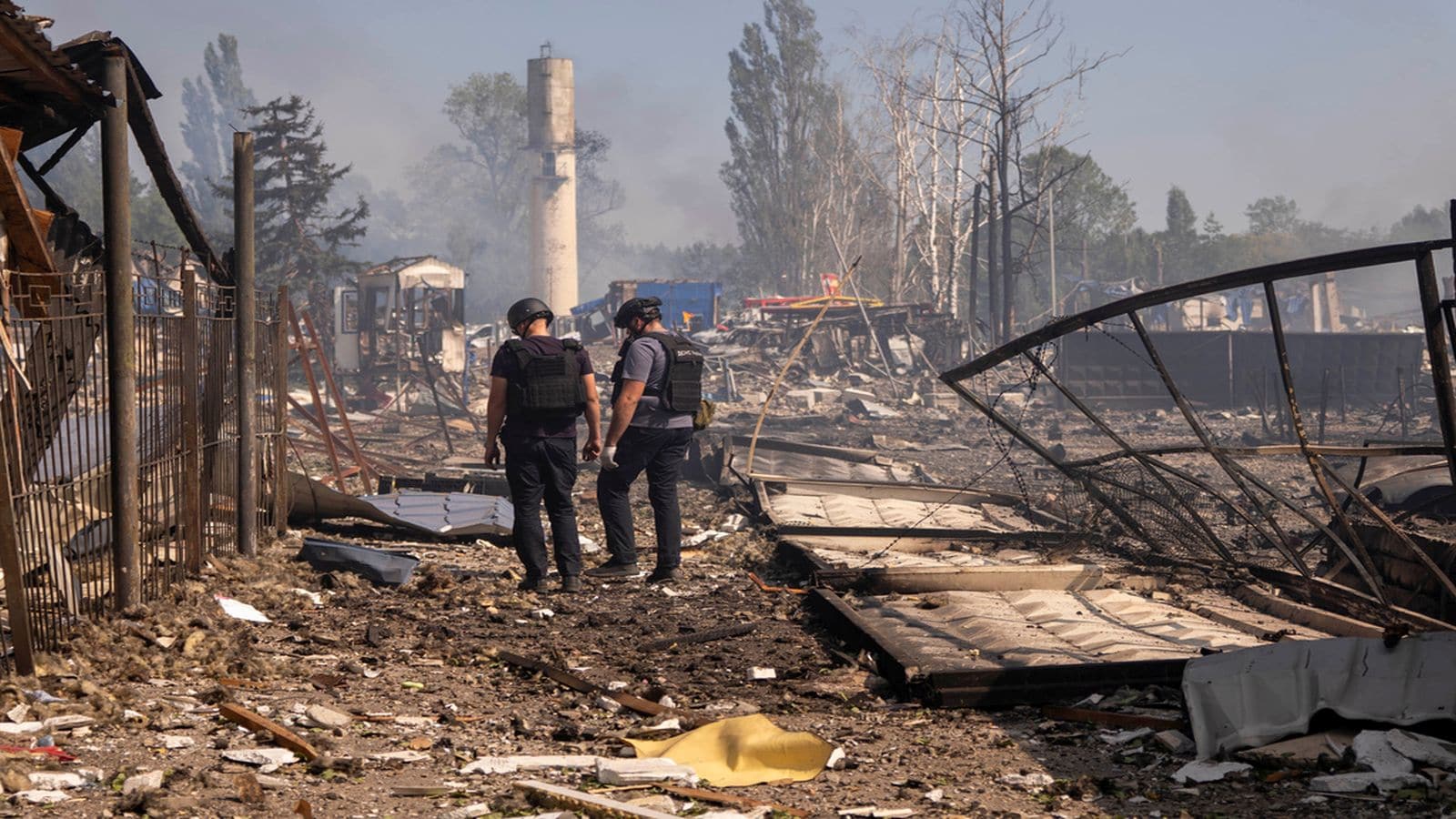
Modern aerial bombardment campaigns operate on a calculation of marginal utility where high-cost munitions are deployed against dense urban terrain to induce systemic paralysis. When state-directed air assets target civilian infrastructure across multiple regions simultaneously, the objective extends beyond tactical disruption. The recent barrage across Ukraine, which resulted in twelve fatalities including a foreign national, demonstrates an escalation in saturation-level targeting. Analyzing this operational pattern requires moving past standard casualty tallies to evaluate the economic, infrastructural, and diplomatic friction introduced by persistent drone and missile saturation.
The mechanics of these campaigns rely on vector diversification. By deploying mixed packages of jet-powered drones, ballistic missiles, and guided aerial bombs, offensive forces strain air-defense networks through high-volume saturation. Also making news in related news: Why Modi at the SCO Summit is the Masterclass Nobody Wants to Admit.
The operational mechanics function across three distinct vectors:
- Munition Heterogeneity: Combining low-cost loitering munitions with high-speed ballistic assets forces defenders to expend scarce interceptors inefficiently.
- Temporal Staggering: Sustaining waves over consecutive days degrades defender fatigue and stretches emergency response capabilities past nominal thresholds.
- Infrastructure Node Targeting: Striking dual-use nodes such as railway depots, border crossings, and power subgrids simultaneously isolates regional command and economic output.
In the assault on Kyiv, Boryspil, and Odesa, the strikes bypassed front-line military targets to focus on transit arteries and residential centers. The destruction of a railway depot and the disruption of a border checkpoint on the Danube demonstrate a calculated effort to impair logistical throughput. When transport nodes are compromised, the friction coefficient of internal commerce and humanitarian relief multiplies instantly. More details regarding the matter are explored by The Guardian.
The inclusion of an Indian citizen among the casualties elevates the geopolitical risk profile of the theater. While expatriates, students, and workers in active combat zones represent an unavoidable statistical vulnerability, their presence internationalizes the cost of localized air campaigns. This incident follows high-level diplomatic friction, including direct appeals between international leaders regarding the cessation of hostilities. Diplomatic channels must constantly recalibrate their posture when neutral nationals are caught within saturation-strike zones, adding an unpredictable layer of bilateral pressure to state actors.
Air defense efficacy operates on a strict supply-demand curve. Interceptor stock levels dictate the interception ceiling. When aerial asset deployment rates outpace replenishment pipelines, the defensive leakage percentage rises predictably.
The mathematical relationship governing interceptor depletion can be expressed through inventory mechanics:
- Stock Deficit: The rate of incoming vector arrivals exceeds the operational firing rate of defensive batteries.
- Leakage Multiplier: Every percentage drop in interceptor availability correlates directly with a non-linear increase in structural damage and civilian casualties.
- Resource Asymmetry: Deploying multi-million-dollar interceptor units against inexpensive drone platforms drains state treasuries faster than manufacturing bases can replenish them.
This dynamic explains why strategic advocates emphasize the acceleration of anti-ballistic supply pipelines. Without a secure supply curve for defensive hardware, urban centers remain exposed to high-volume attritional strategies designed to break societal resilience over time.
To mitigate the systemic impact of these multi-vector bombardment campaigns, defense planners must shift focus from reactive point-defense to proactive supply-chain hardening and distributed power generation. Decentralizing critical logistics hubs and establishing localized micro-grids will reduce the systemic vulnerability exposed by current mass-strike strategies.