Assessing the deterioration of security in South Sudan requires moving beyond surface-level humanitarian lamentations to examine the underlying mechanical failure of state governance, resource distribution, and fragmented military integration. The intensification of violence across regions like Warrap, Upper Nile, and Jonglei is not merely a resurgence of random communal raiding, but the predictable outcome of a stalled peace architecture, severe climate shocks, and an acute fiscal squeeze.
Understanding how local flashpoints compound into national instability demands an examination of three primary structural vectors: elite political fragmentation, resource scarcity driven by systemic environmental degradation, and the logistical bottlenecks choking humanitarian intervention.
The Mechanics of Political and Military Fragmentation
The core driver of the current escalation is the systemic failure of the 2018 Revitalized Peace Agreement. Power-sharing arrangements at the national level failed to translate into a unified command structure for security forces. Instead, the military apparatus remains vertically fractured along factional and ethnic lines, creating a security dilemma where preemptive mobilization is viewed by each faction as a survival necessity.
When political elites experience a contraction in patronage resources—exacerbated by stagnant oil revenues and external shocks—cohesion dissolves. Local commanders and aligned youth groups, such as the White Army, operate with high autonomy. This decentralization of violence transforms localized disputes over pasture and water into proxy conflicts for national political factions.
The state security apparatus responds through blunt-force mechanisms, including retaliatory sweeps and aerial bombardments in populated areas. This strategy produces a self-reinforcing loop: state-sponsored violence alienates local populations, drives recruitment into armed opposition groups, and deepens territorial fragmentation.
The Environmental and Economic Cost Function
Security dynamics in South Sudan are inextricably linked to an extreme climate-conflict nexus. Consecutive years of catastrophic flooding across the Sudd marshlands and adjacent river basins have permanently altered arable land availability.
- Arable Land Contraction: Flood-drought cycles destroy traditional seasonal migration routes for pastoralist communities, forcing cattle-herding groups into compressed geographic corridors.
- Asset Depletion: Livestock, which functions as both a liquid currency and a primary store of value, faces high mortality rates from disease and drowning, driving desperate retaliatory cattle raids.
- Macroeconomic Vulnerability: Overreliance on a single export commodity—petroleum—leaves the treasury vulnerable to external price shocks and transit disruptions through neighboring territories.
When state revenues drop, the government loses its capacity to pay security forces and civil servants consistently. Unpaid soldiers routinely resort to looting and local extortion, directly degrading civilian security. Meanwhile, the influx of hundreds of thousands of returnees and refugees fleeing the parallel conflict in Sudan places an unsustainable load on already collapsed local infrastructure, stretching carrying capacity past the breaking point.
The Humanitarian Access Bottleneck
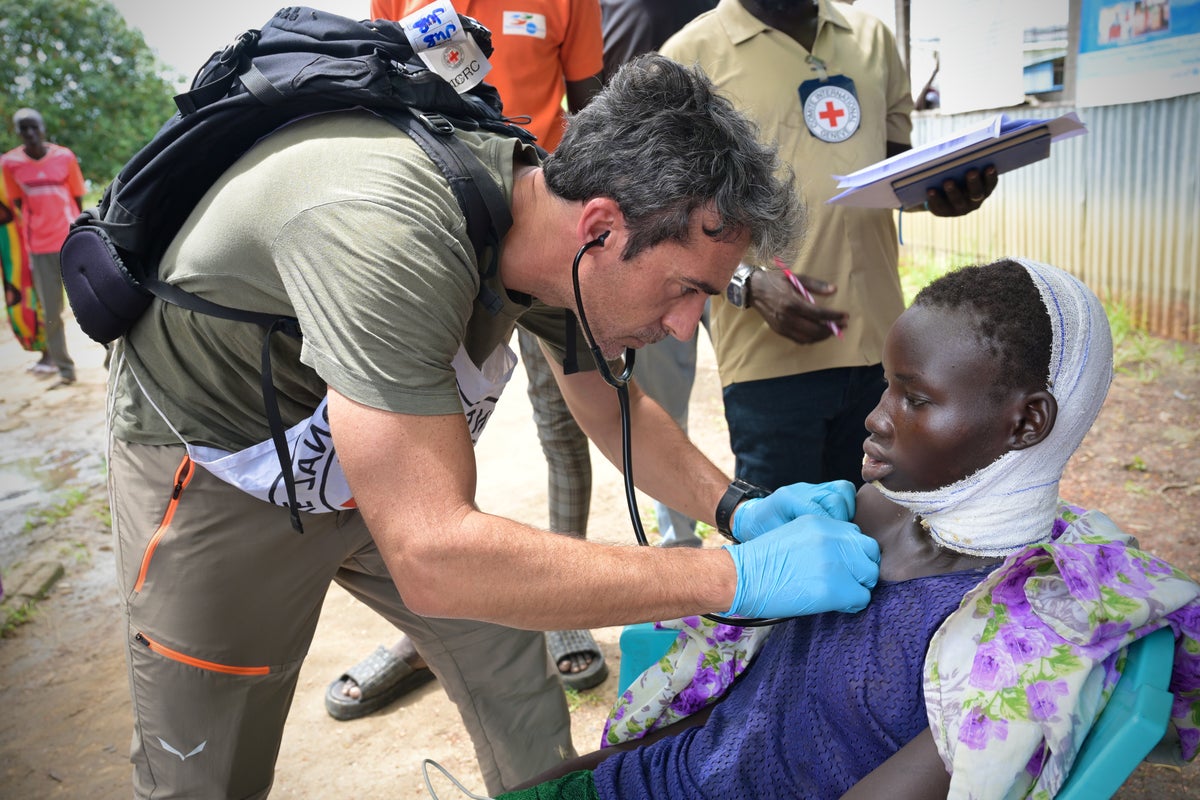
The operational environment for aid delivery has deteriorated into a high-friction matrix. Humanitarian operations face three distinct operational barriers that prevent effective mitigation of civilian suffering:
- Insecure Supply Corridors: Combatants routinely target transport routes, bridges, and humanitarian assets, turning logistics into a high-risk enterprise requiring expensive air operations.
- Administrative Obstruction: Bureaucratic interference, arbitrary taxation, and operational restrictions imposed by state security agencies delay the deployment of emergency food supplies and medical interventions.
- Underfunded Appeal Structures: International funding mechanisms operate at a severe deficit, forcing agencies to triage populations and abandon preventive programming to focus solely on acute mortality management.
With over two-thirds of the population requiring direct assistance and acute malnutrition rates scaling upward, the structural gap between required aid and delivered resources continues to widen. Disease outbreaks, including recurring cholera and measles waves driven by compromised water systems, act as lagging indicators of this systemic breakdown.
Strategic Operational Outlook
To arrest this trajectory, international actors and regional bodies must abandon traditional diplomatic approaches that rely exclusively on elite-level power-sharing pacts. Future interventions must target the economic incentives driving localized mobilization.
Diplomatic pressure must enforce transparency on oil revenue management to ensure salary disbursement to security forces, thereby reducing predatory behavior against civilians. Concurrently, humanitarian logistics must pivot from reactive, convoy-based distribution to localized prepositioning before seasonal rains cut off access routes. Stabilizing the region requires treating violence not as an unpredictable humanitarian tragedy, but as a calculated rational output of broken political and economic systems that must be systematically re-engineered.


