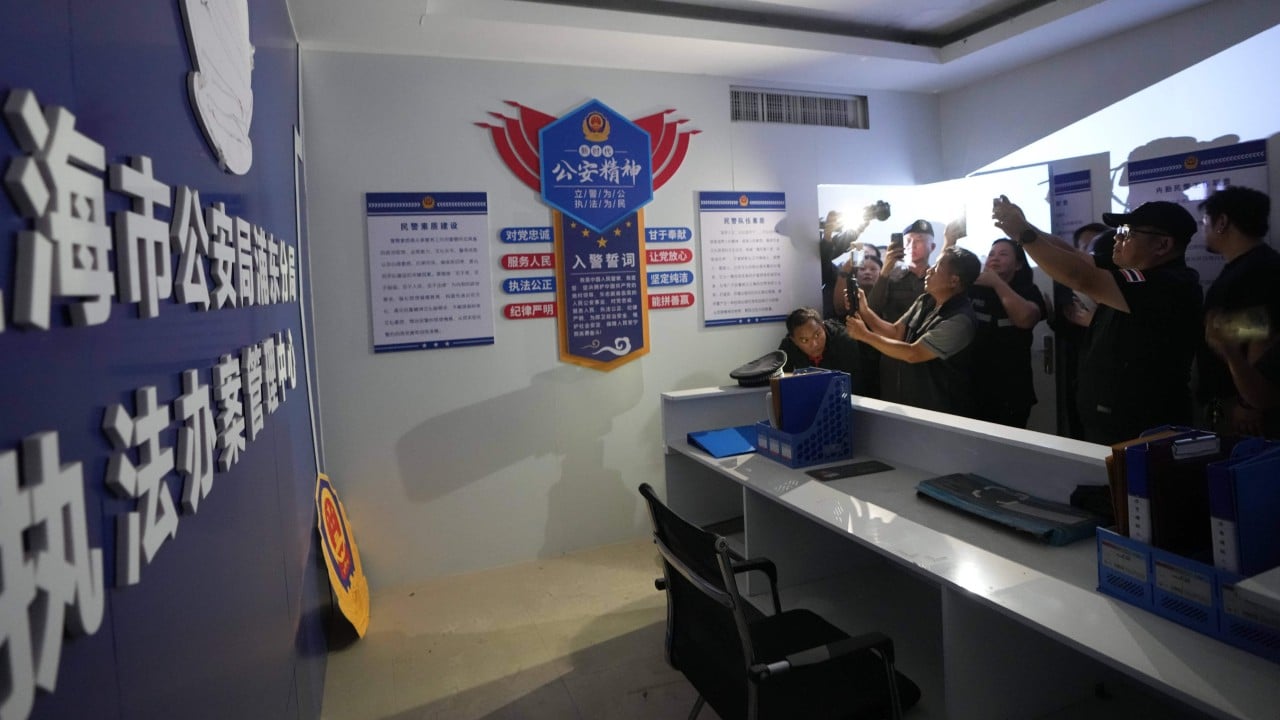
Asset forfeiture at the US$1 billion threshold alters the unit economics of transnational cyber-fraud by attacking capital accumulation rather than operational labor. When Thai authorities move to freeze and confiscate a ten-figure sum tied to a money laundering syndicate, the intervention targets the balance sheet of an illicit enterprise rather than its call-center floor staff. Most coverage treats such seizures as isolated law enforcement victories, ignoring the underlying capital mechanics, jurisdictional arbitrage, and liquidity bottlenecks that govern Southeast Asian scam networks. Understanding this enforcement action requires dissecting how illicit revenue is generated, layered through Thai financial infrastructure, and legally decoupled from its operators under civil asset forfeiture frameworks.
The Structural Economics of Industrialized Cyber-Fraud
Transnational scam syndicates operating across the Mekong subregion function as vertically integrated enterprises rather than loose criminal gangs. Their business model relies on high-margin social engineering—commonly categorized as investment fraud, pig-butchering schemes, and fake e-commerce operations—paired with low-cost, often trafficked labor situated in border enclaves in Myanmar, Cambodia, and Laos.
While the operational front-end sits outside Thai jurisdiction to evade immediate tactical raids, the financial back-end depends heavily on Thailand's banking infrastructure, real estate market, and transit hubs. A syndicate generating hundreds of millions of dollars cannot store value in the remote, under-banked special economic zones where its compounds operate. Capital must migrate into liquid, globally connected financial systems to pay suppliers, distribute dividends to principals, and acquire hard assets.
This creates a structural vulnerability. The operational side of the syndicate benefits from geographic dispersion and weak border enforcement, while the treasury side requires concentration, institutional access, and legal title. By targeting US$1 billion in assets, Thai regulators—specifically the Anti-Money Laundering Office (AMLO) alongside cybercrime task forces—strike the single point of failure where illicit digital inflows must convert into verifiable wealth.
The Three-Stage Laundering Architecture
To accumulate US$1 billion within Thai jurisdiction without triggering immediate automated compliance halts, a laundering group must execute a multi-tiered conversion architecture. Standard retail banking controls flag sudden, unsubstantiated wire transfers, forcing syndicates to rely on structured layering mechanisms.
Stage 1: Digital Ingestion and Mule Aggregation
Victims in North America, Europe, and East Asia transfer funds via wire, cryptocurrency, or payment processors. The syndicate immediately fragments these inflows across thousands of domestic and regional "mule" accounts—bank accounts opened by recruited locals or using stolen identities.
- Velocity management: Funds remain in first-tier mule accounts for minutes rather than days, moving rapidly to prevent victim-initiated recall requests from freezing the principal.
- Crypto-fiat bridging: High-value tranches are converted into stablecoins (predominantly USDT on the Tron network due to low transaction fees) via over-the-counter (OTC) brokers before entering the Thai baht ecosystem.
Stage 2: Corporate Shell Layering
Once aggregated, capital requires a legitimate origin narrative. Laundering groups establish or acquire dormant Thai-registered companies—often structured as nominee entities to circumvent foreign ownership restrictions under the Foreign Business Act.
- Trade-based laundering: Syndicates generate falsified invoices for high-value, subjective-pricing goods such as software licensing, consulting services, or luxury commodities.
- Cash-intensive fronts: Hospitality venues, entertainment complexes, and construction firms serve as secondary mixing engines, blending illicit digital proceeds with legitimate domestic cash flows.
Stage 3: Capital Immobilization in Hard Assets
Holding US$1 billion in liquid cash exposes a criminal network to instantaneous electronic freezes. Syndicates therefore convert liquid balances into illiquid, appreciating assets within Thailand.
- Luxury real estate: High-end condominiums in Bangkok, resort villas in Phuket, and commercial land parcels absorb large capital blocks per transaction while generating rental yield.
- Moveable luxury goods: Supercars, fine art, and high-horology watches provide portable stores of value that can be liquidated through private secondary markets across borders.
Mechanisms of Civil Asset Forfeiture in Thailand
A seizure of this magnitude does not rely on securing criminal convictions prior to freezing wealth. Criminal prosecution of transnational syndicate bosses is notoriously slow, complicated by extradition hurdles, dual nationality, and the use of insulated proxies. Instead, Thai authorities utilize civil forfeiture provisions under the Anti-Money Laundering Act.
Under this framework, the legal action is in rem—directed against the property itself rather than the individual. Once investigators establish a probable nexus between an asset pool and a predicate offense (such as public fraud or transnational organized crime), the AMLO Transaction Committee issues a temporary freeze order, typically valid for 90 days.
The burden of proof then shifts sharply. Rather than the state proving beyond a reasonable doubt that the funds are criminal proceeds, the registered titleholders must demonstrate with documented tax records, audited financial statements, and verifiable banking trails that the assets were acquired through legitimate economic activity. When assets are held by nominee directors earning modest declared incomes or shell companies with zero operational footprint, this evidentiary threshold becomes impossible to meet. The state then petitions the Civil Court to vest permanent ownership of the assets in the public treasury.
Why US$1 Billion Matters to Syndicate Liquidity
Assessing the impact of a US$1 billion seizure requires distinguishing between accounting value and operational liquidity. The headline figure almost certainly represents the gross appraised value of frozen bank balances, seized real estate deeds, luxury vehicles, and cryptocurrency wallets combined, rather than pure cash on hand.
Even accounting for valuation inflation in seized physical goods, losing a ten-figure asset base inflicts severe operational damage on a laundering syndicate through three distinct channels:
- Working Capital Contraction: Laundering syndicates operate as clearinghouses for multiple scam compounds. They guarantee liquidity to operational bosses in exchange for a percentage fee (often 10% to 30% of gross scam revenue). Freezing the clearinghouse's reserve pool breaks its ability to settle accounts, triggering immediate defaults across its client network.
- Collateral Destruction: Syndicates frequently use Thai real estate and corporate equity as informal collateral to secure credit lines from underground banking networks. When the state encumbers the underlying titles, the syndicate's borrowing capacity evaporates overnight.
- Counterparty Contagion: When a major laundering hub collapses, upstream scam operators lose trust in similar financial intermediaries. This forces syndicates to fragment their cash-out operations into smaller, less efficient channels, driving up their transaction costs and compressing net profit margins.
Operational Limitations and Evasion Dynamics
While a US$1 billion enforcement action disrupts a specific network, treating asset seizures as a permanent solution to regional cyber-fraud ignores the adaptive nature of illicit finance. Enforcement strategies face structural limitations that syndicates actively exploit.
First, jurisdictional leakage remains the primary escape valve. As Thai authorities tighten scrutiny on domestic property transfers and corporate nominee structures, laundering syndicates redirect capital flows toward jurisdictions with looser beneficial ownership registries or weaker enforcement capacity, such as unregulated zones in neighboring states or offshore financial centers.
Second, nominee resilience slows the final liquidation phase. Even when assets are frozen, contested civil forfeiture proceedings can tie up real estate and corporate shares in Thai courts for years. During this period, physical assets depreciate, and the state incurs holding and maintenance costs before any restitution can be returned to fraud victims or absorbed into state revenue.
Third, stablecoin internalization reduces reliance on traditional banking rails. Increasingly, syndicates settle internal supply chain costs—paying software developers, data brokers, and traffickers—directly in cryptocurrency without ever off-ramping into fiat currency. As closed-loop crypto economies mature within the scam ecosystem, the surface area exposed to traditional banking freezes shrinks proportionally.
Strategic Imperatives for Financial and Regulatory Systems
To convert high-profile asset seizures from episodic disruptions into systemic deterrence, regulatory and financial institutions must target the structural prerequisites of laundering rather than reacting to accumulated balances.
- Enforce Beneficial Ownership Transparency: Thailand's Department of Business Development and AMLO must synchronize corporate registration databases with tax and banking records in real time. Preventing nominee structures at the point of incorporation eliminates the primary vehicle used to acquire high-value real estate.
- Shift from Transaction Monitoring to Network Analysis: Commercial banks must move beyond static threshold alerts (such as flagging transfers above a specific baht amount) and deploy graph-based analytics capable of identifying high-velocity, fan-in/fan-out mule networks within hours of account activation.
- Establish Cross-Border Asset Recovery Protocols: Because victims of Thai-laundered scam proceeds predominantly reside abroad, bilateral treaties governing the rapid sharing of financial intelligence and the equitable repatriation of forfeited assets are essential to align international law enforcement incentives.
Syndicates will continuously migrate toward the path of least regulatory resistance. Sustaining pressure requires systematically raising the cost of capital conversion until the financial friction of laundering outweighs the high margins of digital fraud.