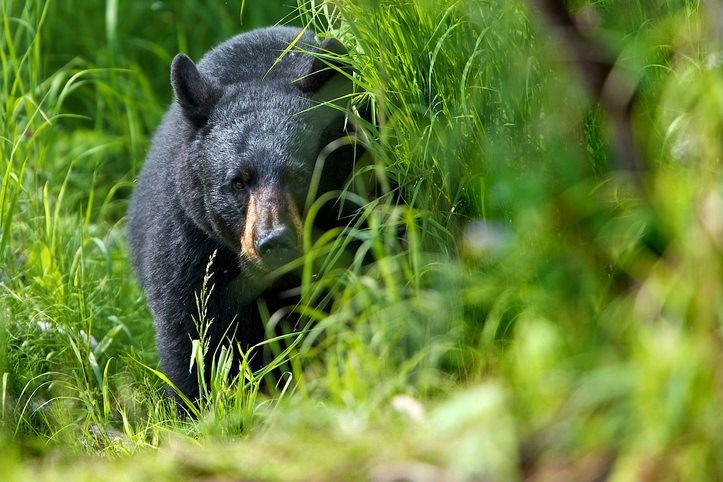
The fatal encounter at McTavish Lake in northern Saskatchewan, resulting in the deaths of two individuals, marks a highly anomalous escalation in human-wildlife conflict metrics for the region. Media narratives frequently classify these events under the umbrella of "accidents" or "tragedy," omitting the underlying behavioral mechanics and ecological shifts that govern predatory risks in isolated geographies. Understanding these events requires breaking away from sensationalism and evaluating the interaction through localized wildlife vectors, environmental stressors, and defensive tactical failures.
The incident occurred at a fly-in cabin approximately 90 kilometers north of La Ronge, an area completely isolated from municipal infrastructure and dense human activity. According to reports from the provincial Ministry of Community Safety, the Saskatchewan Conservation Officer Service, and the Saskatchewan Coroner’s Service, a single bear was identified as the vector and subsequently euthanized for veterinary pathological review. This marks the second fatal bear interaction in the province within a sixty-day window, a clustering of events that challenges historical statistical baselines. Discover more on a similar issue: this related article.
The Dual-Mechanism Framework of Large Carnivore Aggression
To evaluate why a wild animal transitions into lethal engagement with humans, wildlife biologists separate interactions into two distinct operational profiles: defensive-reactive and predatory.
Defensive-Reactive Interactions
These are short-duration, high-intensity encounters triggered by a perceived threat to the animal's immediate survival or resources. The primary drivers include: Additional reporting by The Guardian delves into similar views on this issue.
- Sow-Curb Defense: A female bear protecting cubs from an unexpected close-quarter approach.
- Resource Guarding: Defense of a highly valued food cache, such as an animal carcass.
- Surprise Threshold Incursions: Sudden human presence within the animal’s flight-or-fight perimeter, typically under 15 meters.
Defensive attacks are structurally designed to neutralize the threat. Once the human actor ceases movement or retreats, the animal typically breaks off the engagement.
Predatory Interactions
Predatory behavior follows a fundamentally different causal pathway. It is characterized by silent tracking, prolonged observation, and a deliberate, unprovoked assault aimed at consumption. In these scenarios, the human is categorized strictly as biomass. The physical layout of the McTavish Lake site—where one individual was discovered on the lakeshore and the second deep within adjacent timber—strongly points away from a singular, defensive flashpoint and toward an active predatory pursuit or a multi-stage zone displacement.
Environmental Stressors and Resource Deficits
The baseline probability of predatory behavior in American black bears (Ursus americanus) increases when regional ecosystem carrying capacities collapse or encounter structural disruptions.
[Regional Climate Shifts] ──> [Boreal Berry / Forage Failure] ──> [Caloric Deficit]
                                                                         │
                                                                         ▼
[Socioeconomic Encroachment] ──> [Attractant Mismanagement] ──> [Anthropogenic Habituation]
                                                                         │
                                                                         ▼
                                                            [Predatory Risk Escalation]
The boreal shield of northern Saskatchewan relies on strict seasonal sequences for bear foraging. The transition from emergence to hyperphagia—the late-summer period where bears must consume up to 20,000 calories per day to survive winter dormancy—requires immense access to high-density caloric sources like soft mast (berries) and colonial insects.
When environmental shocks disrupt berry crops, apex predators face severe caloric deficits. This forces individuals to expand their home ranges into non-traditional territories, including active human leases, mining operations, and cabins. The second limitation of standard wildlife reporting is failing to correlate these localized forage collapses with the frequency of camp incursions. A starving animal systematically lowers its risk-aversion threshold, neutralizing the natural deterrence usually provided by human scents or vocalizations.
The Bottleneck of Remote Camp Management and Habituation
Isolated cabins and exploratory industrial outposts operate with inherent structural vulnerabilities that compound wildlife risks. The primary operational bottleneck centers on anthropogenic attractants.
Scent Line Dispersal
Greywater systems, food storage, and fish-cleaning stations generate concentrated olfactory plumes that travel kilometers downwind through dense boreal forest. To an animal experiencing hyperphagia, these plumes represent a low-energy, high-reward foraging vector.
The Mechanism of Habituation
When a bear investigates an attractant and encounters no negative stimuli, it experiences psychological reinforcement. Over multiple iterative exposures, the animal transitions from food-conditioned (associating humans with food) to habituated (losing all intrinsic fear of human presence).
Data from previous northern encounters indicates that habituated bears do not exhibit standard avoidance behaviors like huffing, jaw-popping, or swatting the ground. Instead, they approach silently, deploying stalking mechanisms identical to those used when hunting ungulates. Cabin owners in remote zones frequently overlook minor property incursions by bears, failing to realize that an unpunished exploration of a porch or storage shed is a precursor to a dominance assertion over the physical space.
Micro-Geography and Fatal Vulnerabilities
The physical distribution of the victims at McTavish Lake exposes the severe tactical disadvantage of unmonitored wilderness properties. The first individual was located on the shoreline, while the second was discovered in the woods during a subsequent secondary search. This spatial separation highlights several lethal tactical variables:
- Line-of-Sight Blockage: Boreal topography features dense black spruce stands and uneven muskeg terrain. This limits visual reconnaissance to mere meters, completely neutralizing early-warning opportunities.
- Acoustic Masking: Shoreline activities involve ambient water movement, wind shear, or small-motor operation. These acoustic profiles mask the approach of a large predator through nearby brush.
- Isolation From Defensive Enclosures: Working on shorelines or paths removes immediate access to hard-sided structures or vehicles, eliminating the primary physical barrier capable of stopping a charging animal.
Systemic Flaws in Remote Wilderness Defense Strategy
Standard outdoor safety protocols rely heavily on non-lethal and lethal deterrents, yet their efficacy drops precipitously in remote settings due to execution failures.
| Deterrent Type | Operational Mechanism | Key Failure Modes |
|---|---|---|
| Capsaicin Spray (Bear Spray) | Induces temporary respiratory inflammation and ocular blindness via atomized oil. | Wind-direction reversal; deployment outside effective range (< 5 meters); failure to carry on person at all times. |
| Acoustic Deterrents (Bangers/Horns) | Deploys a high-decibel shockwave to trigger a flight response. | Can provoke an aggressive charge if used on a habituated or cornered animal; requires precise aiming. |
| Firearms (Large Caliber) | Kinetic neutralization of vital organs or central nervous system. | High stress degrades marksmanship; improper ammunition selection (failing to use deep-penetrating solid slugs or heavy rifle rounds). |
The primary vulnerability is not the tool itself, but the transport bottleneck. Analysis of historic fatal encounters reveals a systemic trend: deterrents are frequently left inside cabins, stored in boats, or packed away in zipped bags rather than being secured directly to the user’s hip via a rapid-draw holster. In a predatory charge, which can close a 20-meter gap in less than two seconds, any deterrent not physically attached to the body is non-existent.
Operational Playbook for Remote Outpost Risk Mitigation
To prevent structural breakdowns in safety when operating or staying in high-density apex predator zones, facilities and private operators must implement an absolute containment and defense strategy.
First, execute complete exclusion zoning. Surround the immediate perimeter of any high-use camp or cabin with a solar-powered electric fence capable of delivering a minimum shock of 6,000 to 8,000 volts. This provides an immediate, severe negative stimulus that breaks the habituation cycle before an animal approaches living quarters.
Second, enforce zero-tolerance attractant isolation. All organic waste must be stored in certified bear-resistant containers or incinerated daily. Fish cleaning must never occur on the immediate cabin shoreline; instead, establish a dedicated cleaning station at least 100 meters downwind or on an isolated island, with all remains sunk in deep water away from camp perimeters.
Third, maintain mandatory individual defense readiness. Every individual outside a hard-sided structure must carry a minimum of one canister of high-output capsaicin spray on an open hip-holster, supplemented by a secondary heavy-caliber firearm or acoustic deterrent if operating in dense brush. Establish regular blind deployment drills to ensure reaction times under two seconds.