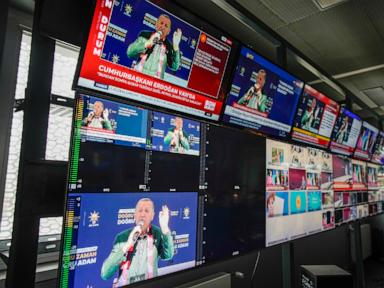
Dawn raids on television studios and court-appointed trusteeships are not isolated acts of censorship; they operate as coordinated institutional takeovers that neutralize information distribution right before or during high-stakes political trials. Standard coverage of media crackdowns in Turkey typically treats each event as a standalone clash between state police and independent journalists, cataloguing detentions and quoting opposition leaders and press freedom organizations. That framing captures the immediate shock of a broadcast going dark, yet it misses the structural machinery behind the seizure. To understand what happens when prosecutors target a television network—such as the October 2026 seizure of Halk TV amid the trial of imprisoned Istanbul Mayor Ekrem İmamoğlu, followed by the November 2026 raid and trustee appointment at Sözcü TV—an analyst has to separate judicial pretexts, corporate ownership vulnerabilities, and distribution bottlenecks.
Deconstructing Conventional Coverage
Conventional reporting on broadcast raids relies on an event-driven narrative loop. An outlet reports a pre-dawn police operation, lists the detention warrants or arrests, summarizes the prosecutor's legal theory—whether financial crimes, anti-terror financing, or espionage—and pairs those claims with statements from rights groups and opposition politicians. While accurate on surface facts, this structure leaves major causal links unexamined.
The first analytical gap lies in treating legal charges as either pure truth or pure fabrication without examining their operational utility. When prosecutors open financial investigations or cite alleged ties to designated groups like the Gülen network (referred to by Turkish authorities as FETÖ/PDY), those allegations serve an immediate procedural function: they justify search warrants, asset freezes, and the appointment of state-backed trustees who immediately alter editorial control.
The second gap is flattening media repression into a single uniform action. Raiding a television studio and suspending live broadcasts disrupts a mass-market visual medium with high real-time political salience, whereas leaving print editions untouched—as seen when Sözcü TV and its website received a trustee while the daily Sözcü newspaper and sister dailies were not seized—reflects selective targeting rather than total elimination of a corporate group.
The Four Pillars of Broadcast Capture
A rigorous breakdown of state media interventions rests on four interacting mechanisms. Together, they explain how legal instruments convert into editorial capture.
- Judicial Pretext and Procedural Leverage: Investigators invoke statutes covering financial crimes, anti-terror financing, or national security. Regardless of how long-running an underlying file is or how contested the evidence proves later in court, the opening of an active prosecutorial action unlocks coercive tools—detentions, travel bans, office searches, and trusteeship petitions—that operate immediately.
- Ownership and Capital Concentration: Independent broadcasters rarely sit inside isolated, debt-free newsrooms. They are embedded in holding structures alongside adjacent businesses, overseas accounts, or family-linked entities. Tracing ownership links allows authorities to frame a media takeover as a corporate or financial compliance action rather than a direct assault on journalism.
- Regulatory and Administrative Attrition: Long before a physical raid occurs, broadcasters face ongoing administrative pressure, including fines from Turkey's Radio and Television Supreme Council (RTÜK) over political commentary. Continuous regulatory friction raises compliance costs, shrinks operating margins, and leaves outlets with thinner legal and financial buffers when a crisis hits.
- Distribution and Amplification Chokepoints: Controlling a studio is only half of a seizure. Halting television broadcasts cuts off mass linear viewing, while blocking associated social media accounts—such as the move against Halk TV's high-follower X account after its takeover—severs the secondary digital distribution channel that carries clips and live updates to wider audiences.
Timing and Political Sequencing
Conventional summaries often note that a raid happened around a major political event without mapping the cause-and-effect sequence. Timing matters because television news shapes public interpretation of fast-moving legal and political developments in real time.
When a major opposition-aligned channel goes off the air or shifts to trustee management during an active high-profile prosecution, the immediate effect is informational asymmetry. Viewers who rely on broadcast coverage for live courtroom context, investigative reporting, or opposition commentary face an abrupt drop in alternative framing. Even if broadcasts resume under new management or viewers migrate online, the disruption breaks momentum at a moment when public attention is concentrated.
Known Facts Versus Analytical Hypotheses
Maintaining strict discipline between verified facts and analytical inference prevents overreach:
- Known facts: Prosecutors have cited financial crimes or anti-terror financing investigations when moving against major broadcasters; police have carried out early-morning operations; executives and staff have faced detentions or arrests; and court-appointed trustees have assumed control of television operations and websites while halting or interrupting independent programming. Press freedom bodies and opposition figures have characterized these actions as politically motivated efforts to silence critical coverage.
- Educated hypotheses: Prosecutors likely select financial and security investigations because those legal categories carry broad investigative powers and high public-order stakes, making judicial pushback harder in the short term. Similarly, selective seizure of broadcast and digital arms while sparing print newspapers may reflect a calculated effort to neutralize high-reach visual media while limiting broader collateral backlash across all publishing assets.
Operationalizing Risk Assessment
For media executives, legal counsel, risk analysts, and policy observers tracking press freedom and institutional stability, reacting only after a raid occurs is a late-stage posture. A practical analytical workflow evaluates exposure before a takeover happens.
Step 1: Audit Corporate and Financial Exposure Points
Map every legal entity, signatory role, overseas transfer, and affiliated company tied to a media organization. Any historical dispute, dormant investigation, or cross-company transaction becomes a potential entry point once prosecutors decide to act. Separating core editorial operations from non-core commercial ventures—where legally and financially viable—helps clarify where contagion risk sits.
Step 2: Stress-Test Leadership and Continuity
Identify single points of failure across executive leadership, legal signatories, broadcast control rooms, and digital publishing accounts. When detentions hit senior managers or trustees arrive on site, newsrooms lose coordination if decision rights and backup editorial protocols are concentrated in one physical location or a small handful of individuals.
Step 3: Diversify Distribution Before Chokepoints Close
Linear television and single social platforms are vulnerable to sudden suspension or account blocks. Resilient media operations build redundancy across independent web properties, newsletters, messaging channels, and international partner syndication so reporting can continue even if a broadcast signal is cut or a primary social account is restricted.
Step 4: Separate Legal Defense From Public Messaging
Legal teams must contest warrants, trusteeship orders, and evidentiary claims through formal judicial channels, while newsroom leadership and press freedom coalitions document procedural irregularities and protect staff safety. Conflating courtroom strategy with political rhetoric can blur legal arguments without halting administrative enforcement.
Limits of Countermeasures and Structural Constraints
No operational playbook can fully insulate a domestic broadcaster from determined state action when prosecutors control warrant issuance, police deployment, and trustee appointments. Corporate restructuring cannot cure a politically driven indictment, and digital workarounds rarely match the immediate reach and habit formation of national television. International condemnation from press groups and rights organizations raises reputational costs and creates an evidentiary record, yet external pressure has limited power to reverse a domestic court-ordered trusteeship overnight.
Strategic Play for Analysts and Decision-Makers
Track broadcast seizures as leading indicators of broader institutional consolidation rather than standalone media stories. Whenever a high-reach outlet faces financial or security probes alongside major political trials or municipal crackdowns, treat an administrative or trusteeship escalation as a high-probability scenario and shift monitoring immediately to ownership networks, digital account blocks, and remaining independent channels.
Turkey's Media Crackdown Escalates as Police Raid Sozcu TV
This video report provides visual coverage of the police raid and trustee takeover at Sözcü TV, illustrating the on-the-ground escalation analyzed above.