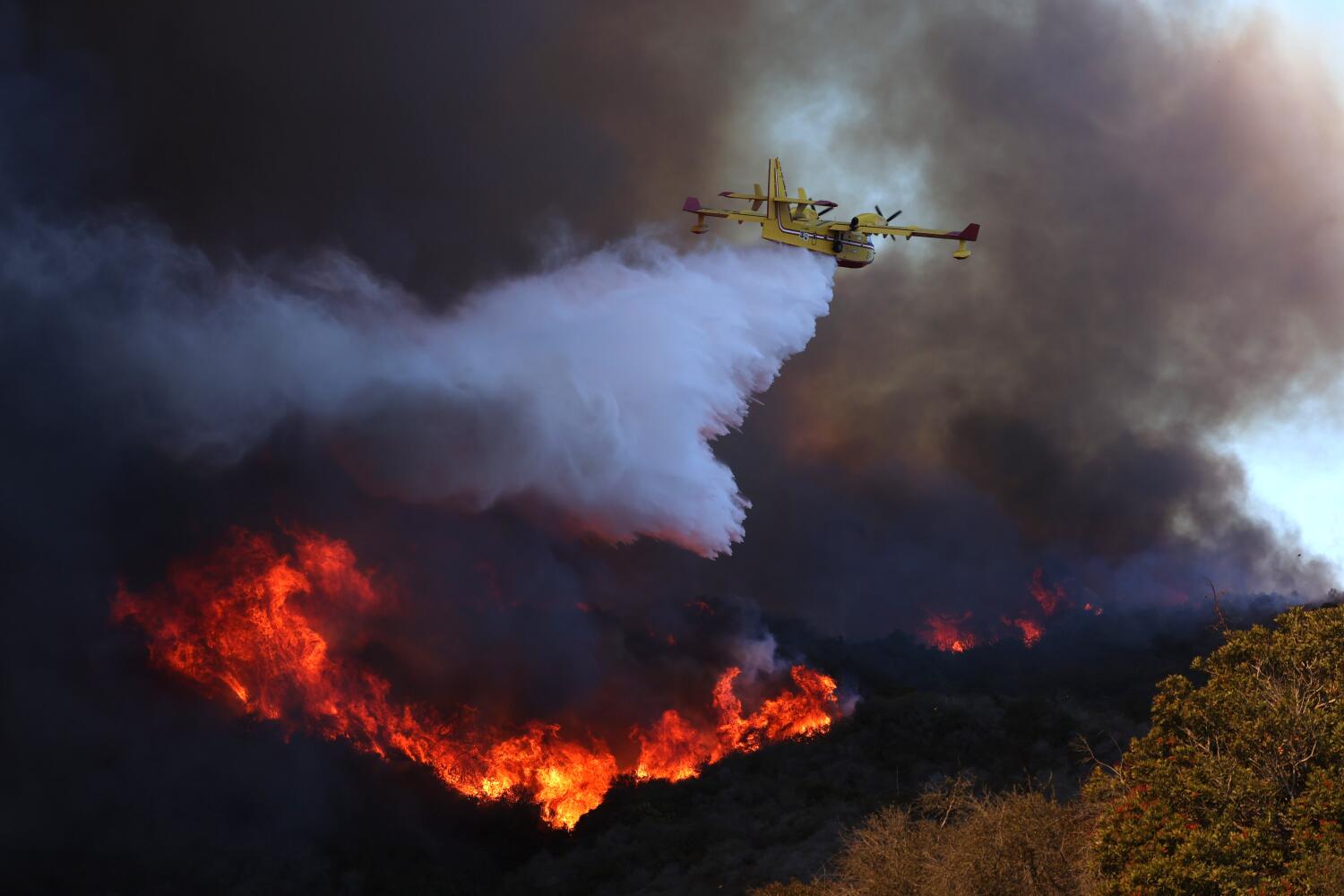
When the smoke finally clears over the canyon rims of Los Angeles, the blame game begins with the predictability of a metronome. Local politicians point toward state funding shortfalls, residents lash out at overburdened municipal crews, and editorials fill with defensive murmurs about unprecedented wind patterns. The public debate reduces a multi-layered structural crisis into a simple binary argument of who failed to turn on a hydrant or clear a brush line fast enough.
The reality of urban wildfire loss is far more systemic and uncomfortable than a failure of local emergency dispatch. Decades of municipal expansion, insurance market retreats, and deferred environmental maintenance have collided in a way that local fire departments alone were never engineered to stop. Understanding why Los Angeles fire losses keep shattering historical benchmarks requires looking past the immediate theatre of suppression and examining the underlying architecture of modern Western disaster management.
The Myth of Local Monopoly on Risk
The immediate reflex after any major urban interface fire is to scrutinize the response times, water pressure levels, and staffing rosters of regional firefighting agencies. While tactical performance matters when flames lick at suburban rooflines, assigning total responsibility to local municipal operators ignores the vast upstream forces that dictate whether a neighborhood burns to the ground.
Local agencies operate at the end of a long chain of decisions made decades prior. Zoning boards approved housing developments deep into high-risk brush zones. State regulatory bodies struggled to keep pace with an insurance crisis that leaves thousands of homeowners structurally unprotected or priced out of risk mitigation. When a wind-driven ember storm descends from the Santa Susana Mountains at seventy miles per hour, municipal tactical decisions are reduced to damage control in a rigged game.
Look at the structural economics of modern suburban sprawl in high-risk zones. For generations, municipal tax bases expanded outward into the chaparral, driven by the demand for single-family housing within commuting distance of metropolitan cores. Each new subdivision added immediate property tax revenue to city ledgers while quietly compounding long-term ecological and infrastructural liabilities. The cost of maintaining brush clearance buffers, upgrading aging water infrastructure to handle simultaneous residential and fire demands, and deploying heavy air support falls heavily on local budgets that were never scaled for catastrophic climate-driven events.
The Insurance Withdrawal and the Mitigation Gap
Behind every charred timber frame and ash-covered driveway lies a financial ecosystem in freefall. Major insurance carriers have quietly or abruptly pulled back from underwriting properties throughout Southern California, leaving homeowners stranded in state-backed fairs plans or facing astronomical premium hikes. This financial retreat alters human behavior on the ground in dangerous ways.
When insurance policies become unaffordable or unavailable, homeowners often defer expensive, mandatory mitigation steps such as installing dual-pane tempered glass, boxing in eaves, or clearing complex defensible space boundaries. The private market's retreat from risk assessment removes a powerful enforcement mechanism for property hardening. Without financial incentives or penalties tied directly to structural survival, individual accountability dissolves into wishful thinking.
This creates a dangerous feedback loop. Insurance companies flee the market because cumulative wildfire losses outpace their risk models. Homeowners absorb the cost or drop coverage entirely, reducing the overall capital available for private property adaptation. Local governments are left holding the bag, expected to subsidize public safety infrastructure for properties that private markets have deemed uninsurable.
Infrastructure Strains Under Extreme Weather
The physical infrastructure of Los Angeles was largely engineered for a mid-twentieth-century climate regime that no longer exists. Water delivery systems rely on gravity-fed reservoirs and electric pumps designed to suppress standard structural fires, not to maintain simultaneous high-pressure output across thousands of hydrants during a multi-front wind event.
When utilities implement preemptive power shutoffs to prevent wind-blown transmission lines from sparking new ignitions, secondary systems fail. Electric pumps lose power, forcing fire crews to rely on onboard tank capacities or hastily deployed portable generators. The friction between grid hardening and immediate suppression needs exposes a profound vulnerability in how municipal services coordinate during acute emergencies.
Furthermore, the urban canopy and residential landscaping play an invisible role in fire propagation. Ornamental vegetation favored for aesthetic appeal—such as eucalyptus and non-native pine—acts as an accelerant under low-humidity, high-wind conditions. These trees drop volatile oils and dry litter that accumulate near structures, bridging the gap between wildland chaparral and suburban architecture.
Rethinking Accountability
Fixing the trajectory of wildfire destruction in Southern California requires abandoning the comforting illusion that a larger fleet of engines or sharper local management can permanently outrun geography. The solutions are structural, expensive, and politically contentious. They require reevaluating where and how we build, enforcing rigorous zoning restrictions in high-hazard zones, and establishing stable long-term funding mechanisms for landscape-scale vegetation management that cross municipal boundaries.
Until the conversation shifts from pointing fingers at local dispatchers to confronting the systemic mismatch between housing development and ecological reality, the ashes will continue to settle on familiar ground.