The Operational Baseline of Megafires
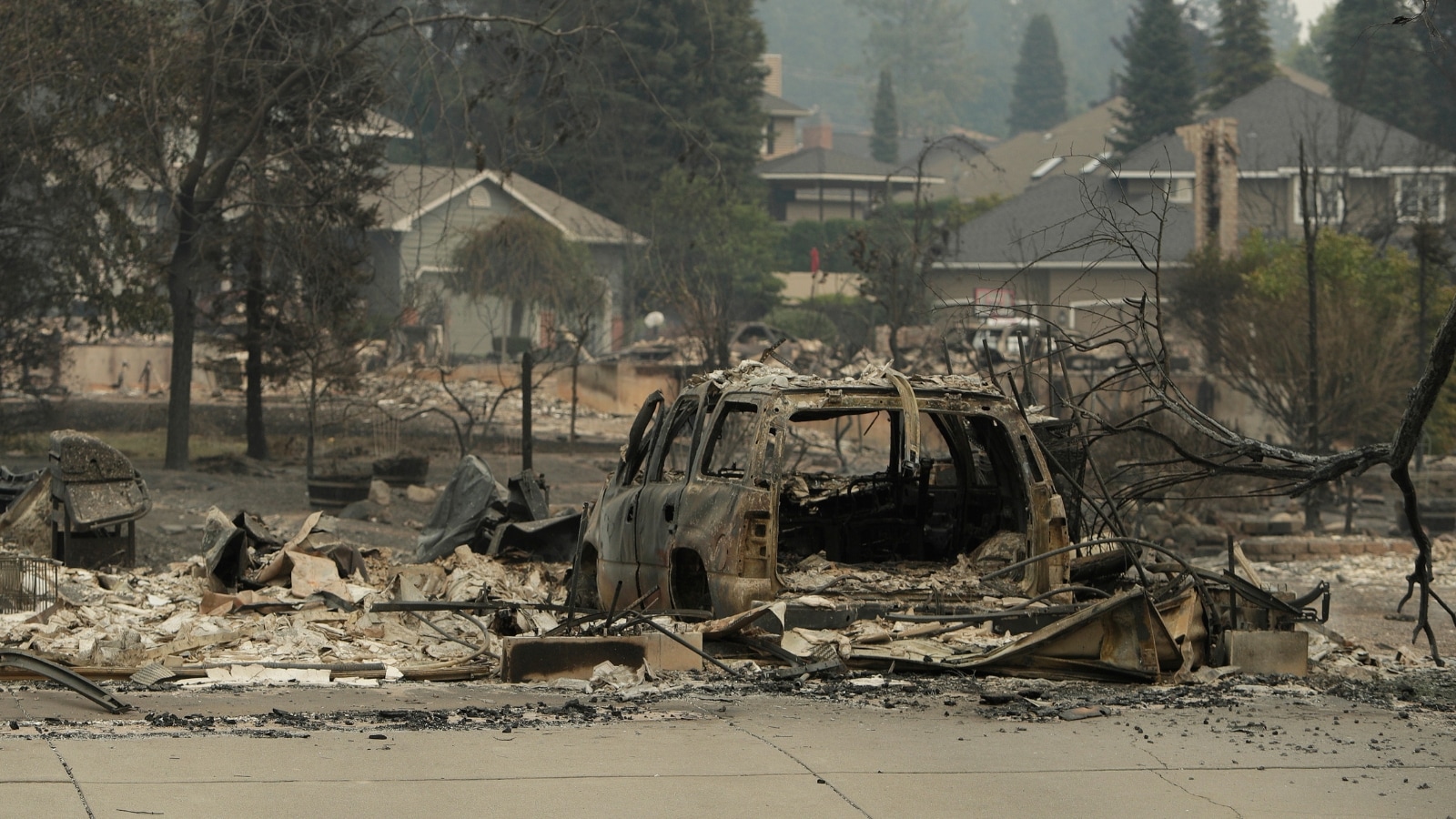
Wildfire containment failure follows a predictable physical sequence. When a fire front breaches suppression thresholds, the operational focus shifts from perimeter control to population protection. The destruction of six hundred structures and the displacement of sixty thousand residents in Washington state illustrate the hard limits of modern wildfire suppression. Traditional response models treat these events as isolated tactical anomalies. This perspective obscures the structural drivers that transform seasonal burns into regional displacement crises.
Understanding why evacuation scales exponentially relative to structural loss requires examining the friction points within regional emergency infrastructure. The mechanics of mass displacement depend on three interdependent variables: atmospheric velocity, fuel load continuity, and network capacity limits. When these variables align unfavorably, the speed of front propagation outpaces the decision cycles of municipal authorities, forcing reactive mass evacuations rather than phased operational relocations.
The Three Pillars of Evacuation Friction
Emergency management theory relies on predictive modeling to manage population movement. In practice, real-time friction degrades these models. Mass displacement events fail not due to a lack of intent, but due to systemic bottlenecks across three distinct operational domains.
1. Network Topology Constraints
Rural and exurban wildland-urban interfaces feature high asset dispersion combined with low road density. Most evacuation zones rely on single-ingress and single-egress corridors. When a fast-moving fire front intersects a primary artery, the theoretical capacity of the road network drops to zero.
The sixty thousand evacuees in the Washington incident experienced this compression firsthand. Single-lane routes convert orderly traffic patterns into stationary bottlenecks. Evacuation timelines are governed entirely by the geometric capacity of the local road network rather than the speed of public notification systems.
2. Information Latency and Risk Perception
Human response to hazard warnings follows a predictable behavioral curve characterized by confirmation bias and social verification loops. Residents rarely evacuate upon initial notification. Instead, they seek visual confirmation, check local communication channels, and consult neighbors.
This verification delay compresses the available window for safe transit. By the time risk perception matches physical reality, the margin for error has vanished. The operational challenge is not transmitting the warning, but overcoming the cognitive latency inherent in decentralized populations.
3. Resource Allocation Triage
During a rapidly escalating fire event, incident commanders face extreme resource scarcity. Structural defense must compete directly with life-safety evacuation management. Fire suppression units cannot protect every asset simultaneously.
Commanders use triage frameworks to abandon indefensible clusters and concentrate assets on choke points. This triage mechanism, while mathematically necessary to minimize loss of life, directly contributes to high structural loss counts. The destruction of hundreds of buildings is frequently the byproduct of defensive resource concentration away from peripheral zones.
The Economic and Physical Cost Function
The destruction of six hundred structures represents more than a localized real estate loss. It highlights a fundamental failure in risk-pricing models for property development within wildland-urban interfaces.
Physical vulnerability is a function of ignition resistance and defensible space maintenance. When regional fuel loads exceed historical averages due to suppression policies and climate variability, the baseline risk profile changes. Standard insurance models struggle to price these systemic shifts accurately, leading to undercapitalized recovery phases and prolonged community displacement.
The cost function of a regional wildfire event scales non-linearly. The initial suppression phase incurs high capital expenditure on aviation and ground personnel. The secondary displacement phase introduces hidden economic drag through lost productivity, emergency shelter operations, and medical strain. The tertiary recovery phase triggers municipal tax base erosion as displaced residents delay rebuilding decisions or permanently relocate.
Systemic Vulnerabilities in Regional Defense
Critical infrastructure dependencies amplify the impact of widespread structural loss. Power grids, water treatment facilities, and telecommunications towers within the wildland-urban interface operate on distributed networks with high exposure to radiant heat and ember storms.
When power transmission lines fail, pumping stations lose functionality. This simultaneous loss of electrical grid integrity and municipal water pressure converts a wildfire threat into an immediate structural vulnerability. Firefighting units lose their primary defensive asset: pressurized hydrants.
Furthermore, telecommunications failures break the command-and-control loop. When cellular towers lose backup power or sustain physical damage, real-time intelligence sharing between field units and evacuation coordinators breaks down. This information vacuum forces decentralized units to operate on fragmented local awareness, increasing the likelihood of uncoordinated tactical retreats and compounding civilian exposure risk.
Strategic Adaptation for High-Risk Corridors
Mitigating the recurrence of catastrophic displacement requires moving away from reactive suppression models toward structural hardening and predictive corridor management. Municipalities must abandon the assumption that perimeter containment is universally attainable under extreme weather conditions.
First, zoning codes within high-risk interfaces must mandate rigorous defensible space perimeters tied to parcel-level compliance audits rather than voluntary guidelines. Second, regional road networks must undergo structural stress testing to identify and eliminate single-point-of-failure bottlenecks before seasonal fire windows open. Third, emergency notification architectures must transition from single-channel opt-in systems to geofenced, high-priority cellular override protocols that bypass human verification latency.
Regional authorities must institutionalize pre-season resource staging along historical fire corridors, decentralizing command structures to empower local tactical units. Waiting for a fire front to breach containment before mobilizing mutual aid guarantees systemic failure. Operational resilience depends entirely on compressing response latency and designing egress infrastructure capable of absorbing peak volumetric load under zero-visibility conditions.