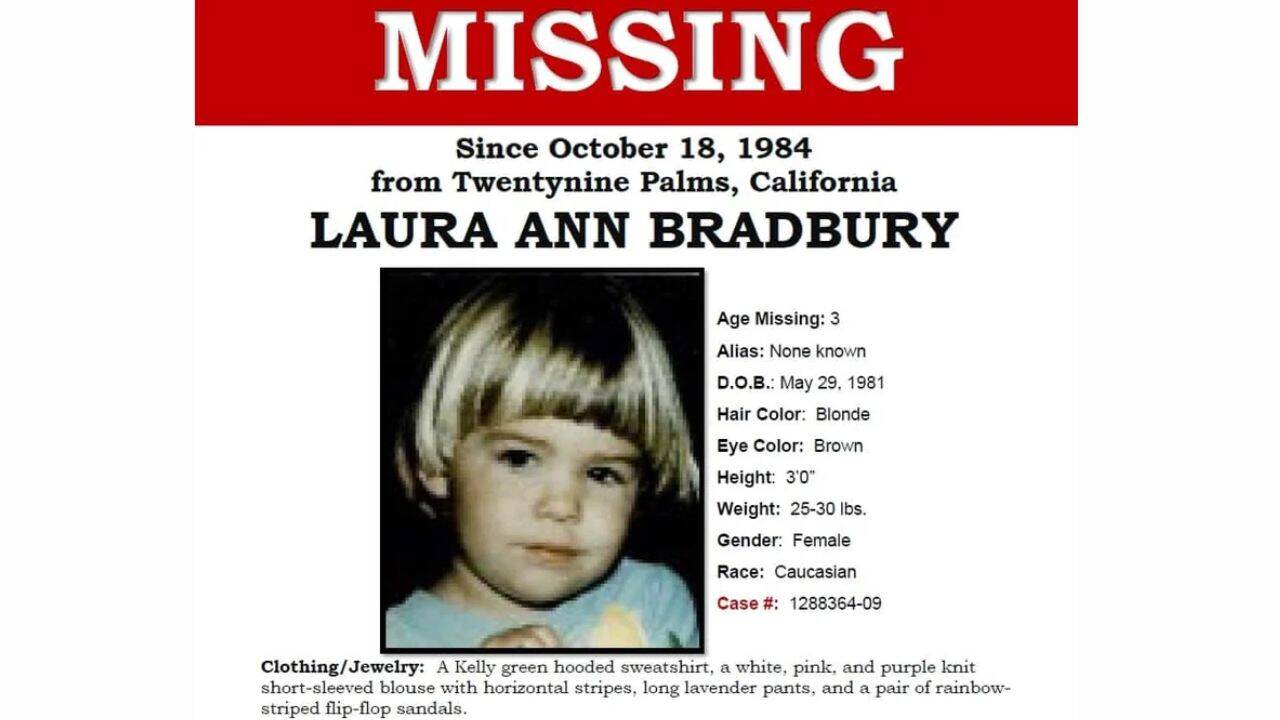
When an adult approaches a grieving parent claiming to be a child who disappeared forty years prior, standard news reporting relies on emotional shock value while ignoring the forensic, cognitive, and institutional mechanisms that determine whether the claim is real. Evaluating a belated identity claim—specifically involving a three-year-old child who vanished from a California campground in 1984—requires stripping away human-interest framing and applying a rigorous investigative audit. To separate genuine long-term abduction survival from false positives, psychological delusion, or deliberate fraud, investigators and families must execute a sequential verification protocol anchored in biological genetics, developmental memory limits, and historical record reconstruction.
The Structural Flaws in Standard Cold Case Reporting
Traditional media coverage of sudden reappearances commits three analytical errors that distort public understanding of missing-person investigations: If you liked this post, you might want to read: this related article.
- Emotional Confirmation Bias: Reporters treat the claimant's subjective conviction and the family's emotional reaction as evidentiary weight. In reality, high emotional resonance correlates poorly with factual accuracy.
- Narrative Compression: Decades of institutional silence are collapsed into a single dramatic confrontation, obscuring the bureaucratic and scientific hurdles required to legally re-establish an erased identity.
- Omission of Base-Rate Probabilities: Coverage rarely contextualizes how statistically rare verified long-term stranger abductions of toddlers actually are compared to the high volume of false claims generated by direct-to-consumer DNA databases and media publicity.
Understanding what actually happens when a forty-year-old cold case reopens demands examining the three foundational pillars of identity verification: biological certainty, cognitive plausibility, and documentary continuity.
Pillar One Biological Verification and Genetic Kinematics
Physical resemblance after forty years is forensically worthless. Craniofacial structure undergoes radical remodeling between age three and age forty-three, driven by puberty, hormonal shifts, dental development, environmental exposure, and lifestyle factors. Relying on photographic overlays or shared mannerisms introduces severe confirmation bias. Modern cold case resolution relies entirely on molecular genetics, operating through two distinct pathways. For another angle on this development, refer to the latest coverage from Reuters.
Direct Short Tandem Repeat Profiling
The gold standard for confirming parent-child lineage is autosomal Short Tandem Repeat (STR) testing conducted by an accredited forensic laboratory.
- Mechanism: Biological children inherit exactly half of their nuclear DNA from each biological parent. At every tested genetic locus, the claimant must share at least one allele with the biological father.
- Chain of Custody: Unlike commercial ancestry kits, forensic STR testing requires documented chain-of-custody protocols—witnessed buccal swabs, tamper-evident packaging, and accredited lab processing—to ensure the results hold legal standing for vacating a death certificate or updating vital records.
- Statistical Threshold: A valid parent-child match yields a Combined Paternity Index (CPI) that translates to a probability of parentage exceeding 99.99%. Anything below this threshold indicates either a non-biological relationship or a more distant familial connection, such as an avuncular (aunt/uncle) or cousin link.
Investigative Genetic Genealogy Limitations
Many modern claims originate when an adult takes a commercial autosomal DNA test (such as AncestryDNA or 23andMe) and discovers unexpected genetic matches or a lack of expected familial ties. While commercial Single Nucleotide Polymorphism (SNP) data can identify biological relatives up to the fourth-cousin level, it is insufficient as standalone legal proof. Commercial databases lack chain-of-custody verification, and raw data uploads to third-party platforms like GEDmatch are vulnerable to file manipulation. Therefore, commercial DNA serves strictly as an investigative lead that must be confirmed via law enforcement-supervised STR testing.
Pillar Two The Neuroscience of Infantile Amnesia
A critical bottleneck in evaluating a claim involving a child who disappeared at age three is the biological reality of human memory development. When claimants assert they "remember" the campground, the abduction, or their biological parents' faces from age three, investigators must measure those claims against established cognitive science.
The Prefrontal and Hippocampal Bottleneck
Children under the age of three to four experience infantile amnesia—the inability of adults to retrieve episodic memories from early childhood.
- Neurobiological Cause: The hippocampus and prefrontal cortex, structures essential for binding contextual details (who, what, where, when) into retrievable long-term episodic memories, are structurally immature at thirty-six months.
- Fragmentation vs. Narrative: While a three-year-old possesses semantic memory (language acquisition, object recognition) and implicit memory (emotional conditioning, fear responses), they lack the neural architecture to encode a coherent, chronological narrative of an abduction event.
- Memory Contamination: Any detailed narrative offered by a claimant regarding events at age three is almost certainly constructed retrospectively. Sources of contamination include subconscious absorption of media reports, leading questions from investigators or family members, and confabulation—where the brain fills memory gaps with fabricated details that feel entirely real to the speaker.
Evaluating Behavioral and Somatic Markers
Because episodic recall is unreliable, forensic psychologists look instead for non-declarative markers or early-childhood medical anomalies that persist into adulthood.
- Structural Scars and Bone Fractures: Healed greenstick fractures, specific surgical scars, or congenital dental anomalies documented in 1984 pediatric records provide objective physical anchors that cannot be fabricated through memory suggestion.
- Linguistic Artifacts: Children abducted at age three often retain subtle phonetic habits, regional accents, or specific vocabulary patterns from their original household for several years post-abduction, though these typically erode completely by adolescence.
- Psychological Conditioning: Unexplained phobias or somatic responses tied to specific environmental triggers (e.g., smoke, dense forest, specific sounds) may reflect implicit trauma encoding, though they hold zero standalone evidentiary value without genetic confirmation.
Pillar Three Documentary Reconstruction and Abduction Typologies
If a three-year-old vanished from a California campground in 1984 and survived into adulthood, the logistics of their survival leave a distinct documentary footprint. Raising a child from toddlerhood to adulthood without detection requires navigating school enrollment, medical care, tax reporting, and Social Security registration.
The Pre-Digital Era Vulnerability
In 1984, institutional verification systems were fragmented, paper-based, and lacked cross-state digital synchronization. This created specific exploits that abductors utilized:
- The "Paper Tripping" Exploit: Before the 1986 Tax Reform Act required parents to list Social Security Numbers for dependents claimed on federal tax returns, millions of American children did not obtain an SSN until age fourteen or fifteen when applying for a first job. An abductor could raise a child for over a decade without needing a valid birth certificate or SSN for tax filings.
- Delayed Birth Registration: Abductors frequently claimed a child was born at home to a midwife or unassisted, applying for a delayed birth certificate in a different county or state years after 1984.
- Identity Theft of Deceased Infants: A classic 1980s method involved matching the missing child's birth year to a deceased infant's cemetery record, ordering a certified copy of that deceased infant's birth certificate via mail, and using it to establish a new legal identity.
Categorizing the Claimant's Origin Scenario
When an adult surfaces claiming to be the missing child, their life history typically maps onto one of four operational scenarios:
- Non-Familial Abduction and Illegal Adoption: A stranger or acquaintance abducted the child and raised them as their own, fabricating a backstory (e.g., claiming the child was adopted privately or born to a relative). The claimant only discovers the discrepancy upon applying for a passport, requesting an original birth certificate, or taking a commercial DNA test.
- Custodial Interference or Extended Family Concealment: A non-custodial parent, estranged relative, or family associate orchestrated the disappearance at the campground, subsequently relocating and altering the child's name. In these cases, the claimant often has partial familiarity with family names or regional geography.
- Delusional Misidentification: The claimant genuinely believes they are the missing person due to untreated psychiatric conditions, dissociative disorders, or severe identity disturbance. These claims are frequently triggered by viewing age-progressed photos released by organizations like the National Center for Missing & Exploited Children (NCMEC) that bear a superficial resemblance to the claimant.
- Opportunistic Fraud: The claimant intentionally fabricates the connection to extract financial support, media attention, or inheritance rights. Fraudulent claimants typically avoid law enforcement-supervised DNA swabs, claiming distrust of authorities or offering excuses for why commercial DNA results cannot be shared directly.
The Institutional Friction of Reopening a 1984 Case
Even when a claimant appears credible, local law enforcement agencies face severe operational bottlenecks when reactivating a four-decade-old missing-person file.
Evidence Degradation and Jurisdictional Drift
A 1984 California campground disappearance typically involves overlapping jurisdictions—county sheriff's offices, state park rangers, California Department of Justice (DOJ) missing persons units, and potentially the FBI if state lines were crossed.
- Physical File Loss: Paper case files from the 1980s were frequently misfiled during transitions to digital records management systems in the 1990s and 2000s.
- Reference Sample Absence: In 1984, forensic DNA profiling did not exist (Alec Jeffreys did not develop genetic fingerprinting until late 1984, and US law enforcement adoption occurred years later). Consequently, investigators cannot compare the claimant's DNA against a 1984 sample from the child unless pediatric blood spots (Guthrie cards), baby teeth, or hair follicles with intact roots were preserved by the family. Comparison must rely entirely on living biological relatives.
- Deceased Witnesses: Original investigating detectives, campground hosts, and key witnesses from 1984 are often retired, unreachable, or deceased, preventing investigators from verifying minor non-public details (holdback evidence) that only the true victim or perpetrator could know.
The Legal Limbo of Presumed Death
In California, if a person is missing for five continuous years without explanation, family members often petition the probate court for a judicial declaration of death to settle estates or life insurance policies. If the claimant is proven via STR DNA testing to be the missing child, the legal system must execute a complex reversal:
- Vacating the Death Certificate: The court must issue an order nullifying the presumptive death record.
- Restoring Original Vital Statistics: The California Department of Public Health must unseal or reinstate the original 1981 birth certificate.
- Invalidating Fabricated Records: Any fraudulent birth certificates, Social Security Numbers, or driver's licenses issued under the claimant's raised identity must be reconciled by the Social Security Administration and Department of Motor Vehicles without destroying the claimant's existing credit, tax, and employment history.
Operational Protocol for Families and Investigators
When confronting an unverified adult claiming to be a long-missing child, emotional restraint must precede public announcement. Premature media disclosure destroys investigative integrity, exposes vulnerable families to psychological devastation, and alerts potential perpetrators—who may still be alive and acting as the claimant's "parents"—to destroy documentary evidence.
Execute the following four-step containment and verification sequence immediately upon initial contact:
- Enforce Information Quarantine: Do not release the claimant's name, photograph, or specific claim details to the press. Keep holdback evidence—specific details from the 1984 campground scene or the child's medical history that were never published—strictly confidential to test the claimant's knowledge without contamination.
- Route Directly to the Originating Law Enforcement Agency: Bypass private investigators and commercial genealogy enthusiasts as primary arbiters. Contact the cold case unit of the sheriff's department or police agency holding the 1984 case file so they can log the claimant's statement under official record.
- Mandate Witnessed Forensic STR Testing: Arrange for the claimant and the surviving biological parent(s) to submit witnessed buccal swabs directly to a forensic laboratory accredited by the ANSI National Accreditation Board (ANAB) or through the state DOJ Missing Persons DNA Program. Reject screenshots of commercial DNA results as proof.
- Audit the Claimant's Early Paper Trail: Simultaneously request the claimant's earliest known documentary records—specifically their oldest available school enrollment forms, immunization records, and Social Security application history—to identify the exact year and jurisdiction where their current legal identity originated.