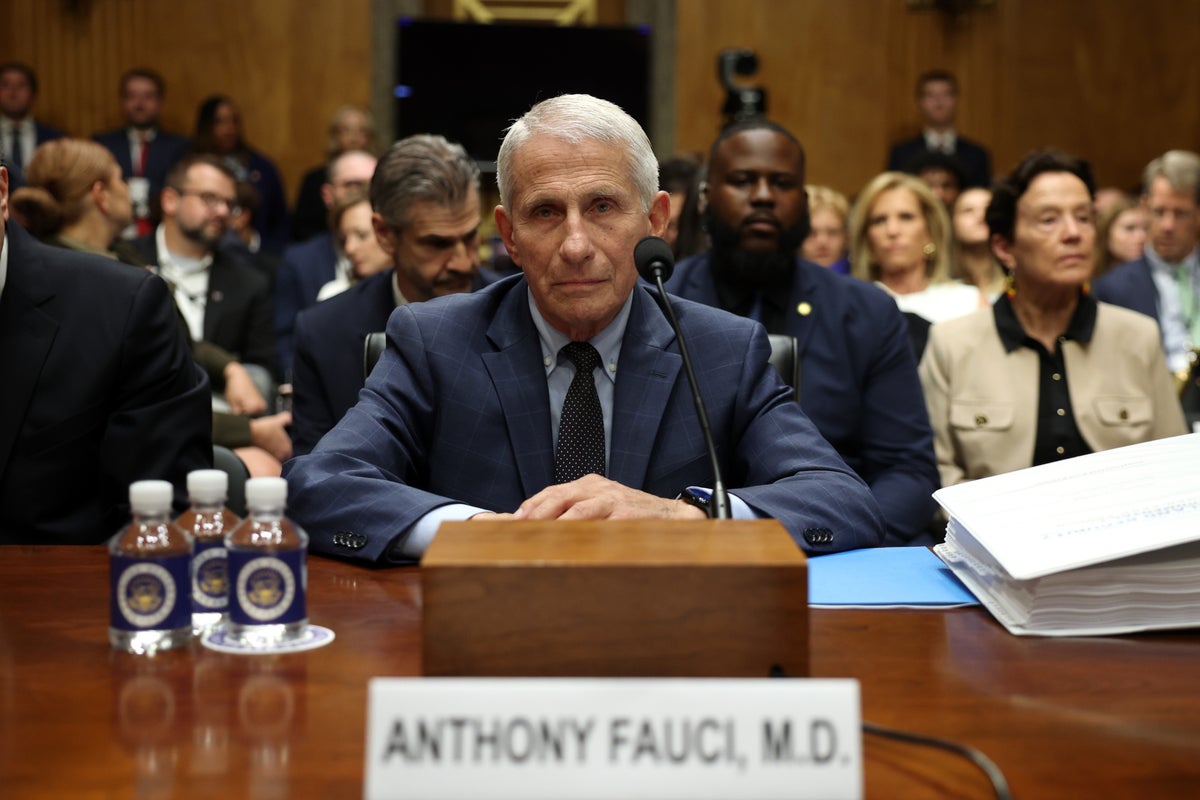
Legislative oversight operates through enforced compulsory process, a mechanism designed to compel executive branch officials and public figures to answer inquiries under oath. When a witness refuses to comply with a congressional subpoena, the issuing committee possesses administrative and penal remedies, the most severe of which is a referral for criminal contempt under federal statute. The decision by the Senate Homeland Security and Governmental Affairs Committee to advance a contempt resolution against former National Institute of Allergy and Infectious Diseases director Anthony Fauci highlights the friction points between legislative investigative authority and constitutional protections against self-incrimination. Deconstructing this dispute requires examining the legal frameworks governing presidential pardons, the scope of the Fifth Amendment, and the tactical maneuvers surrounding direct executive referrals.
The Mechanics of Compulsory Oversight and Subpoena Defiance
Congressional investigative power relies entirely on the premise that lawmakers must gather facts to draft legislation or evaluate administrative performance. To enforce this power, committees issue subpoenas backed by statutory authority. When a witness appears under subpoena but declines to answer substantive questions, a breakdown occurs in the information-gathering process. Read more on a related topic: this related article.
In the case of the proceedings involving Fauci, the confrontation centered on more than one hundred invocations of the Fifth Amendment during a hearing concerning pandemic origins and administrative record-keeping. Congressional oversight theory dictates that a witness either complies, asserts a legally recognized privilege, or faces punitive measures. Committee chairman Senator Rand Paul initiated the contempt resolution by arguing that the refusal to testify constituted an uncooperative obstruction of an official inquiry, while minority members argued that the witness exercised a fundamental constitutional right.
The Pardon Interaction and the Scope of Self-Incrimination
The legal argument advanced by the committee majority hinges on the existence of a pre-emptive executive pardon issued to Fauci prior to the proceedings. Under constitutional doctrine, a full and unconditional pardon eliminates the threat of criminal prosecution for past offenses covered within its temporal and substantive scope. The core legal question governing the committee's action is whether a pardoned individual can legitimately fear self-incrimination regarding the precise matters covered by that pardon. More analysis by BBC News highlights similar views on the subject.
The majority thesis asserts that because federal criminal liability was ostensibly extinguished by the presidential pardon, the legal foundation for invoking the Fifth Amendment evaporated. Under this logic, a witness cannot claim protection against self-incrimination for crimes for which they can no longer be prosecuted.
Conversely, legal counsel and defensive positioning for Fauci maintained that appearances before a hostile investigative panel create exposure to distinct legal hazards. Specifically, any new statements made under oath could potentially form the basis for allegations of false statements or perjury—charges that would occur after the execution of the pardon and thus fall outside its protective umbrella. Furthermore, state-level jurisdictions and future investigatory scopes remain technically distinct from federal executive pardons, creating a multi-variable risk matrix for any witness appearing under intense political scrutiny.
Procedural Divergence and the Department of Justice Referral Pathway
Standard congressional contempt protocol dictates a two-step legislative sequence:
- First, the originating committee approves a contempt resolution by a majority vote.
- Second, the resolution is transmitted to the full chamber (either the House or the Senate) for a floor vote.
If approved by the full chamber, the matter is formally referred to the United States Attorney for the District of Columbia for presentation to a grand jury.
The procedure adopted in this instance deviated from historical precedent. Committee leadership signaled an intent to transmit the contempt referral directly to the Department of Justice, bypassing a floor vote in the full Senate. This bypass strategy is driven by arithmetic constraints: in a 100-member Senate divided along narrow margins, clearing a filibuster or securing a majority vote on a contentious partisan measure is structurally difficult without bipartisan support.
This maneuver creates a procedural bottleneck and an institutional debate over separation of powers. Minority members argued that a committee chairman lacks the statutory authority to transmit a binding contempt citation without full chamber authorization. Legal scholars note that while the Department of Justice reviews all congressional referrals, prosecutors retain absolute prosecutorial discretion over whether to pursue indictments, and unilateral committee referrals without full chamber backing face heightened scrutiny regarding their legal validity.
Institutional Precedent and Long-Term Oversight Implications
The escalation from contentious hearings to contempt referrals alters the strategic calculus for future legislative inquiries. When committees penalize witnesses for asserting constitutional protections, or conversely, when high-ranking officials utilize blanket non-responsiveness to parry legislative questioning, the efficiency of congressional oversight degrades.
If direct-to-agency referrals become an established mechanism to bypass floor gridlock, committees will possess a faster, albeit legally vulnerable, tool for penalizing uncooperative actors. However, this shift risks converting oversight committees from fact-finding legislative bodies into punitive legal actors, increasing the frequency with which federal courts are asked to adjudicate the boundary between congressional subpoena power and executive branch immunities.
File the direct referral with the U.S. Attorney's Office while anticipating immediate motions to quash based on the absence of a full Senate floor vote and the unresolved legal status of post-pardon perjury traps.