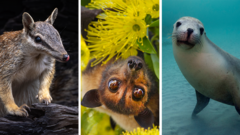
Australia maintains the highest rate of mammal extinction on Earth. Since European settlement in 1788, approximately ten percent of the continent's endemic terrestrial mammal species have been eradicated. This far exceeds the baseline extinction rates observed across North America, Eurasia, or Africa over the same chronological window.
This localized ecological collapse contradicts traditional conservation models. In most global regions, biodiversity loss correlates directly with human population density, industrial land-use conversion, and intensive deforestation. In contrast, the vast majority of Australian mammalian extinctions have occurred in remote, arid, and semi-arid biomes that remain structurally unmodified by intensive human infrastructure. Understanding this divergence requires shifting from a model of habitat destruction to a framework governed by introduced predators, trophic disruption, and specialized reproductive strategies.
The Architecture of the Extinction Driver
The primary mechanism driving Australian mammalian decline is not the loss of physical space, but the introduction of non-native apex predators. Specifically, the feral cat, Felis catus, and the red fox, Vulpes vulpes, act as the primary operational stressors on the continent's fauna.
[Introduced Predators (Cats/Foxes)]
       │
       ▼
[High-Efficiency Naive Predation]
       │
       ▼
[Targeted Weight Class Vulnerability (35g - 5500g Critical Weight Range)]
       │
       ▼
[Rapid Extirpation of Endemic Populations]
These predators exploit an evolutionary mismatch. Australian marsupials and small rodents evolved in isolation from cursorial mammalian carnivores for millions of years. Consequently, native species lack the behavioral anti-predator adaptations required to evade high-efficiency hunters.
This vulnerability operates across a specific mass vector known as the critical weight range. Mammals weighing between 35 grams and 5.5 kilograms experience the highest rates of predation mortality. This weight class contains species too large to burrow effectively for permanent defense, yet too small to overwhelm predators through sheer physical mass or group defense.
The Failure of Traditional Conservation Interventions
Conventional conservation strategies focus heavily on legislative habitat protection, national park designation, and reserve expansion. While these measures protect flora and larger vertebrates like macro-marsupials, they fail against mobile predators.
Reserves established without physical or ecological isolation boundaries permit feral cats and foxes to hunt freely within protected zones. The designation of land as a national park does not lower predator carrying capacity. Without active population suppression of introduced carnivores, legal protection functions merely as a static boundary for a dynamic predation process.
Furthermore, fire management policies have historically accelerated these declines. Inappropriate fire regimes—whether driven by suppression or unmanaged high-intensity burns—strip away the dense understory vegetation that medium-weight mammals rely upon for escape cover. When fires remove this structural complexity, predation efficiency among feral cats increases exponentially due to the loss of visual obstruction and refuge sites.
The Mechanics of Species Recovery
Counterbalancing this systemic decline are localized conservation programs focused on targeted species recovery. The recovery trajectory of the numbat, Myrmecobius fasciatus, and the eastern barred bandicoot, Perameles gunnii, demonstrate that population stabilization is achievable under specific structural conditions.
The operational blueprint for these recoveries relies on three distinct variables:
- Exclusion Fencing: The creation of expansive, predator-proof sanctuaries bounded by fine-mesh wire and electrical outriggers designed to achieve total eradication of cats and foxes within a defined perimeter.
- Captive Breeding and Genetic Management: Sustaining high heterozygosity within captive populations to mitigate the inbreeding depression common in remnant wild isolates.
- Aided Translocation: Systematic reintroduction of captive-bred stock into secure, monitored wild environments once internal predator eradication is verified.
The eastern barred bandicoot provides a clear case study. Extinct in the wild on mainland Australia by the late twentieth century, the species was reintroduced into fenced, predator-free reserves and offshore islands in Victoria. Intensive management of these populations altered their trajectory, moving them from terminal decline to self-sustaining localized densities. However, these successes remain bounded by the high capital expenditure and ongoing maintenance costs required to sustain physical barriers against reinvasion.
The Scaling Problem of Sanctuary Conservation
While predator-free enclosures save individual species from immediate extinction, they operate as closed-system interventions. The financial and logistical cost of constructing and maintaining exclusion fencing across millions of hectares of arid interior is economically prohibitive.
Conservation management must transition from fortified islands to open-landscape control. This requires the development and deployment of scalable vector control technologies, including landscape-scale baiting programs, targeted genetic controls, and the reintroduction of apex competitors such as the dingo, Canis lupus dingo. Where dingo populations remain intact, they suppress red fox numbers and disrupt feral cat activity through competitive exclusion, indirectly shielding smaller native mammals from high-intensity predation.
The long-term persistence of Australia's remaining mammalian fauna depends entirely on replacing passive land designation with active, aggressive predator management across the continental matrix. Without continuous intervention against introduced carnivores, the baseline extinction rate will continue unabated, moving the continent's remaining vulnerable lineages toward functional collapse.