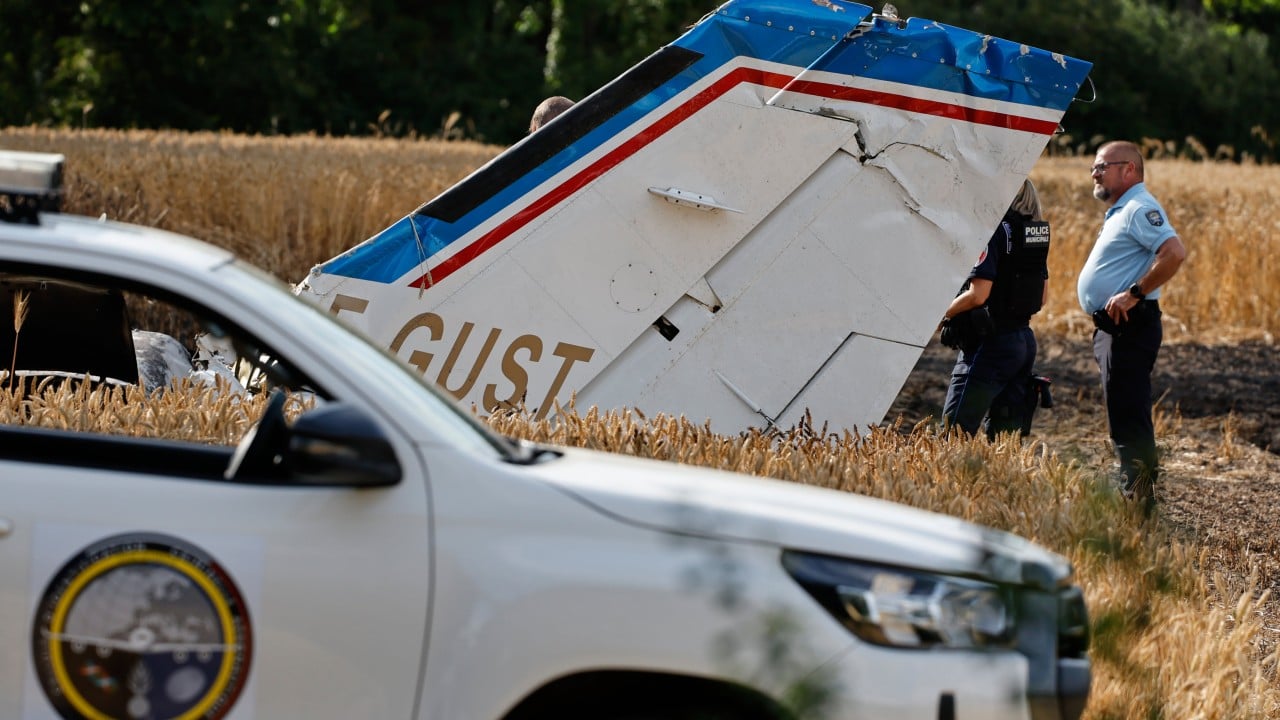
The death of a corporate architect forces an immediate transformation from relational family governance to institutional risk management. On June 19, 2026, Claude Guillemot, one of the five founding brothers of Ubisoft and the executive chairman of Guillemot Corporation, was killed alongside a flight instructor when his twin-engine Cessna 421 crashed during its landing approach near La Baule-Escoublac Airfield in western France. He was 69.
While public attention often centers on his brother, CEO Yves Guillemot, Claude operated as the functional backbone of the multi-billion-dollar enterprise’s early operations and the absolute leader of its hardware sister company. This sudden operational vacancy highlights the systemic risk embedded within tight-knit founder networks, where strategic knowledge and corporate continuity are deeply centralized. In similar developments, read about: Six Crore Rupees Is Not A Retirement Fund It Is A H-1B Panic Attack.
The Dual-Engine Structure of the Guillemot Empire
To calculate the structural impact of Claude Guillemot’s absence, one must analyze the unique, dual-engine corporate architecture he built alongside his brothers. This network operates across two distinct pillars:
- The Software and Content Engine (Ubisoft): Founded in March 1986, the firm shifted from a regional mail-order software distributor into a global publisher controlling multi-billion-dollar intellectual properties including Assassin’s Creed, Far Cry, and Tom Clancy. Claude served as Executive Vice President of Operations and maintained a powerful seat on the board of directors.
- The Hardware and Ecosystem Engine (Guillemot Corporation): Established to capture the margin on high-end interactive entertainment peripherals, this entity owns dominant peripheral brands such as Thrustmaster (flight simulators and racing wheels) and Hercules (DJ equipment and digital audio). Claude presided as Chairman and CEO, controlling research and development, logistics, and distribution facilities across Europe, Canada, and China.
The operational connection between these two pillars created an insular corporate ecosystem. While Ubisoft scaled its software footprints, Guillemot Corporation captured the premium hardware accessories market. Claude’s unique dual credentials—a Master’s degree in Economic Science from Rennes 1 University paired with an Industrial Computing Certificate from ICAM—allowed him to act as the linguistic and strategic translator between pure code development and capital-intensive physical manufacturing. The Wall Street Journal has analyzed this important issue in great detail.
Governance Resiliency and the Succession Vector
The immediate governance risk following the loss of an executive is typically governed by a company's succession readiness. The Guillemot family had begun executing an intentional, multi-year generational wealth and management transition prior to the incident, which buffers the immediate operational shock.
In July 2025, Claude stepped down from his day-to-day duties as CEO of Guillemot Corporation, shifting into the role of Chairman. He transferred chief executive responsibilities to his son, Valentin Guillemot. This deliberate separation of oversight and daily execution isolates Guillemot Corporation from immediate management paralysis.
A critical bottleneck remains at the board level of Ubisoft. The five Guillemot brothers historically operated as a unified voting bloc and strategic defense mechanism against hostile corporate takeovers—most notably repelling a multi-year acquisition attempt by media conglomerate Vivendi. The reduction of this original founder core changes the internal equilibrium of the board.
The loss of a senior operations executive alters the family's long-term capability to balance institutional shareholder pressure against founder-led creative risk. Independent institutional investors now possess an opening to push for aggressive structural reforms, cost-rationalization programs, or strategic divestments within Ubisoft's expansive global studio network.
The Operational Mechanics of the Flight Event
Analyzing the event requires looking closely at the mechanical and situational variables available from initial aviation and local authority reports. The aircraft involved was a Cessna 421 Golden Eagle, a pressurized, twin-engine light transport aircraft renowned for its utility but demanding high pilot proficiency during low-speed landing phases.
The flight originated in Rennes and was concluding its approach to the La Baule-Escoublac Airfield before 6:00 p.m. local time under clear visibility conditions ahead of a planned regional aviation event. Statements from local authorities indicate the aircraft made an abrupt, unexpected turn during the final approach phase before losing altitude and impacting a field adjacent to the runway, triggering an immediate, intense post-crash fire.
Two critical operational hypotheses emerge from this flight profile:
- Asymmetric Thrust or Power-Loss Management Failure: In twin-engine aircraft, an engine failure during low airspeed configurations (such as the landing approach) introduces severe aerodynamic asymmetry. If the pilot fails to immediately counter the induced yaw with rudder input or allows the airspeed to drop below the minimum controllable speed with one engine inoperative, the aircraft will roll violently into the dead engine.
- Low-Altitude Aerodynamic Stall: An uncoordinated, steep turn initiated close to the ground increases the load factor on the wings, exponentially raising the stall speed. If the aircraft was executing a corrective maneuver to line up with the runway at a marginal airspeed, it could trigger an unrecoverable accelerated stall.
The Bureau of Enquiry and Analysis for Civil Aviation Safety (BEA) has assumed control of the technical investigation. Their analysis will focus heavily on fuel system integrity, engine mechanical state prior to impact, and the precise division of flight controls between the two certified pilots on board.
The Long-Term Strategic Play
For enterprise leaders and institutional stakeholders observing this transition, the strategic play requires a two-pronged adjustment to portfolio risk and leadership structures:
- De-Risk Family Vote Centralization: Corporate governance structures tied to legacy founder agreements must formalize voting trusts or proxy architectures that prevent sudden estate changes from triggering market vulnerabilities or inviting hostile takeover bids.
- Decouple Hardware and Software Dependencies: With Valentin Guillemot leading Guillemot Corporation and Yves Guillemot steering Ubisoft, the formal transactional and strategic agreements between the hardware peripheral business and the gaming software developer must be codified under standard arm's-length commercial terms to preserve independent balance sheet health.