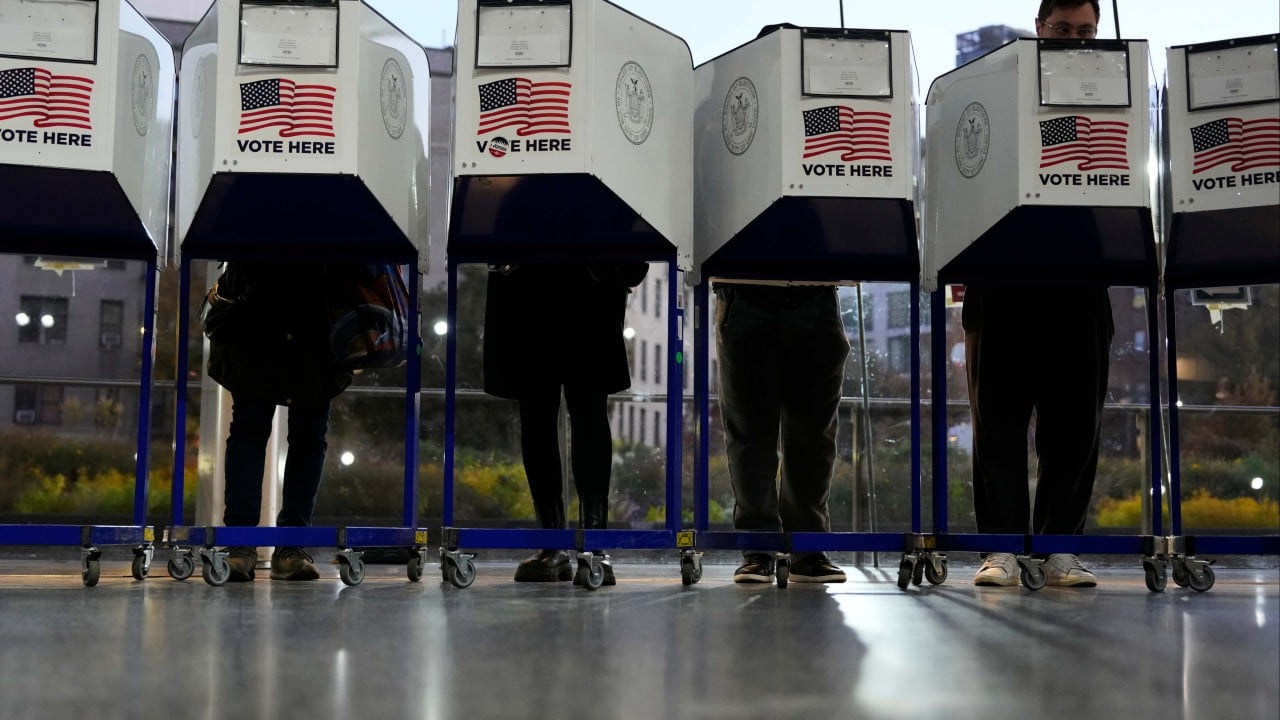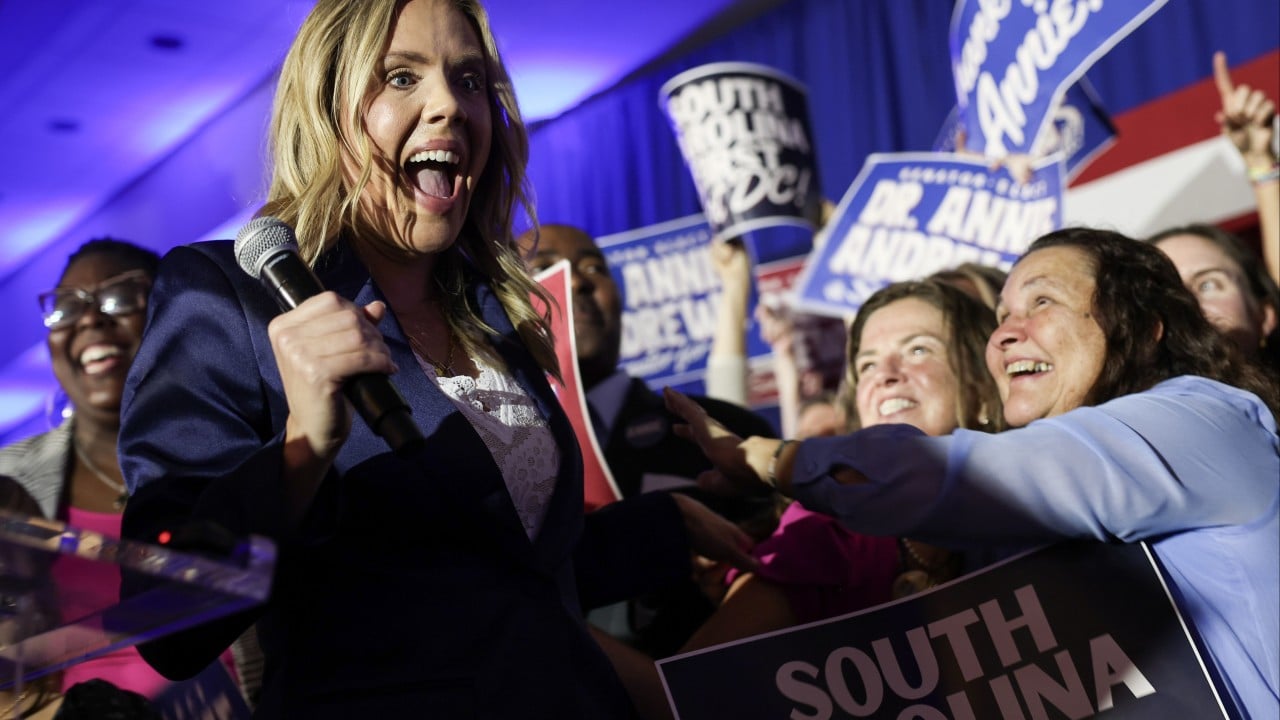
When congressional seats flip and a party loses its grip on Washington, the post-mortem begins before the final precincts even report. Donald Trump’s assertion that he was not on the ballot during a midterm election cycle is a textbook political maneuver designed to insulate his personal brand from legislative defeat while Democrats position themselves to control Congress. While factually true in a literal sense—presidents do not appear on midterm ballots—the statement ignores the foundational mechanics of modern American elections, where off-year contests function almost entirely as national referendums on the sitting chief executive.
Political veterans recognize this rhetoric immediately. It is a firewall. By separating the commander-in-chief from down-ballot casualties, a president attempts to preserve political capital, deter primary challengers, and maintain an aura of invincibility. Yet history, campaign finance data, and voter behavior tell a very different story about how power actually shifts in the United States.
The Midterm Referendum Trap
Every modern president faces the same structural headwind two years into a term. The party holding the White House almost always loses seats in the House of Representatives, and frequently in the Senate as well. Since the Civil War, the president’s party has lost House seats in nearly every midterm election, with only a handful of exceptions driven by extraordinary national crises or economic booms.
When Trump argues that his absence from the physical ballot explains Democratic gains, he is fighting against a century of political science. Voters rarely treat midterm elections as isolated local contests anymore. The nationalization of American politics has eroded ticket-splitting to historic lows. Today, a voter in a suburban district in Pennsylvania or a rural county in Michigan rarely evaluates their local congressional candidate in a vacuum. Instead, they use the congressional race as a proxy vote to register approval or frustration with the person occupying the Oval Office.
The Mechanics of Voter Turnout
To understand why Democrats gain traction when a Republican sits in the White House—and vice versa—you have to look at differential turnout.
In a presidential election year, the electorate expands dramatically. Casual voters, driven by high-profile media coverage and intense national drama, show up in massive numbers. In off-year elections, the electorate shrinks and shifts toward higher-propensity voters—individuals who are older, more educated, and deeply engaged in daily political news.
When a president dominates the daily news cycle with polarizing rhetoric or aggressive executive actions, it triggers an asymmetric mobilization effect. The opposition party’s base becomes intensely motivated to check the president's power. Meanwhile, the president’s own coalition often suffers from complacency, particularly if the leader himself is not actively campaigning for his own re-election. Saying "I wasn't on the ballot" inadvertently highlights this exact vulnerability. Without the top-of-the-ticket draw, the coalition struggles to replicate its presidential-year turnout, leaving vulnerable incumbents exposed in swing districts.
The Coattail Illusion and Primary Purity Tests
There is a glaring contradiction at the heart of the deflection strategy. Presidents routinely claim full credit when their preferred candidates win, yet distance themselves the moment those same candidates stumble in November.
During the primary season, executive endorsements carry immense weight. Candidates bend over backward to secure the president's blessing, adopting specific talking points, aligning with hardline policy positions, and running advertisements that feature the president more prominently than the candidate themselves. In effect, the president places himself squarely on the primary ballot.
This dynamic creates a severe structural problem for the general election.
- The Primary Trap: To win a party nomination, candidates often have to appeal to the most ideological segment of the base. Positions that guarantee victory in a closed partisan primary can become toxic liabilities in a general election district decided by moderate independents.
- Resource Allocation: When high-profile endorsements elevate unconventional or inexperienced challengers over established, well-funded incumbents, the national party is often forced to spend millions of dollars defending seats that should have been safe.
- Message Discipline: Local candidates lose the ability to tailor their campaigns to regional economic concerns when the national narrative is dictated entirely from the White House.
Consider a hypothetical scenario in a competitive suburban district. A moderate incumbent focuses on local infrastructure and tax relief, polling comfortably ahead of a Democratic challenger. If the president intervenes in the primary to oust that incumbent in favor of a fiery loyalist, the general election immediately transforms. The race is no longer about local roads or municipal budgets. It becomes a direct referendum on the president’s persona. If that loyalist loses in November, claiming the president was not on the ballot ignores the fact that the president personally selected the nominee and dictated the campaign's central theme.
How Congressional Control Changes the Governing Reality
A shift in congressional control is not merely a symbolic setback or a bruised ego for the administration. It fundamentally alters the mechanics of federal governance, shifting the White House from an offensive legislative posture to a defensive survival mode.
When the opposition party captures the House of Representatives, the speaker's gavel changes hands, and with it comes total control over the legislative calendar and committee structure. Bills favored by the administration simply stop moving. Nominees for judicial and executive posts face intense scrutiny, stalling the administration's ability to staff agencies and reshape the federal courts.
The Subpoena Power Shift
The most immediate impact of losing the House is the transfer of investigative authority. Committee chairs gain the unilateral power to issue subpoenas, compel testimony from cabinet officials, and demand internal executive branch communications.
- Oversight Hearings: Cabinet secretaries spend less time managing their departments and more time preparing for televised grilling sessions on Capitol Hill.
- Document Production: White House counsel offices must expand rapidly to handle waves of legal requests, draining administrative focus and taxpayer resources.
- Narrative Control: Congressional investigations generate a steady drip of headlines that dominate the news cycle, forcing the administration onto the back foot for two consecutive years.
Even if the president retains the Senate, losing the House effectively ends major domestic legislative initiatives. Governance shifts to executive orders, regulatory rollbacks, and high-stakes brinkmanship over government funding and the debt ceiling.
The Historical Precedent of Executive Blame Shifting
Trump is hardly the first president to distance himself from midterm losses, though his phrasing is uniquely blunt. Every administration attempts to spin off-year defeats to protect its standing.
In 1994, when Republicans swept control of both chambers of Congress for the first time in four decades, Bill Clinton’s White House initially struggled to accept the scale of the rejection, framing the loss around local grievances and communication failures rather than a repudiation of his early policy agenda. Sixteen years later, in 2010, Barack Obama famously acknowledged taking a "shellacking" after losing 63 House seats, yet his surrogates quickly argued that voters were simply frustrated with the slow pace of economic recovery rather than opposing the president personally.
The difference lies in the strategic aftermath. Traditional presidents use midterm losses as a signal to pivot toward the center, triangulate with the opposition party, and pass bipartisan legislation to rebuild their approval ratings ahead of their own re-election campaigns. Clinton famously leaned into welfare reform and balanced budgets after 1994, cruising to re-election in 1996. Obama adjusted his legislative strategy after 2010, focusing on targeted economic messaging that carried him to victory in 2012.
Deflecting blame entirely prevents that strategic recalibration. If a leader refuses to acknowledge that their rhetoric, personnel choices, or policy priorities contributed to down-ballot losses, the party cannot correct course. The same vulnerabilities remain exposed, and the opposition party learns exactly which pressure points to exploit in the next cycle.
The Financial and Institutional Fallout
Beyond the immediate legislative gridlock, losing Congress triggers a quiet crisis inside the party's donor network and institutional apparatus. Major political contributors treat campaigns like capital investments. When they pour hundreds of millions of dollars into a cycle only to watch the party lose control of the legislative branch, they demand accountability.
Strategic disagreements quickly spill into public view. Establishment fundraisers blame ideological purists for nominating unelectable candidates. Populist factions blame party leadership for failing to embrace the president’s agenda aggressively enough. This internal civil war starves down-ballot infrastructure of funding during the crucial off-year building phase, leaving state parties underfunded and voter registration drives lagging behind the opposition.
Meanwhile, Democrats gain the institutional advantages of incumbency. Sitting members of Congress raise money exponentially faster than challengers. They command free media attention through committee assignments, deliver federal grants to their districts, and build durable constituent service networks that make them vastly harder to unseat two years later.
The Myth of the Isolated Leader
In modern politics, there is no such thing as an isolated national figure. A president’s approval rating is the gravitational pull that governs every political orbit in the country. When that rating sits underwater in key battleground states, even the most disciplined local candidate struggles to outrun the drag.
Data from exit polls consistently demonstrates that a voter’s view of the president is the single strongest predictor of how they will vote for Congress. In wave elections, independent voters break decisively against the White House, punishing the president's party for inflation, foreign policy turbulence, or perceived administrative chaos. Telling those voters—or the defeated candidates—that the president was not on the ballot misses the fundamental truth of how representative democracy functions in an era of hyper-partisanship. The name at the top of the ticket does not need to be printed on the paper for voters to cast their judgment upon it.