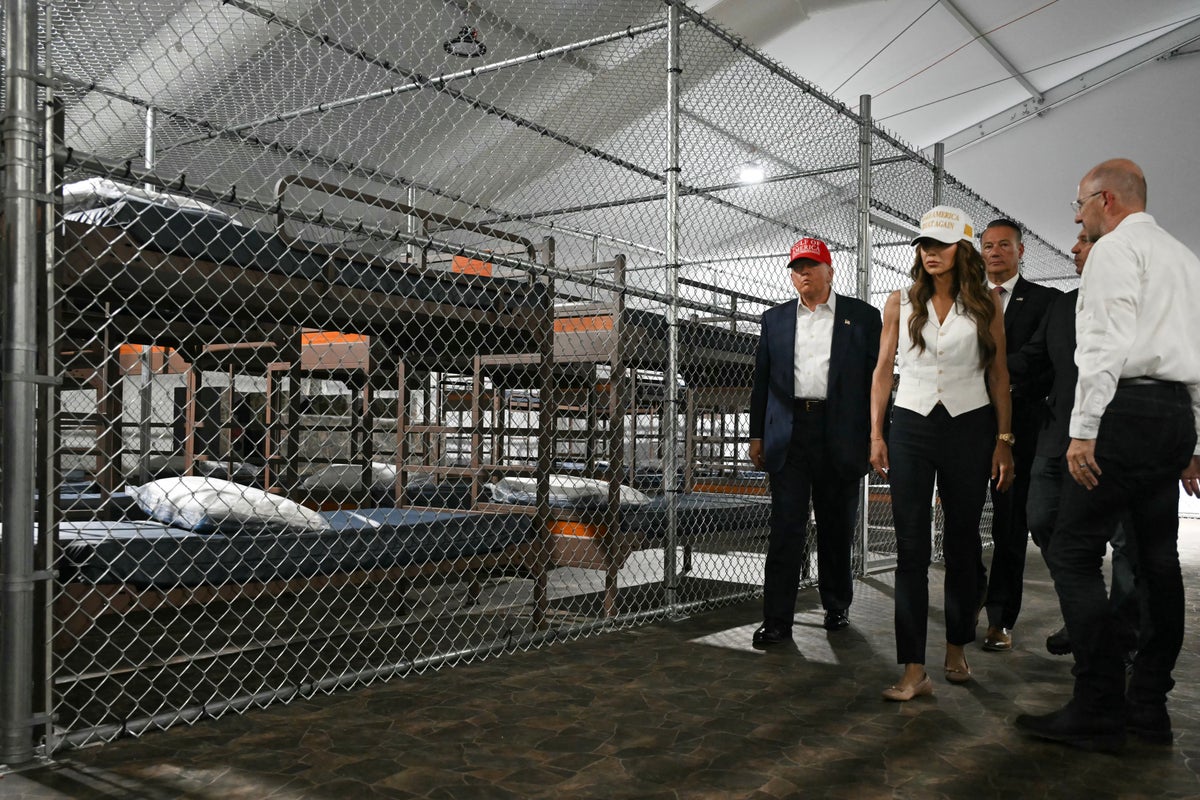
The operational viability of private immigration detention relies on a single economic friction: the ability to decouple facility maintenance costs from competitive labor markets. When the federal government updated its detention standards, it did not merely adjust administrative guidelines; it systematically altered the cost structures and legal liabilities of multi-billion-dollar government contractors. By explicitly codifying that detained migrants participating in Voluntary Work Programs (VWPs) are not legal employees, the regulatory updates insulate private operators from devastating state-level minimum wage lawsuits while cementing a sub-market compensation floor of exactly $1.00 per day.
To evaluate the systemic effects of these changes, one must analyze the interplay between federal supremacy, corporate margin preservation, and automated risk mitigation. The revised guidelines address a mounting operational crisis for major private correctional firms. Over the past decade, class-action litigation and state-level enforcement actions—most notably in Washington, California, and Colorado—challenged the long-standing practice of utilizing detainee labor for essential facility operations at nominal rates. By formalizing these exemptions and introducing automated systems, the federal framework secures the financial architectures of private detention operators against structural labor market shocks.
The Legal Insulation Framework: Neutralizing Class-Action Liability
The primary financial risk facing private detention contractors is not occupancy fluctuation, but the threat of retroactive labor enforcement. Under the previous regulatory framework, operators like the GEO Group and CoreCivic faced multi-million-dollar judgments. For instance, a federal jury previously ordered a private operator to pay $17.3 million in back wages after finding that the $1.00-per-day stipend violated Washington state's minimum wage statutes. The core legal vulnerability hinged on regulatory ambiguity: if federal standards did not explicitly forbid higher wages or clearly define the employment status of detainees, state courts could assert jurisdiction over private entities operating within their borders.
The updated standards neutralize this vulnerability through two structural mechanisms:
- Status Definitiveness: The text explicitly categorizes VWP participants as non-employees, formally blocking the application of the Fair Labor Standards Act (FLSA) and state-level equivalents. This standardizes the definition of detainee labor as a programmatic element of civil confinement rather than a commercial employment relationship.
- Compensation Ceilings: By explicitly barring facilities from paying above the $1.00-per-day minimum stipend, the rule eliminates the primary legal argument used by plaintiffs. Previously, plaintiffs argued that because contractors possessed the discretion to pay more, the $1.00 rate was an arbitrary corporate choice rather than a mandatory federal directive. The new ceiling establishes a defense based on intergovernmental immunity and federal preemption, arguing that state laws cannot compel a federal contractor to violate explicit federal procurement standards.
This shifting framework transforms a volatile legal liability into a predictable administrative constant. Litigants attempting to prove forced labor or wage theft face an uphill battle when federal policy mandates both the exact compensation rate and the non-employee status of the workforce.
The Operational Cost Function: Subsidizing Facility Maintenance
Private detention centers function as high-fixed-cost, low-variable-cost operations. Food service, laundry operations, facility sanitization, and basic maintenance represent the core operational expenses that dictate facility margins. Under standard market conditions, maintaining a facility housing over 1,500 individuals requires a significant footprint of full-time, market-wage janitorial and culinary staff.
The VWP acts as an operational subsidy. To quantify this dynamic, consider a standard facility model where 85 full-time equivalent (FTE) positions are required to run basic services.
- Market Labor Baseline: At a standard state minimum wage of $15.00 per hour, 85 FTEs working 40 hours per week generate an annual labor expense of approximately $2.65 million, excluding payroll taxes, benefits, and insurance.
- Detention Arbitrage Baseline: Utilizing VWP labor at $1.00 per day for the same operational output collapses that specific labor expense line item to less than $32,000 annually.
The delta between these two numbers represents pure margin preservation for the operator. The revised rule guarantees this cost-saving mechanism remains intact. By establishing an absolute ceiling on pay, the policy prevents an arms race where competitive facilities might raise stipends to attract more compliant labor, which would otherwise threaten the industry's aggregate margin targets.
The economic model is further stabilized by internal corporate ecosystems. Because the earned stipends are largely non-transferable outside the facility, they flow directly into corporate-run commissaries. Detainees utilize these nominal earnings to purchase basic necessities, communication access, and supplementary food items at highly inflated internal price points. The contractor effectively operates a closed currency loop: issuing capital at $1.00 per day and recapturing it via monopoly retail margins inside the walls.
Digital Substitution: Scaling Communications via Automated Systems
Labor is only one component of the updated cost-reduction strategy. The revised standards also permit contractors to substitute human labor with artificial intelligence and automated tools to manage detainee communications and translation workflows.
Previously, ensuring compliance with federal mandates regarding language access and grievance processing required significant administrative overhead. Facilities maintained contracts with on-call human interpreters or employed bilingual staff to manage daily intake, medical screening, and administrative grievances. This created operational bottlenecks and exposed contractors to compliance failures when human assets were unavailable.
The integration of automated systems changes the operational equation in three distinct ways:
- Variable Cost Elimination: Automated translation tools operate on minimal marginal costs per interaction. Once the initial software licensing or infrastructure setup is integrated, the cost of processing a grievance or conducting an intake interview scales at near-zero marginal expense.
- Throughput Maximization: Automated interfaces handle simultaneous interactions across multiple languages instantly, removing the human queue latency that frequently caused operational friction during mass intake events.
- Liability De-risking: Human translation errors can lead to medical neglect claims or civil rights lawsuits. Standardizing communications through verified automated protocols allows corporate operators to shift systemic software liability back to the technology vendors or point to procedural compliance with federal guidelines.
However, this transition introduces specific operational risks. The reliance on automated tools for urgent medical grievances creates a barrier for individuals experiencing acute crises. While the standard satisfies the letter of the law by providing translation "at no cost to the detainees," it strips human nuance from high-stakes environments, potentially masking critical health indicators that a trained human interpreter would notice.
Mandatory Admission Constraints: The Risk Transfer Mechanism
A less scrutinized but highly consequential alteration in the standards is the provision barring facility operators from refusing to admit any detainee routed to them by federal authorities. On its surface, this appears to strip autonomy from the private operators. In practice, it functions as a complex risk-transfer mechanism.
Historically, private operators could reject individuals with severe medical conditions, advanced psychological disorders, or physical disabilities. These rejections were driven by financial calculations: the cost of treating an individual requiring specialized outside hospitalization or constant psychiatric care could rapidly consume the daily per-diem revenue generated by that specific detainee.
The new mandatory admission rule eliminates this refusal option, creating an immediate operational burden. Facilities must now absorb highly complex medical profiles. To mitigate the resulting financial exposure, the updated policy pairs mandatory admission with a revised liability structure. Operators are required to request a transfer for detainees whose medical needs exceed facility capabilities, but the agency is not mandated to execute that transfer immediately.
This delay creates a legal buffer. Because the private operator is legally prohibited from refusing the initial admission and is mandated to follow a bureaucratic transfer-request protocol, the company's liability for adverse health outcomes during the interim period is severely curtailed. If a detainee suffers a medical emergency while a transfer request is pending, the operator can document compliance with the admission mandate and the subsequent administrative filing, effectively shifting the legal blame for delayed care onto the federal bureaucracy.
The Structural Realignment of Private Detention Portfolios
The long-term consequence of these regulatory adjustments is a profound stabilization of private detention portfolios. By securing cheap labor, lowering administrative costs via automation, and limiting litigation vulnerabilities, the federal government has created a highly insulated investment environment for private prison firms.
The immediate strategic move for operators is clear: capital expenditure must be redirected away from legacy labor-management frameworks and toward technological integration. Firms that aggressively deploy automated translation, biometric processing, and algorithmic tracking will maximize the efficiency of the $1.00-per-day labor force while driving administrative headcount to historic lows.
Furthermore, legal teams must immediately leverage the new regulatory text to file motions to dismiss in all pending wage-and-hour class actions. The explicit prohibition against paying more than $1.00 per day provides the definitive defense needed to assert federal preemption over state labor regulations. Private detention operators will emerge from this regulatory cycle with lower overhead, minimal exposure to state-level labor enforcement, and an optimized, low-cost operational model designed to handle scaled enforcement operations without a corresponding increase in operational expenses.
.jpg)