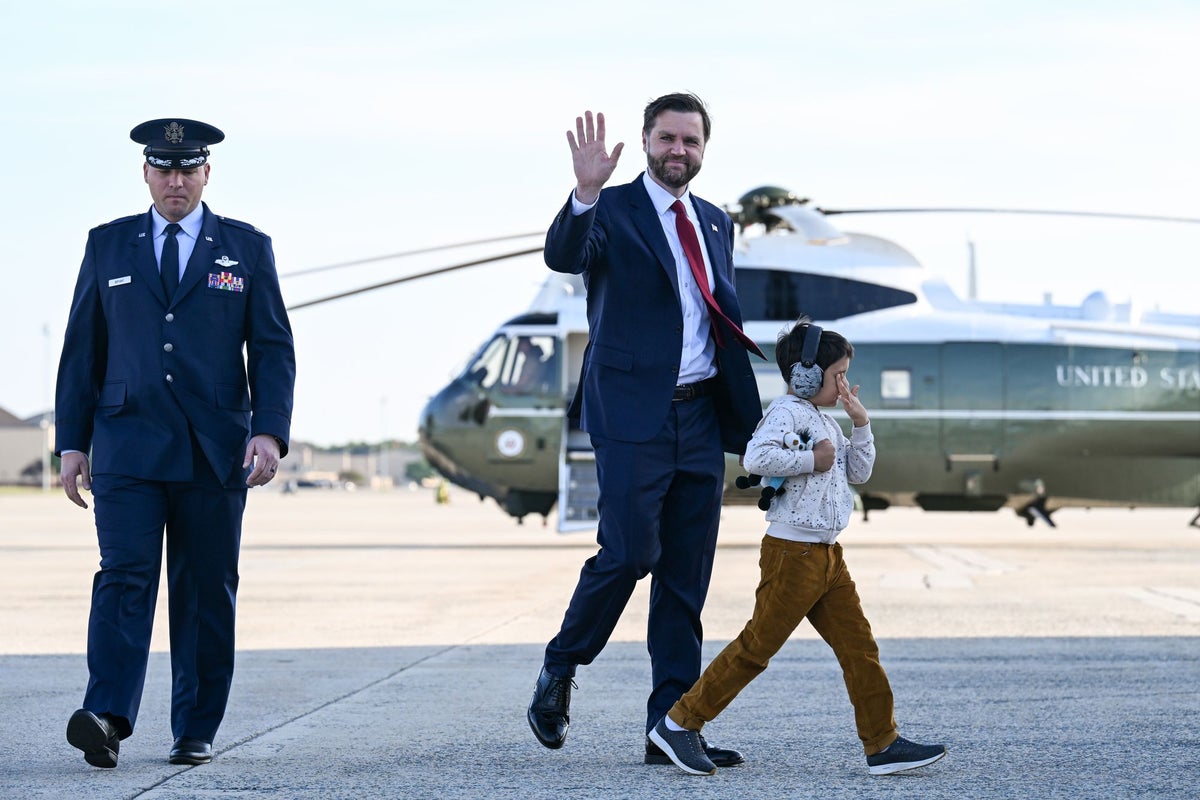
In modern presidential politics, the sprint to a national nomination begins long before the first official debate is scheduled. A precise examination of Vice President JD Vance's three-state itinerary—stretching from voting booths in Cincinnati, Ohio, to fundraising corridors in Oklahoma, and culminating in a highly calculated retail campaign stop in Des Moines, Iowa—reveals a masterclass in early-stage presidential positioning. While superficial reporting frames this travel as a series of disconnected, routine political actions, a structured strategic analysis exposes how Vance is deploying his capital to solve a complex, multi-variable equation: securing his home base, building institutional leverage, and establishing early dominance in the critical 2028 lead-off caucus state.
To understand the underlying mechanics of this strategy, we must dissect the tour through three distinct operational vectors: home-state consolidation, national financial network building, and early-mover retail dominance.
Vector 1: Home-State Consolidation and the Mechanics of Endorsement Yield
Before a candidate can project power nationally, they must demonstrate absolute control over their native political ecosystem. Vance’s first stop at St. Anthony of Padua Maronite Catholic Church in Cincinnati to cast his ballot in the Ohio primary was not merely civic duty; it was a highly targeted deployment of political endorsement designed to maximize in-state loyalty.
Vance publically confirmed his votes for Vivek Ramaswamy in the gubernatorial race and Jon Husted in the U.S. Senate contest. This dual endorsement serves two structural functions:
- Co-opting Rival Factions: By backing Ramaswamy, a highly visible figure with a powerful, independent base of populist support, Vance prevents the emergence of an alternative, competitive populist center of gravity in Ohio.
- Institutional Alignment: Supporting Husted, who is running to fill the remainder of Vance’s own unexpired Senate term, secures institutional goodwill within the traditional state party apparatus.
In political warfare, home-state friction is a catastrophic drag on national campaigns. By locking down both the populist insurgent wing (Ramaswamy) and the institutionalist governing wing (Husted), Vance achieves a high-yield, friction-free home front. The addition of his young son, Vivek, to the voting booth—complete with the carefully managed press detail of the child voting on a mock ballot—acts as a calculated humanizing agent, softening his sharp ideological edges for a broader suburban electorate without diluting his policy credentials.
Vector 2: The Capital Accumulation Pipeline and RNC Integration
The second phase of Vance's itinerary, a fundraising stop in Oklahoma City, addresses the resource engine required to sustain a multi-year national campaign. Serving as the finance chair of the Republican National Committee (RNC), Vance's role allows him to build personal equity with elite donors while ostensibly executing institutional duties.
We can model this capital accumulation strategy using a basic political return-on-investment formula:
$$V_p = f(C_a \cdot E_d)$$
Where:
- $V_p$ represents Vance's overall political equity.
- $C_a$ is the direct capital allocated to local down-ballot candidates.
- $E_d$ represents the depth of relationship-building with high-net-worth donor networks.
By traveling to non-primary, donor-rich states like Oklahoma to raise money, Vance accomplishes two key objectives:
- Lowering the Opportunity Cost of Fundraising: He avoids exhausting the donor pools of early primary states like Iowa and New Hampshire too early in the cycle, leaving those local resources fresh for his own eventual campaign.
- Creating Down-Ballot Debt: By raising capital that is subsequently distributed to congressional and state-level candidates across the country, Vance creates a network of indebted local politicians. When the 2028 primary begins in earnest, these down-ballot beneficiaries will face immense structural pressure to return the favor via local endorsements and logistical support.
Vector 3: The First-Mover Advantage in the Iowa Caucus Ecosystem
The final and most critical vector of Vance's tour is his arrival in Des Moines, Iowa. To the untrained eye, this is a standard surrogate trip to support incumbent Republican Representative Zach Nunn in a competitive midterm defense. In reality, it is a sophisticated probe of the Iowa caucus ecosystem designed to establish first-mover advantage.
The Iowa caucuses do not reward broad, superficial media campaigns. They are won through high-touch retail politics, localized organizational depth, and alignment with specific economic and cultural interest groups. Vance's visit reveals a highly structured approach to capturing these gatekeepers.
The Agriculture-Industry Nexus
The timing of Vance's visit was delayed due to legislative maneuvering in Washington regarding a sweeping farm bill. By aligning his visit precisely with Representative Nunn's availability post-vote, Vance signals to Iowa's powerful agricultural lobby that he respects the legislative realities of their industry. Appearing with Nunn at a manufacturing facility in Des Moines allows Vance to blend his populist "rust-belt" economic messaging with the specific industrial and agricultural anxieties of Midwestern voters who are currently grappling with high input costs for fuel and fertilizer.
Preempting the 2028 Field
While political consultants claim the 2028 contest is "light-years away," the reality of caucus organizing requires years of relationship cultivation. Other potential contenders, such as Texas Senator Ted Cruz, have already begun engaging with the state’s influential evangelical blocks. By entering the state under the official, taxpayer-subsidized banner of the Vice Presidency, Vance neutralizes the early moves of his potential rivals.
He gains a low-risk, high-reward platform to test his rhetorical resonance with Iowa caucus-goers without the vulnerability of being an declared candidate. If his message falls flat, it is blamed on a tough midterm environment for the local candidate; if it succeeds, he establishes himself as the immediate frontrunner.
Strategic Bottlenecks and Systemic Risks
No political strategy is without systemic vulnerabilities. While Vance's three-state play is structurally sound, it faces three distinct bottlenecks that could disrupt his trajectory toward 2028:
- The War Cabinet Burden: As Vice President, Vance is intimately tied to the administration's active foreign policy decisions, including highly volatile negotiations and conflicts involving Iran. His history as an anti-interventionist Marine creates a sharp ideological friction point when serving in an active war cabinet. Any significant foreign policy failure will be directly attributed to him, potentially alienating the isolationist wing of his base.
- The Foreign Campaign Backlash: Vance's recent international political excursions, such as stumping for Hungary's Viktor Orbán prior to his party's resounding electoral defeat, present an opening for domestic critics. Opponents can easily frame these moves as an prioritization of global ideological battles over local economic concerns.
- The Shadow of Peers: Vance is not the sole heir to the populist movement. Figures like Secretary of State Marco Rubio command equal, if not superior, brand recognition among key primary demographics. A premature push into Iowa risks consolidating his rivals early, forcing a resource-intensive war of attrition years before the first caucus ballot is cast.
The optimal play for Vance moving forward is to lean heavily into local economic defense. Rather than focusing on polarizing cultural skirmishes or high-risk international alliances, his team must systematically tie his populist economic theory to the tangible, kitchen-table pain points of Midwestern voters—namely energy costs and agricultural supply chain stabilization. By framing himself as the pragmatic, policy-oriented protector of domestic industry during a time of global instability, Vance can convert his current institutional vice-presidential authority into an unbreakable, grassroots-driven lock on the road to 2028.



