Power has a distinct weight in a cutting-room floor. It smells like ozone, cold coffee, and suppressed panic.
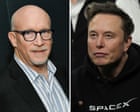
Picture the edit suite. The monitor glows in a darkened room somewhere in Manhattan or Los Angeles. On screen, a documentary filmmaker stares at a face that launches rockets, shifts global stock markets with a single typo, and now controls the digital public square. Alex Gibney—a man who has spent decades shining harsh, unsparing lights on Enron, the Catholic Church, and Scientology—is trying to figure out what to do with Elon Musk.
More importantly, he is trying to figure out if anyone has the stomach to show it.
News broke that Universal Pictures wavered. They hesitated. In an industry built on risk, the prospect of packaging a critical, unflinching look at the world’s most polarizing billionaire caused a sudden, cold shudder in executive suites. Why? Because fear is a rational economic actor. When a single target of your investigation possesses an army of devoted online followers, corporate infrastructure, and an institutional megaphone that can rewrite public sentiment by breakfast, caution stops looking like cowardice and starts looking like self-preservation.
We have built a media ecosystem where the subjects of journalism are powerful enough to buy the platforms that host it. That changes the physics of storytelling.
The Myth of Neutrality
To understand why a major studio gets cold feet over a documentary about Elon Musk, you have to look past the headlines and examine how modern mythmaking operates. We treat billionaires like characters in a superhero franchise. They are either benevolent visionaries saving humanity from climate catastrophe and interplanetary doom, or mustache-twirling villains hoarding resources while the world burns.
Neither story is true. Both stories are dangerous.
Gibney’s approach has never been about easy caricatures. His work dissects systems of power by looking at the small, compromised human choices that sustain them. When you point that lens at Musk, you aren't just looking at an eccentric engineer from South Africa who built electric cars and reusable rockets. You are looking at the uneasy marriage between government subsidies and libertarian mythos. You are looking at the psychological toll of a man who conflates his own survival with the survival of the species, dragging employees, investors, and the public along for a chaotic ride.
When a studio wavers, they aren't questioning the grammar of the film. They are calculating the turbulence. They are wondering if the distribution pipeline—the theaters, the streaming servers, the corporate partnerships—can weather the inevitable digital storm.
Consider what happens when a documentary actually bites. The backlash is no longer confined to traditional film reviews. It is weaponized. Algorithms reward outrage, and an army of accounts stands ready to flood review sites, harass executives, and boycott corporate parents before the premiere even begins. The cost of telling an uncompromising truth has spiked.
The Architecture of Hesitation
Corporate boardrooms love disruption right up until it disrupts them. For years, Silicon Valley sold a gospel of frictionless innovation. Move fast and break things. But when someone points out that the things being broken include labor laws, democratic norms, and public discourse, the pioneers of disruption suddenly demand absolute reverence.
Universal’s hesitation reflects a broader paralysis in modern entertainment. As media conglomerates consolidate into massive, debt-laden behemoths, their appetite for risk shrinks inversely to their scale. A nimble independent studio can afford to court controversy because a scandal is often oxygen for sales. A multinational conglomerate answering to shareholders, theme park divisions, and global distribution networks views controversy as a liability vector.
Musk occupies a singular space in this ecosystem. He is not merely a celebrity or a CEO. He is a cultural weather system. To critique him is to stand outside in a hurricane and complain about the wind. Executives know this. They sat in those rooms watching early cuts of the documentary, feeling the tightening in their chests as the narrative exposed uncomfortable truths about corporate governance, safety records, and the dark underbelly of technolibertarianism.
They saw the film. They recognized its brilliance. And then they looked at the calendar, looked at their balance sheets, and asked the quiet, shameful question that haunts modern art: Will this cost us too much?
The Cost of Silence
When art flinches, society gets smaller.
If we allow the sheer mass of corporate and personal power to dictate what stories can be told about it, we enter a quiet, insidious form of censorship. It does not require men in trench coats burning reels of film in the middle of the night. It requires only the polite, rational calculation of risk managers deciding that a documentary is too hot to handle.
This is why Gibney’s persistence matters. Journalism and documentary filmmaking are not public relations exercises. They are friction. They are the grit in the gears of unchecked adulation. When a studio wavers, it reminds us how fragile our collective reckoning with tech-feudalism truly is. We want accountability, but only if it comes with a safety net. We want truth, provided it doesn't upset the algorithm.
The documentary will find its way out. Truth has a stubborn habit of leaking through the cracks of corporate anxiety. But the brief moment of corporate panic—the hesitation in the boardroom, the silent calculations of executives staring at a screen in New York or Los Angeles—tells us more about our current cultural moment than any interview or archival footage ever could.
It reveals who holds the real leash. And it forces us to ask whether we are willing to watch stories that challenge the gods we built ourselves.


