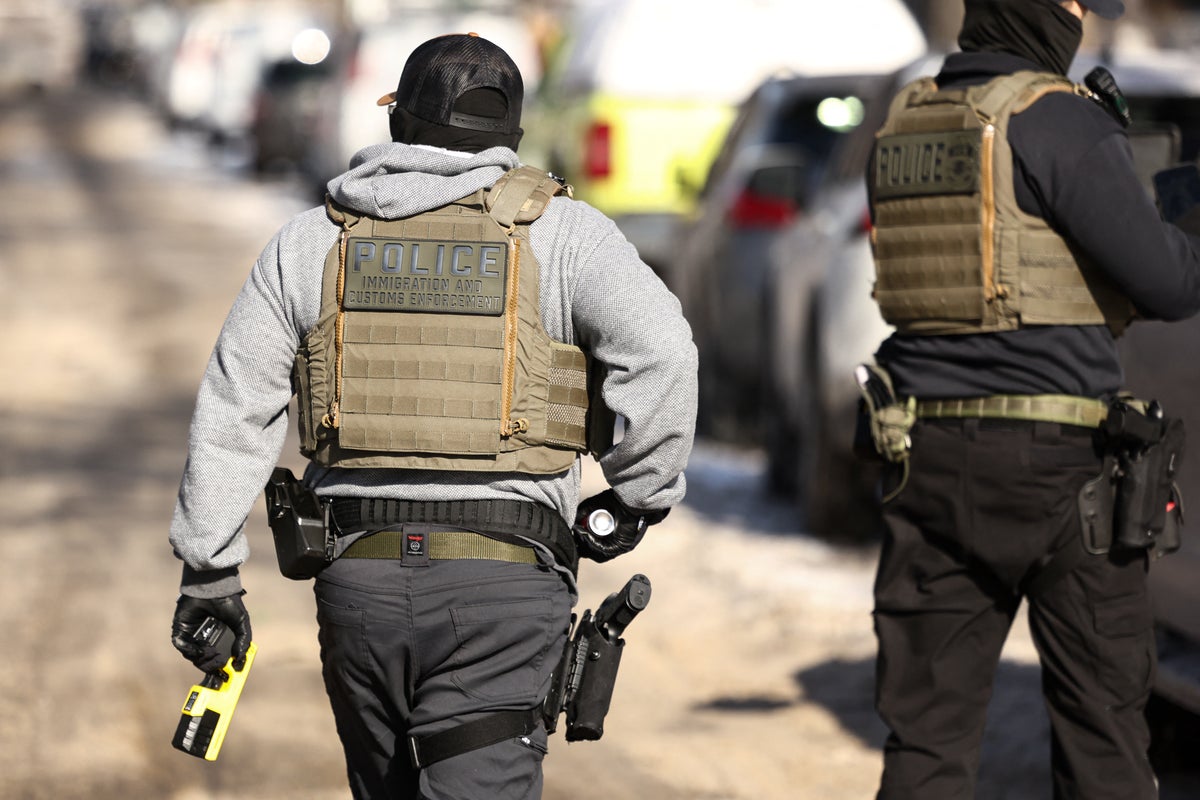
The federal indictment of Immigration and Customs Enforcement officer Christian Castro for false statements, following the controversial Minneapolis shooting of Venezuelan national Julio Cesar Sosa-Celis, illustrates a structural fracture point inside federal-local enforcement dynamics and prosecutorial discretion. Rather than viewing this indictment as an isolated disciplinary action, institutional mechanics reveal a multi-variable conflict involving evidentiary verification failures, interstate extradition gridlock, and internal Department of Justice friction regarding the threshold of criminal liability.
The progression of the case highlights an evidentiary feedback loop that routinely distorts initial law enforcement reporting. During the January enforcement surge in the Twin Cities, the initial operational narrative produced by the Department of Homeland Security asserted that agents were subjected to physical assault by suspects wielding domestic objects like a snow shovel and a broom handle, justifying defensive lethal or semi-lethal force. This narrative directly shaped the initial federal charging instruments filed against Sosa-Celis and another individual.
The systemic failure occurred when independent video evidence—captured via cellphone and local surveillance—contradicted the sworn statements of the participating officers. In legal compliance frameworks, when objective visual data invalidates the foundational premise of an arrest affidavit, prosecutors face an immediate ethical mandate under Brady and Giglio obligations to dismiss pending charges against defendants. The rapid unraveling of the initial case against Sosa-Celis, culminating in dismissals with prejudice, exposed a vulnerability in how operational assertions from tactical units are ingested into formal judicial filings without preliminary corroboration.
This breakdown gave rise to a jurisdictional tug-of-war between Minnesota state authorities and federal entities. Local prosecutors moved swiftly to secure state-level indictments for assault and false reporting against Castro, subsequently triggering an interstate conflict when Texas Governor Greg Abbott’s administration delayed or resisted executing an extradition warrant. The resulting legal maneuvers—including Minnesota’s civil suit against the Texas executive branch and Castro’s eventual release following local detention limits—demonstrate the friction inherent in federalism when state sovereign interests collide with federal employment protections and inter-state sanctuary dynamics.
Simultaneously, internal friction within the Department of Justice exposed the strategic calculus governing federal accountability. Reports indicating that line prosecutors pushed for severe civil rights violations only to be blocked by higher-ranking agency officials—coinciding with the high-profile departure and subsequent investigation of prosecutor Matthew Evans—underline the conservative prosecutorial threshold applied to law enforcement defendants. Opting for a six-count indictment focused strictly on false statements rather than broader civil rights abuses reflects a calculated legal boundary. False statement charges under federal statutes provide a clear evidentiary path requiring proof of materiality and willful deception, avoiding the higher subjective intent burdens associated with proving constitutional deprivations under color of law.
Future risk vectors in federal surge operations will hinge on the speed of digital evidence integration. Institutional resilience requires real-time body-worn camera and digital asset verification prior to the finalization of initial arrest affidavits, cutting off the feedback loop that turns tactical misrepresentation into flawed federal indictments.

:max_bytes(150000):strip_icc()/moscow-kremlin-and-st-basil-cathedral-at-dusk-158200423-5a64f4594e46ba00377331fb.jpg)

