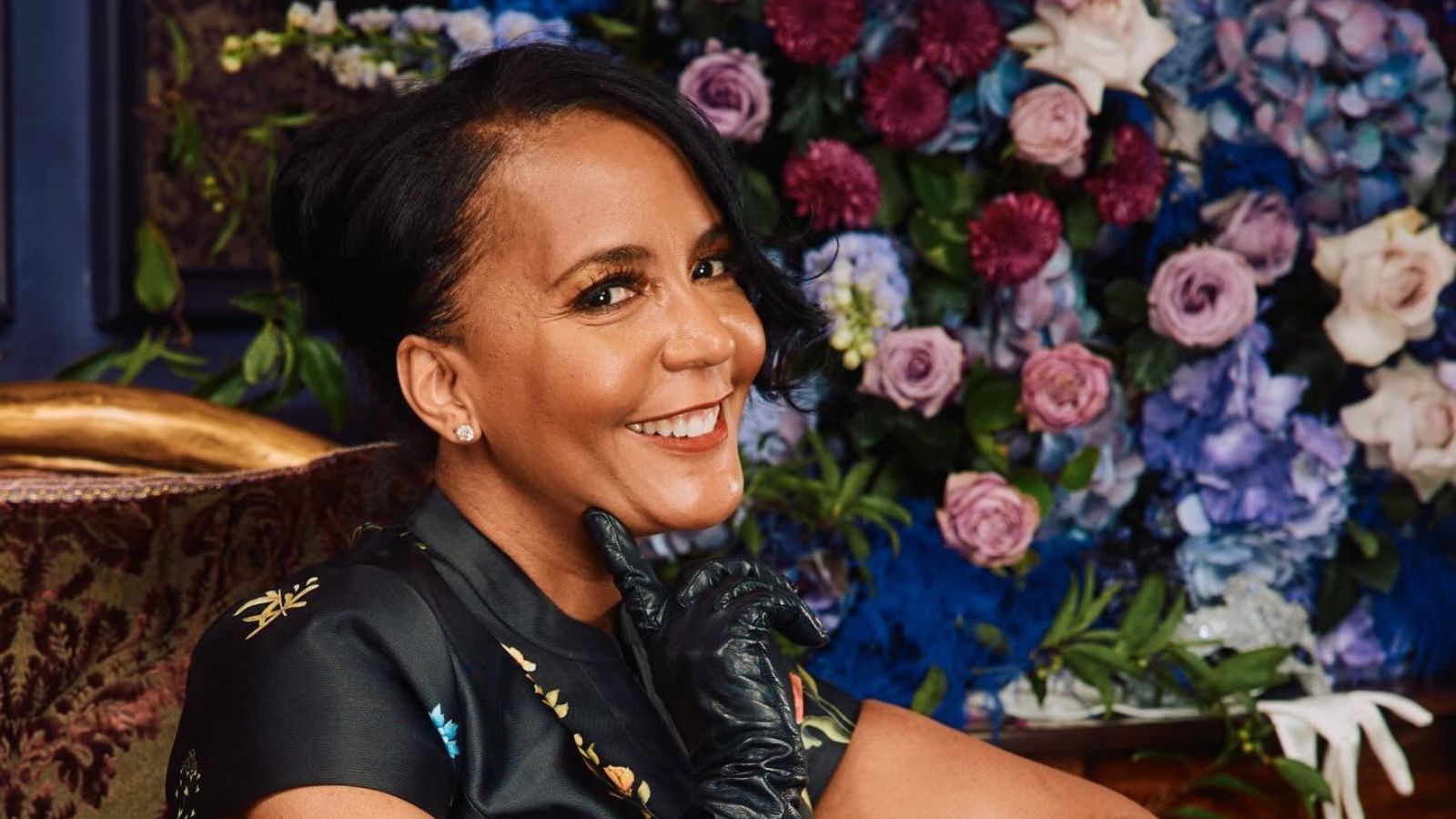
The premise of the viral headline is straightforward, yet the reality behind a Black woman winning a United States governorship—specifically within the complex political machinery of Georgia—is anything but simple. To understand how a figure like former Atlanta Mayor Keisha Lance Bottoms could break the ultimate executive glass ceiling in American state politics, you have to look past the celebratory soundbites and examine the raw mechanics of Southern electoral math, coalition fractures, and the brutal realities of governing a deeply divided state.
For decades, political analysts treated the governorship as an impenetrable fortress for Black women. While Black women have served as mayors of major metropolises, members of Congress, U.S. Senators, and Vice President of the United States, the governor's mansion remained elusive across all fifty states. The structural reasons are well-documented in political science: statewide executive races require a candidate to build an ideological bridge wide enough to carry dense urban cores while simultaneously surviving—or at least minimizing losses—in exurban and rural counties where racial and partisan polarization runs highest.
The Structural Barrier of the Statewide Executive
Legislative races allow a candidate to thrive within a gerrymandered or demographically concentrated district. Statewide races offer no such shelter. Every vote counts equally across vastly different cultural geographies, from the high-rises of Midtown Atlanta to the agricultural stretches of South Georgia.
Historically, voters have applied a different psychological standard to executive roles compared to legislative ones. A legislator is viewed as one voice among hundreds, a representative sent to argue on behalf of a specific constituency. A governor is the singular commander-in-chief of the state's National Guard, the final signature on the state budget, and the sole figure held accountable when crime spikes, hurricanes hit, or the economy stalls. For women of color, overcoming the implicit bias surrounding who "looks" like a commander-in-chief has proven vastly harder in gubernatorial races than in congressional ones.
Consider the precedent set by Stacey Abrams in 2018 and 2022. Abrams proved that a Black woman could shatter fundraising records, register hundreds of thousands of new voters, and come within roughly 55,000 votes of winning the Georgia governor's office in a midterm cycle. Yet her campaigns also exposed the ceiling of a pure base-mobilization strategy. When Republican turnout surged in rural counties and moderate suburbanites split their tickets—voting for Democratic U.S. Senators like Raphael Warnock while backing Republican Governor Brian Kemp—the math simply ran out.
Why Georgia Became the Crucible
Georgia is not an accidental battleground. Over the past twenty years, demographic shifts in the Atlanta metropolitan area have fundamentally altered the state's electorate. Corporate relocations, the booming film industry, and an influx of college-educated professionals from the Northeast and Midwest transformed once-reliable Republican strongholds like Gwinnett, Cobb, and Henry counties into Democratic powerhouses.
Yet demographics are not destiny. Turnout models in Georgia depend heavily on two fragile variables: Black voter enthusiasm and suburban independent swing voters.
When a candidate like Keisha Lance Bottoms enters the statewide arena, her political resume immediately becomes both her greatest asset and her sharpest liability. As Mayor of Atlanta from 2018 to 2022, Bottoms governed through a period of historic upheaval. She navigated the COVID-19 pandemic, clashed publicly with Governor Brian Kemp over mask mandates and business closures, and managed the intense civil unrest following the murder of George Floyd and the fatal police shooting of Rayshard Brooks in Atlanta.
Supporters point to her tenure as proof of crisis-tested executive leadership. During the summer of 2020, her televised plea urging protesters to "go home" and reminding them that "you are burning your own house down" resonated deeply with moderate voters across the country who craved order alongside calls for justice. That moment elevated her national profile, eventually leading to her appointment as Senior Advisor to the President and Director of the White House Office of Public Engagement.
Critics, however, look at the exact same record and see deep vulnerabilities. During the final two years of her mayoralty, Atlanta experienced a sharp rise in violent crime, mirroring national trends during the pandemic. That surge fueled the Buckhead cityhood movement—an effort by wealthy, predominantly white neighborhoods in north Atlanta to secede from the city over policing and public safety concerns. When Bottoms announced in May 2021 that she would not seek a second term as mayor, opponents framed the decision as a retreat from an unmanageable crisis, while allies argued she had simply chosen a different path after an exhausting term.
The Suburban Tightrope and the Crime Narrative
Any credible path for a Black woman to win the Georgia governorship runs directly through the northern Atlanta suburbs. Voters in counties like Forsyth, Cherokee, and North Fulton hold the decisive margin. These are voters who frequently express discomfort with hard-right social policies, yet they remain fiercely protective of their economic interests and hyper-sensitive to narratives surrounding public safety.
To win these voters, a Democratic gubernatorial candidate cannot rely solely on civil rights rhetoric or urban infrastructure promises. They must neutralize the Republican attack machine on crime and taxes before it takes root.
In a hypothetical general election matchup, the opposition playbook writes itself. Attack ads would inevitably splice footage of 2020 street protests with statistics on homicide rates during the pandemic, attempting to paint the candidate as soft on crime and hostile to law enforcement. Overcoming that barrage requires disciplined messaging that separates executive accountability from national partisan caricatures. It requires speaking directly to small business owners in Macon and Savannah about workforce development, rural hospital closures, and property tax relief, rather than fighting ideological battles tailored for cable news panels.
The Myth of the Monolithic Coalition
Mainstream political coverage often treats the Democratic coalition in the South as a unified bloc waiting to be activated. Veteran operatives know the truth is far messier. The alliance between Black voters—particularly Black women, who form the organizational backbone of the party—and white suburban moderates is transactional and constantly under strain.
Black voters in Georgia have repeatedly delivered massive turnout margins in recent cycles, expecting tangible policy returns in areas like voting rights protections, Medicaid expansion, and maternal mortality reduction. At the same time, white suburban swing voters often recoil from progressive economic proposals or sweeping institutional reforms.
A candidate who leans too far left to energize the urban base risks alienating the suburban moderates needed to cross the 50 percent threshold (a critical number in Georgia, where state law mandates a runoff election if no candidate secures an absolute majority). Conversely, a candidate who tacks too aggressively toward the political center risks depressing enthusiasm among young Black voters and progressive organizers, leading to the exact kind of turnout drop-off that sinks statewide campaigns.
Balancing those competing demands requires a rare political dexterity. It demands a candidate who possesses innate cultural fluency within the Black church and civil rights establishment, paired with the institutional credibility to sit comfortably in boardrooms with Fortune 500 executives at the Metro Atlanta Chamber.
Governing a Divided State House
Winning the election is only the opening act. The real test of a historic governorship begins the morning after inauguration, when the newly minted executive confronts the realities of statehouse power.
In Georgia, as in most Southern states, the legislature remains firmly tilted toward rural and exurban Republican districts due to structural geography and redistricting maps. A Democratic governor taking office in Atlanta would immediately face a hostile General Assembly capable of stalling appointments, slashing executive agency budgets, and overriding vetoes if the opposition holds a two-thirds supermajority.
Under these conditions, sweeping legislative victories become nearly impossible. Governance shifts from passing landmark bills to wielding executive authority. A governor in that position relies on line-item vetoes, regulatory appointments to state boards, emergency declarations, and the bully pulpit to shape policy.
Economic development becomes the primary neutral ground. Georgia's status as a magnet for electric vehicle manufacturing, battery plants, and logistics hubs relies on state-backed tax incentives and infrastructure grants negotiated directly through the governor's office. Maintaining the confidence of global corporations while advocating for equitable wage standards and environmental safeguards requires constant, quiet negotiation behind closed doors—the exact opposite of the loud, performative politics that dominate campaign season.
The National Ripple Effect
When a barrier as durable as the American governorship finally falls, the shockwaves extend far beyond state borders. Governors serve as the primary farm team for the presidency. Unlike senators, who spend their careers casting votes and holding hearings, governors manage multibillion-dollar budgets, command state agencies, and make life-or-death decisions during emergencies.
For decades, the absence of Black women from the ranks of governors created a structural bottleneck in national politics. Whenever presidential contenders looked for running mates with executive experience, or whenever party leaders scanned the horizon for future White House candidates, the pool of governors lacked Black women entirely.
Breaking that barrier in a pivotal swing state like Georgia alters the national political calculus overnight. It proves that the electoral coalition that flipped states in presidential elections can be replicated in down-ballot executive races without a presidential nominee at the top of the ticket. It forces national donors, party committees, and political strategists to recalibrate where they invest money and which candidates they deem "electable."
Yet history offers a sobering warning against treating any single election victory as a permanent realignment. Political pendulums in swing states move fast. Every executive decision—from how state surplus funds are rebated to taxpayers to how public school curricula are funded—is scrutinized under a microscope. The margin for error is razor-thin, and the opposition begins preparing for the next four-year cycle the moment the ballots are certified.
True political transformation is never secured on election night; it is earned in the unglamorous, daily grind of budget negotiations, agency oversight, and keeping a fragile coalition intact long enough to deliver measurable results before the voters head back to the polls.