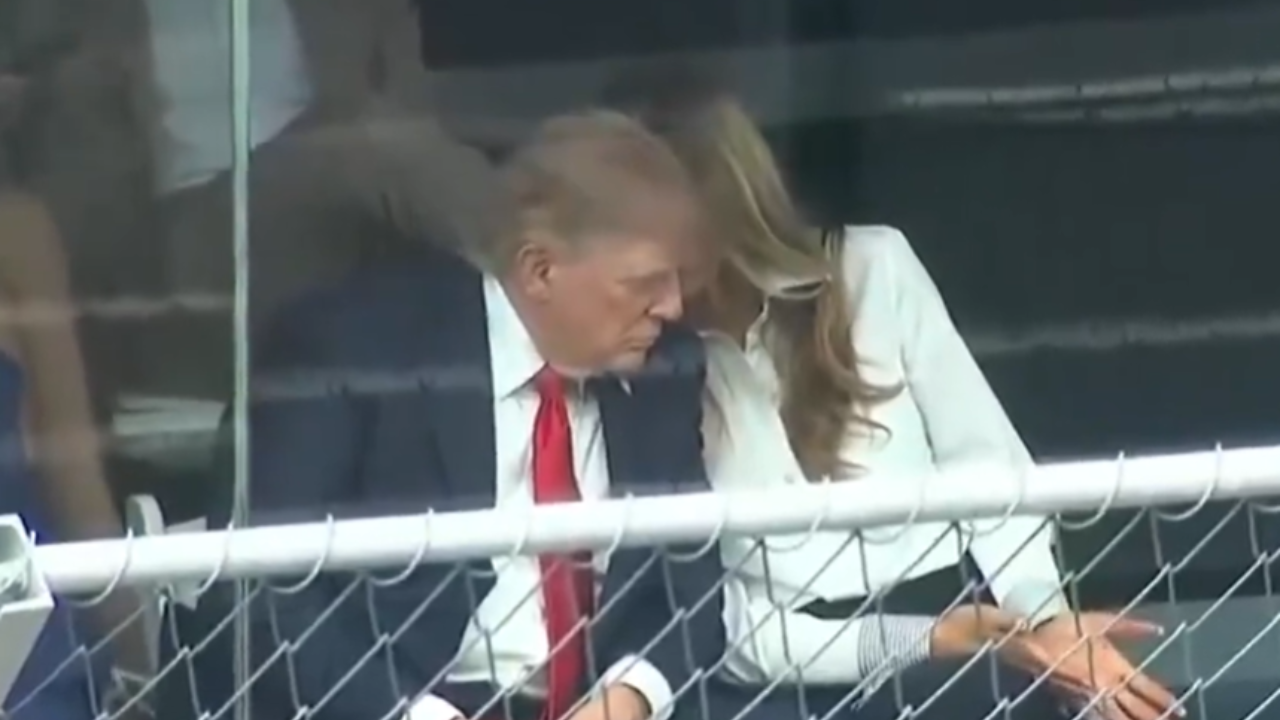
We look for cracks in the armor of public icons because it reassures us. Perfection is terrifying. It alienates. A tight jaw, a fleeting look away, a micro-expression caught in the unforgiving crosshairs of a telephoto lens—these become the raw materials for a modern mythology.
Consider what happens next: a twenty-second loop appears on a screen.
No audio. No context. Just pixels.
Millions tune in. They slow it down. They zoom in on the margins of a public appearance, hunting for friction. We dissect posture like ancient augurs reading bones. When a video surfaces featuring high-profile figures—such as recent footage involving Donald and Melania—the internet transforms instantly into a grand jury of amateur body-language experts.
Human beings are wired to find narrative in motion. Give us two people standing shoulder-to-shoulder, add a sudden shift in weight or a turned head, and our brains immediately construct a script. Was there a disagreement? Was fatigue setting in? Or was it merely the heavy, suffocating weight of living entirely in public view?
The cameras are never turned off. That is the fundamental condition of modern prominence. Every blink is archived. Every momentary lapse in synchronization becomes a headline.
Step back for a moment. Think about the last time you had a difficult conversation while hundreds of strangers stared at you, waiting for a stumble. Now multiply that pressure by a factor that defies imagination. Security details, blinding flashbulbs, the perpetual hum of anticipation—it creates an atmosphere where normal human reactions are flattened into caricatures.
A brief exchange at a high-profile event like a Grand Prix is rarely just a casual chat. It is choreography performed on a tightrope. When a clip sparks viral speculation, the digital ecosystem feeds on ambiguity. Ambiguity is a blank canvas. People project their own fears, political loyalties, and relationship philosophies onto a few silent frames.
If you want to understand why these digital ripples travel so fast, look at our own exhaustion. We project our desire for drama onto screens because it offers a temporary escape from the quiet, unphotographed moments of our own lives. We want the mighty to stumble just enough to prove they bleed the same blood.
Yet, reality is stubbornly mundane. Most captured moments of tension are simply the result of heat, exhaustion, coordination logistics, or a stray thought interrupting a smile.
The lens captures the geometry of the moment, but it misses the entire universe happening underneath the surface. The public stage demands an unbroken facade. When that facade wobbles for even a second, the watchers pounce.
We watch. We judge. We move on to the next clip.
The screen goes dark. The room returns to silence. And the people in the frame remain as unreachable and mysterious as they were before the first pixel loaded.