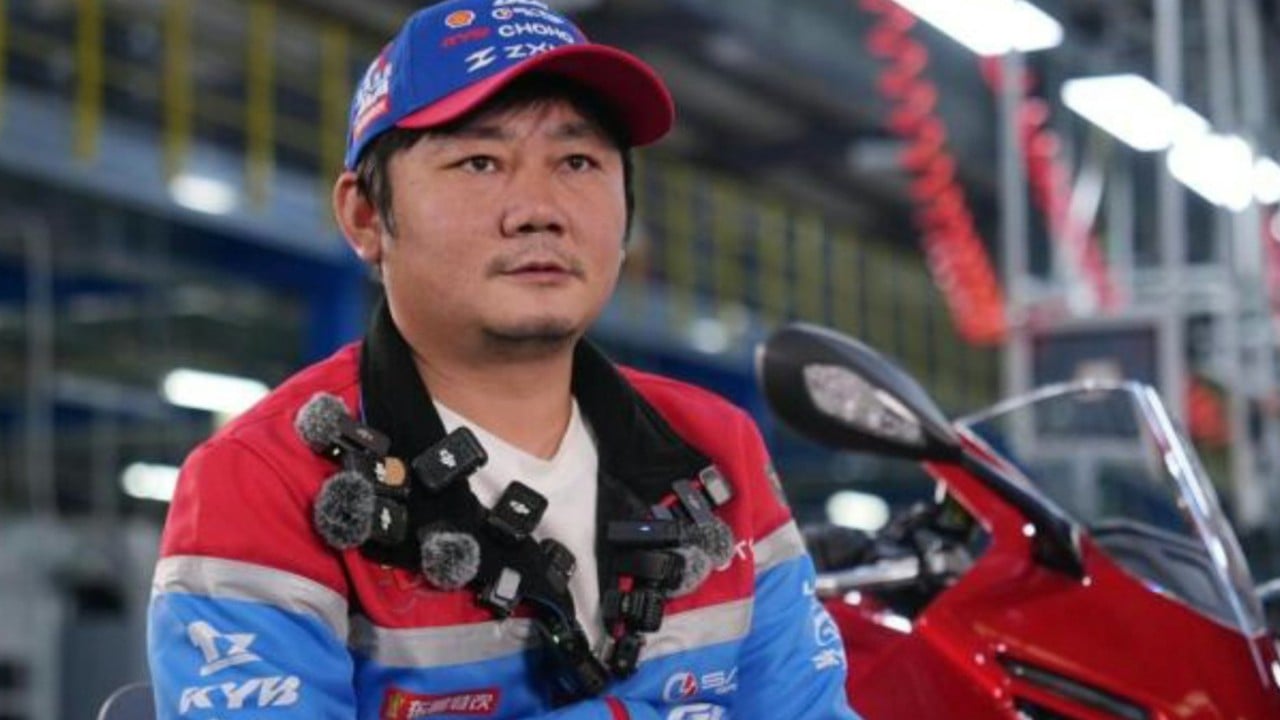
On July 9, 2026, ZXMOTO founder Zhang Xue announced a five million yuan (US$735,000) donation to the Guangxi Charity Federation for flood relief efforts. This capital allocation was executed immediately after liquidating a 100 million yuan (US$15 million) corporate and personal debt liability. To the casual observer, the rapid transition from debt settlement to high-volume philanthropy by a young enterprise—ZXMOTO was established in April 2024—seems financially contradictory. Under a rigorous corporate finance and brand equity analysis, however, this sequence reveals a deliberate, highly calculated strategy designed to convert hard-won technical credibility into durable consumer goodwill and market share.
Understanding this corporate trajectory requires dissecting the mechanics of ZXMOTO's debt clearance, the economic return on non-traditional marketing, and the logistical integration of off-road vehicle supply chains during crisis operations.
The Liquidity Transformation and Debt Clearance Mechanics
The primary hurdle for ZXMOTO during its early expansion was a capital structure weighed down by a 100 million yuan liability. This debt was not merely standard operational credit; it comprised a mix of personal loans incurred to repurchase shares and a substantial shortfall in the company's registered capital. Operating under such a heavy debt-to-equity ratio severely restricted the firm's operational agility, particularly in the capital-intensive motorcycle manufacturing sector.
The resolution of this debt was made possible by a dramatic valuation spike. In March 2026, French rider Valentin Debise secured consecutive victories in the WorldSSP class of the Superbike World Championship riding ZXMOTO’s 820RR-RS model. This athletic and engineering triumph functioned as a powerful proof of concept, validating ZXMOTO's proprietary technology on a global stage.
The capitalization of this milestone followed a specific sequence:
[WorldSSP Championship Victory (March 2026)]
                       │
                       ▼
[Explosive Enterprise Valuation Growth]
                       │
                       ▼
[Targeted Private Equity Placement (Partial Share Sale)]
                       │
                       ▼
[Accumulation of 100M Yuan Liquidity] ──► [Complete Debt Eradication (July 2026)]
By selling a minority portion of his equity to incoming private investors at this post-victory valuation peak, Zhang Xue generated the liquidity required to clear the entire 100 million yuan debt liability. This transaction represents a classic liquidity transformation. Rather than draining the operational cash flow of the manufacturing plant, the founder capitalized on the intangible value of the brand's newfound racing prestige. The immediate elimination of the debt overhang instantly improved the company's balance sheet, reducing interest expenses to zero and freeing up future operational cash flows for product development.
The Economics of Asymmetrical Brand Equity
Traditional marketing models dictate that a newly deleveraged firm should reinvest excess liquidity directly into capital expenditures (CapEx) or conventional customer acquisition funnels (ad campaigns, dealership incentives, digital media spend). Zhang Xue’s decision to immediately allocate five million yuan to disaster relief represents a major departure from traditional corporate finance.
This allocation can be understood through the lens of the Asymmetrical Brand Equity Model.
In highly competitive manufacturing sectors, standard advertising campaigns suffer from steep diminishing returns and high customer acquisition costs (CAC). Consumers are increasingly desensitized to corporate messaging. In contrast, a highly publicized, emotionally resonant philanthropic act—especially when contrasted against a background of personal struggle—yields significant earned media. The earned media value (EMV) generated by the public narrative of an entrepreneur paying off massive debts and immediately diverting millions to disaster relief far outstrips the reach of a traditional five-million-yuan ad buy.
Three distinct variables drive this high-yield return on philanthropy:
- The Narrative Contrast Effect: The transition from personal austerity—exemplified by Zhang's public admission of borrowing trivial sums for his family's basic needs—to high-volume corporate giving creates an authentic underclass-hero archetype. This narrative generates organic consumer alignment that traditional public relations firms cannot replicate.
- The Zero-Utility Illusion: Traditional advertising is viewed by consumers as purely self-serving, which naturally triggers skepticism. Philanthropy during a humanitarian crisis is perceived as a low-utility or zero-utility action for the business, which lowers consumer defense mechanisms and establishes deep-seated brand loyalty.
- National Sentiment Integration: Aligning the corporate identity with national recovery efforts during natural disasters, such as the severe flooding in Guangxi, embeds the brand into the domestic cultural consciousness. This structural alignment establishes a durable defensive moat against foreign competitors.
The business did not simply write a check to improve its reputation. The five million yuan donation was strategically paired with the dispatch of over 30 tons of highly targeted physical assets, including infant supplies, basic nutritional items, and specialized off-road machinery.
Last-Mile Mobility and Field Validation Logistics
The deployment of physical assets to Guangxi serves as an excellent case study in humanitarian supply chain management. During catastrophic flooding events, such as those caused by Typhoon Maysak, the primary logistical bottleneck is the complete failure of secondary and tertiary road networks. Standard supply chain vehicles—such as heavy cargo trucks and standard utility vans—cannot cross washed-out corridors, creating a critical distribution gap between primary supply depots and stranded populations.
To solve this distribution bottleneck, ZXMOTO deployed a specialized hybrid logistics system:
[Primary Logistics Hubs]
         │ (Standard Transport: 30 Tons of Nutritional/Medical Supplies)
         ▼
[Forward Disaster Relief Depots]
         │ (The Last-Mile Bottleneck: Destroyed/Flooded Paved Roads)
         ▼
[ZXMOTO Dispatch: 5 Off-Road Motorcycles + Professional Rider Teams]
         │ (High-Mobility Technical Navigation via Pack Baskets)
         ▼
[Stranded Remote Communities]
This tactical integration of off-road motorcycles equipped with specialized pack baskets directly bypassed the infrastructure failure. The operational parameters of this last-mile intervention are highly specialized:
- Terrain Adaptability: Off-road motorcycles require a path of only a few dozen centimeters to navigate mudslides, collapsed asphalt, and narrow pedestrian suspension bridges. This narrow footprint keeps distribution routes open when all four-wheel vehicle access is completely severed.
- Power-to-Weight Optimization: Using professional riders navigating light, high-torque utility bikes allows for the rapid transport of high-value, low-density cargo (such as infant formula and critical pharmaceuticals) directly to the point of greatest need.
- Real-Time Tactical Feedback: By consulting directly with front-line rescue professionals before deploying, the team ensured that every motorcycle was loaded only with items verified to be in critical shortage.
This deployment also functioned as a highly demanding field test for ZXMOTO’s hardware. Operating pre-production or production-grade utility frames under extreme environmental conditions—submerged running, heavy mud mud-clogging, and continuous high-load operations—yielded invaluable real-world engineering data. The field exercise proved the durability of the brand's engineering under crisis conditions, transforming a humanitarian intervention into an authentic, real-world product demonstration.
Structural Vulnerabilities of Founder Centric Capitalization
While the strategic integration of debt liquidation, high-performance motorsport validation, and targeted philanthropy has positioned ZXMOTO as a powerful emerging brand, the model contains structural vulnerabilities that cannot be ignored.
The primary risk lies in the extreme concentration of brand equity in the person of the founder. Zhang Xue’s personal history—from his childhood during the devastating 1998 floods to his hard-scrabble rise in Chongqing's motorcycle manufacturing ecosystem—is the core engine driving the company's public appeal. When a corporate brand is this closely tied to a single individual's personal story, it faces unique vulnerabilities:
- Key-Man Risk: Any personal, medical, or reputational disruption involving the founder directly threatens the firm's equity valuation and consumer goodwill.
- Equity Dilution Consequences: Utilizing equity sales to settle early-stage corporate and personal debts dilutes the founder's ownership stake. Over multiple funding rounds, this dilution can weaken the founder's voting control, potentially exposing the brand to aggressive institutional takeovers that may prioritize short-term profit over the founder’s long-term vision.
- Scale Limits of Emotional Marketing: While emotional marketing and direct-to-consumer goodwill are highly effective during the early stages of a brand's growth, they scale poorly. As ZXMOTO transitions from an agile challenger to a high-volume mass exporter, its success will depend less on personal stories and more on traditional business factors: manufacturing efficiency, global dealership networks, supply chain resilience, and competitive pricing.
To protect its growth, ZXMOTO must systematically transition its brand identity. It needs to evolve from a story centered entirely on a charismatic founder into an institutional brand defined by superior engineering, reliable global logistics, and robust product warranties. The transition must preserve the core values of authenticity and resilience while ensuring the enterprise can survive and thrive independently of its founder's personal platform.
A logical next step for ZXMOTO is to codify its disaster response operations into a permanent corporate foundation. By formalizing these humanitarian logistics teams, the firm can turn its spontaneous crisis response into a structured corporate asset. This institutionalization would allow the company to predictably deploy its off-road mobility solutions to global disasters, strengthening its brand value worldwide while reducing its reliance on personal, ad-hoc leadership from the founder.
Why ZXMOTO founder donated 5 million yuan after Guangxi floods is a highly relevant resource that captures the founder's emotional rationale and personal history behind this strategic decision.