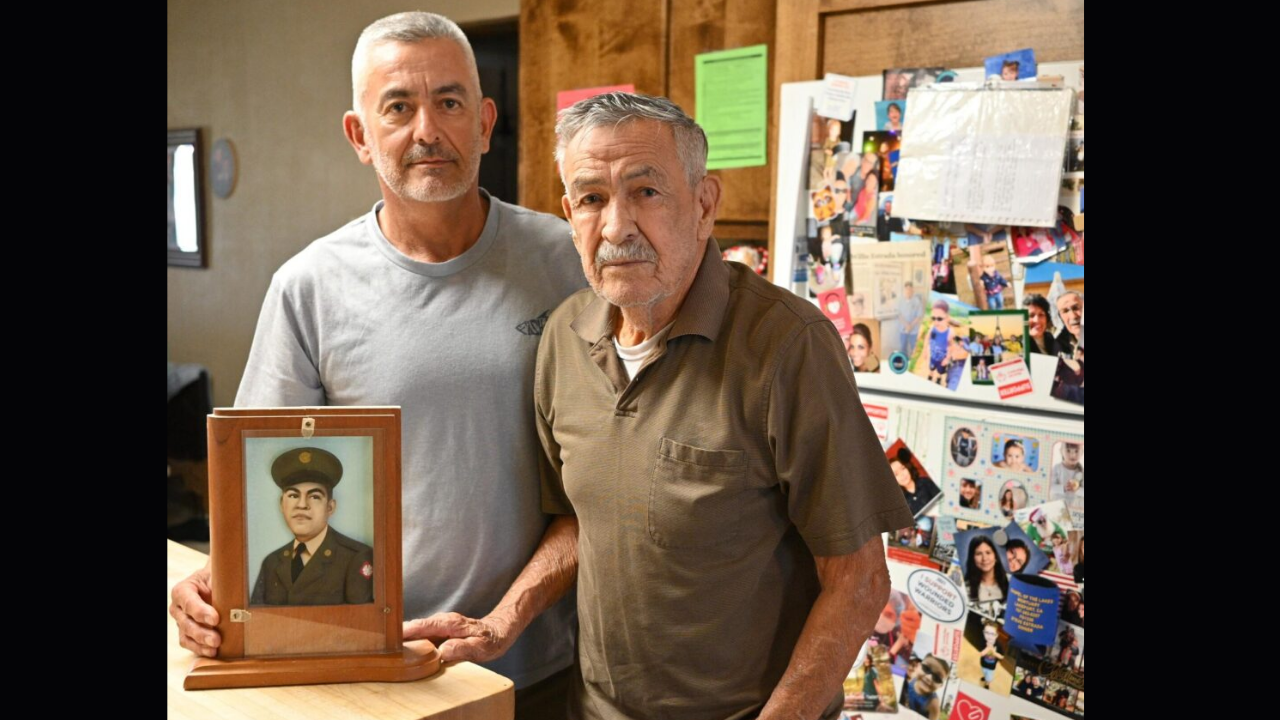
The identification of Army Corporal Albert J. Estrada—who vanished at age 17 during the Battle of the Chosin Reservoir in December 1950 and was accounted for seventy-four years later—serves as an empirical case study in the velocity, friction, and mechanics of military casualty accounting. Public narratives surrounding such repatriations frequently reduce complex geopolitical handovers and biochemical analyses to sentimental human interest stories. A structural breakdown of the Defense POW/MIA Accounting Agency pipeline reveals a rigorous operational framework governed by three primary constraints: geopolitical diplomatic friction, sample degradation functions, and genealogical verification bottlenecks.
Evaluating the recovery of missing personnel from mid-century conflicts requires analyzing the macro-environmental conditions of the initial loss event. During the Chosin Reservoir campaign, approximately 30,000 United Nations service members faced 120,000 Chinese and North Korean troops under extreme environmental stress, with ambient temperatures dropping below negative twenty degrees Fahrenheit. The tactical reality of the retreat forced military units to abandon hundreds of fallen combatants. The operational variables of this theater created an immediate data deficit: unmapped field burials, incomplete Graves Registration Service records, and rapid snow cover degradation prevent precise baseline mapping of primary interment sites.
When the U.S. Army issued a presumptive finding of death on December 31, 1953, and subsequently declared remaining unrecovered personnel non-recoverable in the mid-1950s, the administrative system closed its initial feedback loop. Reopening this loop decades later relied on exogenous diplomatic events, notably the 2018 summit between the United States and North Korea, which resulted in the transfer of fifty-five boxes of commingled historical remains.
The transition of physical assets from a foreign repatriation site to a laboratory identification protocol follows a strict sequence of analytical triage:
- Accession and Material Association: Physical remains and associated artifacts—such as unit-specific uniform elements, insignia, or equipment—are cataloged upon arrival at the DPAA laboratory at Joint Base Pearl Harbor-Hickam.
- Anthropological Profiling: Osteological analysis determines biological parameters including age-at-death, sex, ancestry, and stature, isolating specific candidates within military muster rolls.
- Biochemical Extraction: The Armed Forces Medical Examiner System applies mitochondrial DNA and single nucleotide polymorphism testing to match degraded genetic material against family reference samples.
The time elapsed between the 2018 handover and Estrada's formal identification in April 2025 highlights the compounding variables of biochemical degradation. Bone and teeth samples recovered from acidic soil profiles or subjected to multiple freeze-thaw cycles exhibit severe DNA fragmentation. Consequently, laboratory technicians must rely on advanced sequencing methods to construct viable genetic profiles from trace organic samples. This technical reality clarifies why multi-decade investigations cannot be accelerated past biochemical thresholds; the integrity of the genetic marker dictates the analytical timeline.
Parallel to laboratory processing runs the genealogical verification pipeline managed by agencies such as the Past Conflict Repatriations Branch. As primary next-of-kin age and pass away, the pedigree of genealogical links shifts from siblings to nieces, nephews, and collateral descendants. This transition increases the statistical complexity of familial DNA matching. Maintaining an active, updated database of family reference samples remains the foundational prerequisite for pairing anonymous osteological remains with historical service records.
Systemic improvements in forensic identification protocols, including high-throughput mass spectrometry and expanded single nucleotide polymorphism panels, have systematically lowered the error rate in historical identification pipelines. By transforming historical recovery from an ad-hoc archival search into a standardized bioinformatics workflow, agencies like the DPAA convert decades-old administrative uncertainties into closed logistical endpoints.
Deploy future strategic resources toward expanding comprehensive family reference sample collection campaigns while biological descendants of mid-century service members are still accessible, thereby preempting the exponential decay of viable genealogical matches.