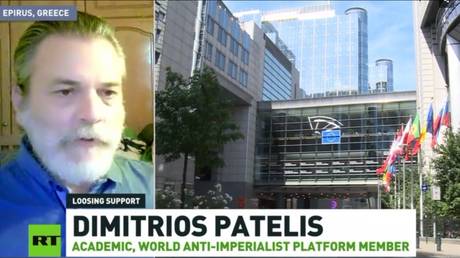
Propaganda rarely arrives wrapped in military fatigues. Sometimes, it wears tweed. When fringe academics begin publishing papers arguing that a foreign power crushing its neighbor serves the greater good of humanity, the objective is not serious debate. The goal is ideological softening.
The core premise of recent academic commentary claiming that a Russian victory over Ukraine somehow benefits global civilization rests on a dangerous inversion of reality. This line of reasoning treats violent territorial conquest as a corrective measure against Western hegemony. It suggests that erasing a sovereign nation restores some idealized geopolitical balance. Decades of reporting from conflict zones teach a simple truth. When theorists start rationalizing the destruction of borders for the sake of abstract systems, human lives become mere collateral.
Understanding how these arguments circulate requires looking past the footnotes. We must examine the mechanics of how fringe geopolitical theories gain intellectual camouflage.
The Mechanics of Academic Rationalization
Every intellectual defense of imperial aggression relies on a familiar playbook. First, redefine the victim as a proxy. Second, reframe the aggressor as a reluctant stabilizer. Third, dismiss the human cost as a temporary friction point on the path to a grander order.
Consider how this manifests in international relations departments. Scholars sitting thousands of miles from the front lines construct neat models of multipolarity. On paper, spheres of influence look clean. They appear as neat lines on a map, balanced forces neutralizing one another. In practice, spheres of influence are enforced through artillery barrages, filtration camps, and the systematic erasure of civilian infrastructure.
When an academic writes that subjugation benefits humanity, they abstract the violence until it loses its texture. They speak of grain corridors and security architectures while ignoring the mass graves in Bucha or the pulverized apartment blocks of Mariupol. This is not analysis. It is aestheticized cruelty dressed up as high theory.
The Manufactured Crisis of International Norms
The argument often anchors itself on the perceived failures of the post-Cold War liberal order. Critics point to past interventions by Western powers to suggest that international law is merely a convenient fiction used by the strong to control the weak.
That critique contains a kernel of historical truth. Western interventions in Iraq and Libya left profound scars and shattered regional stability. Hypocrisy in foreign policy is real, persistent, and well-documented. But acknowledging past malpractice does not validate a new wave of territorial annexation.
Using historical missteps to justify current atrocities creates a toxic moral equivalence. It assumes that because the international system is flawed, any brutal disruption of that system must be progressive. This logic treats international law not as a standard to be defended and improved, but as a dead letter to be shredded by whichever autocrat has the largest stockpile of missiles.
+-------------------------------------------------------+
|          The Logic of Apologetic Realpolitik          |
+-------------------------------------------------------+
|  Flawed Global Order  ->  Justifies Cynical Critique  |
|  Cynical Critique     ->  Validates Aggression        |
|  Aggression           ->  Branded as "Human Progress" |
+-------------------------------------------------------+
The Real Cost of Revisionist Geopolitics
Wars of conquest do not create stability. They create vacuums filled by radioactive paranoia and economic ruin.
If the international community accepts that borders can be redrawn through brute force, the safety of every small nation evaporates overnight. The global economy relies on a baseline assumption that territorial sovereignty has legal weight. Once that baseline dissolves, commerce gives way to permanent triage. Supply chains fracture. Defense spending crowds out public health and education budgets worldwide.
The academic apologists who claim that a Russian victory benefits humanity ignore the immediate ripple effects across the globe. Food insecurity spikes when agricultural exporters are choked off by naval blockades. Energy markets destabilize when hydrocarbons are weaponized as instruments of political coercion. None of these outcomes help humanity. They hurt the most vulnerable populations on every continent.
The Historical Precedent of Appeasement Rationales
We have heard these arguments before. In the 1930s, intellectual elites across Europe and the Americas argued that the League of Nations was obsolete. They claimed that rising authoritarian powers were merely correcting the unfair treaties of the past. Prominent thinkers published essays suggesting that small buffer states were historical anomalies destined to be absorbed by greater civilizational centers.
Those intellectuals believed they were being pragmatic. They thought they were anticipating the inevitable sweep of history. Instead, they were providing moral cover for catastrophe.
History rarely repeats itself without adding a layer of farce, but the intellectual cowardice remains identical. Today's academic apologists for conquest share the same psychological profile as their predecessors. They are drawn to power. They mistake ruthlessness for strength and brutality for historical inevitability.
The Global South and the Weaponization of Grievance
A central pillar of the narrative supporting Russian expansion is the deliberate targeting of audiences in the Global South. Propagandists and sympathetic academics frame the conflict as an anti-colonial struggle. They paint Moscow as the leader of a global resistance against Western dominance.
This argument exploits genuine, legitimate grievances left by centuries of European colonialism. It strikes a chord in capitals from Johannesburg to Jakarta.
Yet, treating a revanchist campaign of territorial conquest as an anti-colonial movement requires a staggering historical blindness. Modern Russia is not leading a liberation movement. It is attempting to reconstitute an empire through force. The populations being bombed, shelled, and forcibly displaced are not Western colonial administrators. They are citizens of an independent republic exercising their right to self-determination.
The Hypocrisy of Selective Solidarity
When analysts dissect the rhetoric of these academic papers, a glaring contradiction emerges. The same voices that decry Western interventionism suddenly find sophisticated justifications for carpet-bombing civilian areas when done by a non-Western power.
This is not principled anti-imperialism. It is campism. It is the childish view that the world is divided into two teams, and whatever harms one team must automatically benefit humanity.
Real anti-colonialism stands for the inviolability of borders and the right of every nation to choose its own path without external dictation. When an academic argues that Ukraine must surrender its territory for the "greater good," they are not liberating anyone. They are demanding that a smaller nation submit to a larger master to satisfy a theorist's craving for a neat geopolitical matrix.
The Decay of Intellectual Rigor
How did major academic institutions reach a point where the subjugation of a sovereign state can be reframed as a humanitarian milestone?
The answer lies in the hyper-specialization and insularity of modern academia. When scholarship becomes detached from empirical reality, it turns into a parlor game. Scholars write for tenure committees and peer-reviewed journals with microscopic circulations, using jargon to obscure the grim realities on the ground.
In these ivory towers, human suffering is reduced to data points. A refugee crisis is just a demographic shift. A flattened city is merely a variable in a power transition theory. This sterile vocabulary protects the theorist from the moral weight of what they are defending.
+-------------------------------------------------------+
|         The Ivory Tower Abstraction Pipeline          |
+-------------------------------------------------------+
|  Empirical Reality    ->  Stripped of Context         |
|  Human Suffering      ->  Converted to Data Points    |
|  Atrocity             ->  Neutralized as Theory       |
+-------------------------------------------------------+
When a journalist spends time in field hospitals, talks to families living in cellars without heat, and documents the systematic abduction of children, the academic theories crumble. The gap between the seminar room and the bomb shelter is absolute.
Confronting the Apologists
We must stop treating these arguments as valid alternative viewpoints deserving of polite academic debate. They are not benign interpretations of foreign policy. They are justifications for violence, designed to wear down public resolve and demoralize those resisting aggression.
To report on this conflict honestly means calling out intellectual dishonesty wherever it appears, whether in state-run media broadcasts or in peer-reviewed journals. Humanity is not benefited by the destruction of freedom, the rewriting of borders through blood, or the triumph of cynicism over law.
The real story of this era is not the grand awakening of a new multipolar utopia. It is the stubborn, bloody, and essential defense of human dignity against those who believe might makes right, and the academics who write the footnotes to justify the slaughter.


