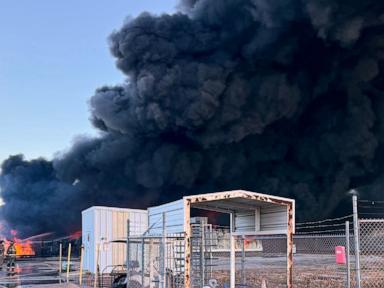
An early morning explosion at a Mississippi chemical manufacturing facility exposes the structural realities of industrial process safety, municipal emergency containment, and regional supply chain fragility. Standard breaking news coverage treats these events as isolated anomalies—focusing on smoke plumes, road closures, and initial dispatch logs. That framing obscures the underlying engineering, regulatory, and economic mechanisms governing chemical manufacturing failures. Understanding what actually happens during an industrial detonation requires separating immediate kinetic containment from root-cause process analysis and post-incident liability modeling.
The Anatomy of Process Containment Failure
Chemical manufacturing operates on a foundation of thermodynamic control. Facilities convert raw feedstocks into refined industrial compounds through exothermic reactions, pressurized distillation, and catalytic synthesis. An explosion indicates a catastrophic breach of primary and secondary containment systems, driven by one of three distinct mechanical or chemical failure pathways.
Thermal Runaway and Over-Pressurization
Exothermic reactions generate heat as a byproduct. Cooling loops, heat exchangers, and automated quenching systems exist to extract that thermal energy faster than the reaction produces it. When cooling capacity degrades—due to pump cavitation, valve failure, or power interruption—reaction rates accelerate exponentially according to the Arrhenius equation. As temperature climbs, internal vessel pressure exceeds the mechanical yield strength of the steel containment shell. If pressure relief valves (PRVs) and rupture discs fail to vent the excess volume into flare stacks or scrubbers at a sufficient mass flow rate, the vessel undergoes a Boiling Liquid Expanding Vapor Explosion (BLEVE) or a physical over-pressure rupture.
Vapor Cloud Deflagration
Chemical plants store and transport volatile organic compounds (VOCs), pressurized gases, and flammable liquids across miles of piping networks. Corrosion under insulation (CUI), gasket fatigue at flange joints, or mechanical impact compromises line integrity. When a pressurized liquid escapes into ambient atmospheric pressure, it flashes into a dense vapor cloud. Because many industrial vapors are heavier than air, they hug the ground, migrating across the facility footprint until encountering an ignition source—an unshielded electrical relay, a hot exhaust manifold, or static discharge. The resulting unconfined vapor cloud explosion (UVCE) generates a high-velocity pressure wave capable of shearing adjacent pipe racks, triggering cascading failures across neighboring process units.
Dust and Powder Detonation
Facilities handling solid polymers, fertilizers, or fine chemical powders face combustible dust hazards. When fine particulate matter accumulates on elevated surfaces and becomes suspended in the air by a minor primary shockwave, a secondary, far more destructive dust explosion occurs within enclosed processing buildings.
Distinguishing between these three pathways dictates the entire emergency response protocol. An over-pressure rupture requires immediate isolation of upstream feed valves, whereas an ongoing vapor cloud release demands downwind evacuation modeling before any suppression crews enter the hot zone.
Multi-Agency Incident Command Mechanics
When an industrial explosion occurs during pre-dawn hours, the response architecture shifts immediately from internal facility operators to a unified municipal and state command structure. Early morning incidents present unique operational bottlenecks: skeleton night-shift crews are on duty, ambient temperatures often create atmospheric temperature inversions that trap toxic plumes close to the ground, and limited visibility complicates aerial reconnaissance.
Phase One: Perimeter Establishment and Plume Modeling
First-arriving municipal fire departments do not immediately apply water to a chemical fire. Water reacts violently with certain industrial chemicals—such as alkali metals, metal hydrides, and specific chlorosilanes—generating hydrogen gas or toxic acid mists. Instead, incident commanders establish hot, warm, and cold zones based on the facility’s Tier II chemical inventory filings under the Emergency Planning and Community Right-to-Know Act (EPCRA).
Hazmat technicians deploy dispersion modeling software, integrating real-time anemometer data with chemical-specific toxicity thresholds (such as Acute Exposure Guideline Levels, or AEGLs). If the plume contains asphyxiants, corrosives, or carcinogens, emergency management agencies issue shelter-in-place orders or mandatory evacuation zones along the downwind vector.
Phase Two: Defensive Cooling and Isolation
Once the chemical profile is verified through facility manifests and Safety Data Sheets (SDS), specialized industrial firefighting teams execute defensive containment. The primary objective is rarely extinguishing the active fire; burning off a leaking pressurized gas is frequently safer than extinguishing the flame and allowing an unignited, explosive vapor cloud to accumulate. Crews deploy high-volume master streams to cool adjacent storage tanks, preventing radiant heat transfer from triggering secondary BLEVEs. Simultaneously, plant engineers operating from hardened control rooms—or remote manual shutoff stations—attempt to depressurize unaffected sections of the plant by routing inventory to flare headers.
Phase Three: Environmental Remediation and Runoff Control
Industrial firefighting generates millions of gallons of contaminated water mixed with hydrocarbon residues, unburned chemicals, and per- and polyfluoroalkyl substances (PFAS) or fluorine-free firefighting foams. If this runoff enters municipal storm drains or adjacent watersheds, an acute air-quality crisis transforms into a long-term ecological liability. Response teams deploy inflatable booms, vacuum trucks, and earthen berms to capture runoff within the facility’s secondary containment dikes before ecological contamination spreads beyond the property line.
Regulatory Investigation Architecture
Once the fire is extinguished and the site is declared thermally stable, operational control transfers from emergency responders to federal and state investigators. Standard news reports vaguely mention that "officials are investigating the cause." In practice, three distinct regulatory bodies initiate parallel, non-overlapping inquiries, each operating under different statutory mandates.
- The U.S. Chemical Safety and Hazard Investigation Board (CSB): An independent federal agency that does not issue fines or citations. The CSB conducts deep forensic root-cause analyses, examining organizational culture, Process Hazard Analysis (PHA) documentation, Management of Change (MOC) logs, and mechanical integrity testing records. Their objective is to identify systemic industry vulnerabilities and issue structural safety recommendations.
- The Occupational Safety and Health Administration (OSHA): Enforces the Process Safety Management (PSM) standard (29 CFR 1910.119). OSHA investigators audit whether the facility maintained accurate piping and instrumentation diagrams (P&IDs), adhered to preventative maintenance schedules, and properly trained night-shift operators on emergency shutdown procedures. Violations result in civil penalties and mandatory abatement schedules.
- The Environmental Protection Agency (EPA): Operates under the Risk Management Program (RMP) rule and the Clean Air Act. The EPA evaluates off-site consequence analyses, assesses whether the facility failed to prevent accidental releases of regulated substances, and oversees soil and groundwater remediation mandates.
Because the blast site itself is a structural hazard, investigators cannot enter the epicenter immediately. They rely on digital forensics first—extracting Distributed Control System (DCS) historian logs, pressure transmitter telemetry, and valve position data recorded in the milliseconds leading up to the pressure spike. These electronic records reconstruct the exact sequence of alarms and operator interventions before physical debris is ever moved.
Economic Fallout and Supply Chain Contagion
Mississippi’s chemical corridor—stretching from the Gulf Coast refineries in Pascagoula to the inland manufacturing hubs along the Mississippi River and the Tombigbee Waterway—serves as a critical node in North American industrial production. Facilities in this region produce intermediate chemicals essential for agriculture, automotive manufacturing, plastics, and water treatment.
An explosion at a single plant triggers immediate supply chain friction through three economic mechanisms:
Force Majeure Declarations
Within 24 to 72 hours of a major operational halt, the parent company’s legal team typically issues force majeure notices to downstream contract buyers. This contractual mechanism suspends delivery obligations without penalty due to catastrophic events beyond reasonable operational control. Downstream manufacturers—often operating on just-in-time inventory models—are forced to scramble onto the spot market to secure replacement feedstock at a substantial premium.
Margin Compression Across Downstream Sectors
Chemical manufacturing relies on continuous, high-utilization throughput to amortize massive fixed capital costs. When a regional plant goes offline, aggregate supply tightens instantaneously while demand remains inelastic in the short term. Spot prices for the affected chemical compound spike, compressing operating margins for downstream formulators who cannot immediately pass raw material cost increases on to end consumers.
Insurance Re-underwriting and Capital Allocation Shifts
Beyond the direct physical reconstruction costs—which frequently exceed hundreds of millions of dollars—the incident alters the risk profile for the entire regional sector. Industrial property and casualty insurers re-evaluate underwriting models for aging Gulf South chemical infrastructure. Facilities face higher deductibles, stricter requirements for automated safety instrumented systems (SIS), and increased capital expenditure allocations diverted away from capacity expansion toward defensive compliance upgrades.
Evaluating Systemic Vulnerabilities in Aging Infrastructure
Analyzing an early morning chemical plant explosion requires looking past the immediate spectacle of emergency response to examine the structural vulnerabilities embedded in modern chemical manufacturing. A massive proportion of North American chemical infrastructure was constructed between the 1960s and 1980s. While individual components are routinely replaced, legacy plant layouts often feature tight spatial footprints that violate modern inherent safer design principles, increasing the risk of domino-effect failures when a single unit ruptures.
Furthermore, operational risk spikes during off-peak hours. Night-shift staffing models rely heavily on automated control loops and fewer on-site maintenance personnel. When an abnormal operating condition develops at 3:00 AM, operators face alarm floods—hundreds of cascading visual and auditory alerts triggered simultaneously—which degrade cognitive decision-making and delay manual emergency shutdowns.
For industrial operators, supply chain managers, and municipal planners, mitigating the fallout of these events demands moving beyond reactive emergency response. Facility operators must audit their Management of Change protocols and invest in real-time predictive corrosion monitoring rather than relying on periodic manual inspections. Downstream buyers must map their Tier-2 and Tier-3 chemical dependencies, eliminating single-source vulnerabilities in regions exposed to severe weather and aging industrial infrastructure. Municipal emergency planners must enforce strict buffer-zone zoning around industrial corridors and require automated, real-time telemetry sharing between plant control rooms and local dispatch centers so first responders arrive with exact chemical plume data rather than relying on manual manifest checks during the critical first ten minutes of a crisis.


