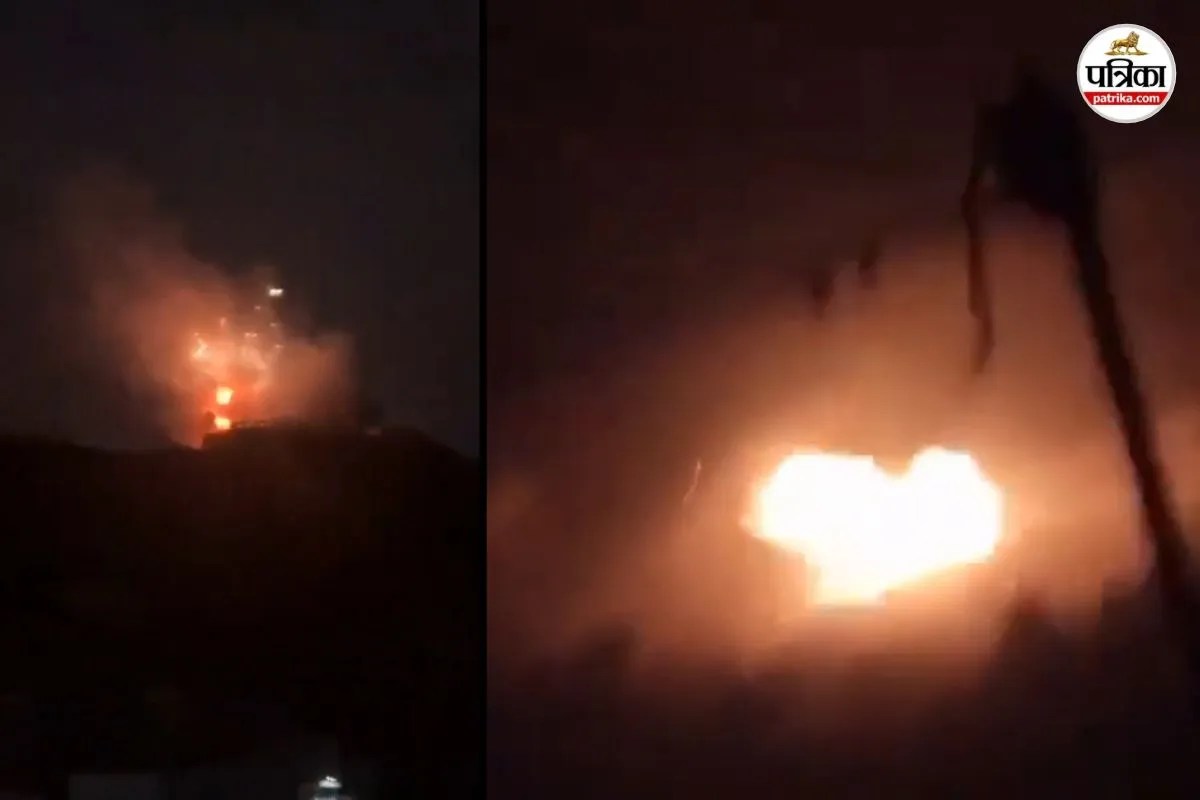
Fatal industrial fires in emerging manufacturing hubs follow a predictable sequence of compounding failures across physical containment, egress architecture, and regulatory enforcement. When Indonesian authorities report 24 confirmed fatalities and dozens missing following a factory blaze, the event represents the terminal stage of systemic risk accumulation rather than an isolated operational accident. Standard news coverage treats these casualties as sudden tragedies, obscuring the engineering and economic mechanisms that convert a localized ignition event into a mass-fatality structural collapse.
Understanding how an industrial fire escalates from initial combustion to total facility loss requires decomposing the event into three distinct analytical phases: the ignition and fuel-load matrix, the egress bottleneck, and the search-and-rescue entropy curve.
The Ignition and Fuel-Load Matrix
Industrial facilities in rapidly scaling manufacturing sectors operate under high thermal and chemical risk profiles. Without inventing unverified specifics regarding the exact facility, the mechanics of rapid fire propagation in light-to-medium manufacturing plants rely on three structural variables:
- Uncompartmentalized Floor Plates: Cost optimization in factory construction favors wide-span, open-plan layouts to maximize assembly line flexibility and material flow. Removing fire-rated masonry partitions eliminates physical barriers to radiant heat transfer and smoke migration. Once flashover occurs—the point at which all combustible surfaces in a space ignite simultaneously—fire spreads horizontally at rates exceeding 10 to 15 meters per minute.
- High-Density Hydrocarbon and Polymer Inventories: Modern manufacturing relies heavily on synthetic polymers, packaging materials, solvents, and lubricants. Unlike cellulosic fuels such as wood or paper, hydrocarbons release significantly higher heat of combustion per unit mass and generate dense, toxic plumes rich in carbon monoxide and hydrogen cyanide.
- Ignition Source Proximity: Electrical distribution panels, high-friction mechanical bearings, and localized heating elements frequently sit adjacent to raw material staging areas. When preventative maintenance schedules slip to meet production quotas, insulation degradation or mechanical overheating provides the initial thermal energy required to ignite adjacent vapor or dust clouds.
The causal chain is direct. High-value machinery and raw materials are concentrated in an uncompartmentalized volume to reduce capital expenditure per square meter. When an electrical or mechanical fault occurs, the absence of passive fire protection—such as fire-rated walls, automated fire dampers, and intumescent coatings on structural steel—allows temperatures to exceed 600 degrees Celsius within minutes. At this threshold, unprotected structural steel loses roughly 50 percent of its yield strength, initiating progressive structural deformation before external firefighting assets can establish a water supply.
The Egress Bottleneck and Casualty Mechanics
The disparity between confirmed fatalities (24) and dozens of missing personnel highlights the primary failure mode of industrial life safety: the collapse of available safe egress time (ASET) relative to required safe egress time (RSET).
In fire protection engineering, survivability depends entirely on maintaining the inequality $ASET > RSET$. A fatal incident occurs when the physical environment becomes untenable faster than occupants can exit the building.
Drivers of ASET Compression
- Smoke Stratification Failure: In facilities lacking automated roof vents or mechanical smoke exhaust systems, superheated gases accumulate at the ceiling and bank downward rapidly. Visibility drops to near zero within 120 to 180 seconds of flashover, disorienting workers even in familiar environments.
- Toxic Incapacitation: Victims rarely perish from thermal burns during the initial evacuation phase. Inhalation of asphyxiant gases induces cognitive impairment, loss of motor control, and unconsciousness within breaths, halting movement long before flames reach the occupant.
Drivers of RSET Expansion
- Detection and Notification Latency: Many regional manufacturing facilities lack addressable fire alarm systems tied to automated optical or ionization smoke detectors. Reliance on manual discovery and verbal notification wastes critical minutes during the incipient fire growth phase.
- Exit Capacity and Obstruction: Building codes dictate minimum exit widths based on occupant load factors. In practice, operational pressures lead management to lock secondary exits to prevent inventory shrinkage, or to obstruct exit corridors with palletized goods and raw material buffers.
- Vertical and Labyrinthine Routing: Multi-story factory conversions or mezzanine additions force workers to navigate narrow stairwells that act as chimneys for rising heat and smoke, trapping personnel on upper levels.
When ASET drops below three minutes due to rapid polymer combustion, and RSET exceeds six minutes due to delayed alarms and locked or obstructed exits, mass casualties become a mathematical certainty. The surviving occupants are almost exclusively those positioned within 15 meters of an unobstructed exterior perimeter door at the moment of ignition.
Search-and-Rescue Entropy and Missing Personnel
Reporting dozens of individuals as missing alongside confirmed fatalities points to severe operational friction in post-incident accounting and structural stability. The transition from active firefighting to search-and-rescue (SAR) operations is governed by two primary constraints: personnel tracking deficits and structural collapse hazards.
The Personnel Manifest Deficit
Accurate casualty accounting requires real-time access control data—such as biometric turnstiles or RFID badge logs—hosted off-site or on cloud servers. Manufacturing facilities utilizing paper shift logs, manual punch cards, or informal subcontracted labor lack a reliable baseline denominator of occupants inside the blast or burn zone. When shift changes overlap or temporary workers are brought in to meet production surges, emergency responders cannot distinguish between workers who fled the premises without checking in and workers trapped beneath debris.
Structural Instability and Thermal Retention
SAR teams cannot enter a compromised industrial shell immediately upon flame knockdown. Heavy manufacturing machinery, overhead cranes, and inventory racks apply massive dead loads to heat-weakened roof trusses and columns. As structural steel cools, differential contraction induces secondary collapses hours after the fire is extinguished.
- Debris Density: Collapsed corrugated metal roofing, twisted steel purlins, and melted polymer masses form impenetrable layers over concrete floor slabs.
- Thermal Pockets: Deep-seated fires within stacked raw materials continue to smolder beneath collapsed roofing, maintaining localized ambient temperatures that exceed the thermal limits of standard firefighter protective gear.
- Identification Degradation: Prolonged exposure to high-temperature hydrocarbon fires severely degrades biological remains, shifting identification from visual confirmation to forensic DNA and dental analysis. This forensic bottleneck explains why official death tolls rise incrementally over days rather than updating instantaneously.
Regulatory Arbitrage and Enforcement Asymmetry
Recurring industrial disasters across Southeast Asian manufacturing centers are not caused by an absence of legal frameworks. Indonesia maintains comprehensive occupational health and safety regulations (K3 standards) and building fire codes modeled on international standards. The failure lies in the economic incentives governing compliance and enforcement.
The Compliance Cost Function
For a mid-sized contract manufacturer operating on thin margins within global supply chains, retrofitting an existing facility with active fire suppression (wet-pipe sprinkler systems, dedicated fire pumps, and water storage tanks) represents a significant capital expenditure with zero direct return on production output.
- Capital Allocation Bias: Management prioritizes capital deployment toward revenue-generating assets—new tooling, assembly line automation, and capacity expansion—while deferring non-productive compliance upgrades.
- Inspection Asymmetry: Municipal fire inspectorates face severe staffing constraints relative to the rapid proliferation of industrial estates and informal peri-urban factories. Inspections often occur prior to initial occupancy, failing to capture subsequent structural modifications, mezzanine additions, or changes in stored hazardous materials.
- Supply Chain Externalization: Global buyers demand aggressive unit-cost reductions and compressed lead times while relying on third-party social compliance audits to manage reputational risk. Scheduled audits frequently function as box-checking exercises that fail to detect operational violations such as blocked fire exits or disabled alarm panels during peak production runs.
This dynamic creates a market distortion where compliant operators bear higher fixed costs, while non-compliant operators capture short-term margin advantages by externalizing catastrophic tail risk onto their workforce.
Limitations of Standard Remediation Frameworks
Addressing industrial fire risk requires acknowledging the hard operational limits of standard interventions. No single policy or engineering control eliminates catastrophic risk in high-density manufacturing.
- Passive Audits Fail Under Dynamic Conditions: Annual or semi-annual safety inspections verify static infrastructure (extinguisher placement, exit signage) but cannot enforce daily operational discipline. A fire door wedged open for ventilation or a corridor blocked by a morning delivery negates millions of dollars in passive engineering within seconds.
- Active Suppression Vulnerabilities: Automatic sprinkler systems represent the most effective engineering control for limiting fire growth, reducing fire fatalities by over 80 percent in industrial settings. However, sprinklers fail when water supplies are inadequate, valves are closed during maintenance and forgotten, or the fire involves specialized chemical agents (such as reactive metals or flammable liquids) that require foam or dry chemical suppression rather than water.
- Training Decay: Conducting annual evacuation drills produces minimal behavioral improvement during an actual high-stress smoke event unless paired with unannounced drills, clear auditory-visual alarms, and strict enforcement of unobstructed egress paths.
Strategic Risk Mitigation Protocol
For supply chain directors, industrial operators, and risk underwriters operating in high-growth manufacturing jurisdictions, mitigating mass-fatality fire exposure requires shifting from passive compliance verification to continuous, hardware-enforced operational controls.
- Enforce Hard Egress Interlocks: Eliminate the physical possibility of locked exits by replacing padbolts and chains with alarmed panic-bar hardware tied directly to security monitoring stations. Any unauthorized opening triggers an immediate local alert, solving the inventory shrinkage concern without compromising life safety.
- Mandate Automated Water-Flow Monitoring: For facilities equipped with sprinkler systems, install tamper switches on all main control valves and pressure sensors on riser pipes, transmitting real-time telemetry to off-site risk managers. A closed valve must trigger an immediate operational shutdown until water pressure is restored.
- Decouple High-Hazard Storage from Assembly: Require physical separation—via two-hour fire-rated masonry walls and self-closing fire doors—between bulk raw material/solvent storage and high-occupancy assembly floors. Limiting fuel load density in occupied zones prevents rapid flashover and preserves the $ASET > RSET$ margin.
- Digitize Shift Telemetry: Replace manual shift rosters with automated, cloud-synced entry and exit logging at facility perimeters. Establishing an instantaneous, accurate headcount removes operational ambiguity during emergency response and accelerates targeted rescue operations.
- Tie Procurement Contracts to Unannounced Technical Audits: Global buyers must replace scheduled checklist audits with unannounced inspections conducted by certified fire protection engineers, linking contract renewal directly to verified egress clearance, functional suppression telemetry, and electrical thermography scans.