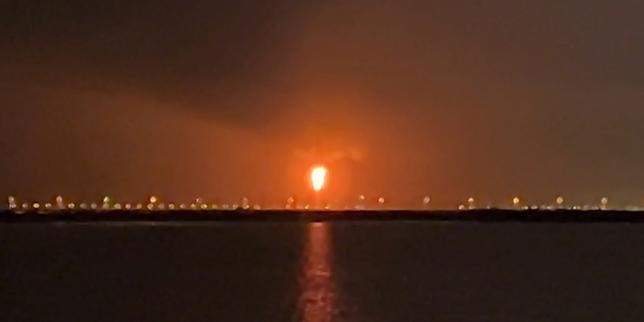
The explosion at Qatar’s Barzan gas supply facility inside Ras Laffan Industrial City exposes the acute operational vulnerabilities inherent in restarting complex hydrocarbon infrastructure after prolonged, non-scheduled shutdowns. By analyzing the variables governing gas processing start-ups, the regional geopolitical variables that forced the initial shutdown, and the critical role of the Barzan plant, we can map the precise mechanics of this industrial failure and calculate its macroeconomic fallout.
The Thermodynamics of Start-Up Failures
Industrial chemical and gas processing plants are designed for steady-state operations. The transition phases—specifically shutdowns and restarts—represent the periods of highest systemic risk. QatarEnergy confirmed that the explosion occurred during the start-up sequence of the Barzan facility.
To understand why restarts act as a catalyst for catastrophic mechanical failure, three primary engineering risk vectors must be isolated:
- Thermal and Mechanical Stress (Transient State Loading): During a shutdown, piping systems, pressure vessels, and heat exchangers cool down to ambient temperatures, causing metallurgical contraction. Reintroducing high-temperature, high-pressure feed gas causes rapid, uneven thermal expansion. This differential expansion introduces massive mechanical stress on welds, flanges, and gaskets, creating immediate pathways for structural failure.
- Fluid Dynamics and Line Packing: Restarting a gas plant requires "packing" the pipelines—gradually raising the pressure using compressible natural gas. If valves are sequenced incorrectly, or if residual liquids remain in the lines from the previous shutdown, a phenomenon known as liquid slugging or "water hammer" occurs. This is a kinetic shock wave generated when high-velocity gas pushes a slug of incompressible liquid through a pipe bend, generating forces capable of instantly rupturing heavy-gauge steel walls.
- Combustible Mixture Formation (Purge Deficiencies): Prior to introducing hydrocarbons into a idled system, the entire volume of containment must be purged with inert nitrogen gas to eliminate oxygen. If pocketed oxygen remains due to incomplete purging sequences, the introduction of high-pressure hydrocarbons creates a highly volatile, compressed fuel-air mixture inside the process loops. A spark from mechanical friction, static electricity, or an electrical component during start-up will detonate this mixture internally, causing the exact type of internal explosion cited by Qatar’s Ministry of Interior.
The Upstream Geopolitical Bottleneck
The operational failure at the Barzan facility cannot be isolated from the regional conflict that preceded it. The restart itself was a direct response to a shifting geopolitical landscape.
Qatar’s production infrastructure was forced offline on March 2 due to sustained drone and missile strikes targeting Ras Laffan. Subsequent kinetic actions on March 18 compromised Qatar’s broader energy architecture, reducing national export capacity by an estimated 17 percent.
The economic and logistical impact of these disruptions operates through a clear causal chain:
[Kinetic Strikes / Geopolitical Risk]
                 │
                 ▼
[Strait of Hormuz Shipping Constraints]
                 │
                 ▼
[Forced Production Curtailment & System Shutdown]
                 │
                 ▼
[Prolonged Asset Idling & Metallurgical Degradation]
                 │
                 ▼
[High-Risk Operational Restart Sequence]
                 │
                 ▼
[Internal Technical Malfunction / Explosion]
When maritime transit routes through the Strait of Hormuz contracted due to regional hostilities, Qatar lacked the logistical pathways to clear its inventory, forcing an immediate upstream production halt.
A prolonged, unscheduled shutdown in a highly corrosive marine environment introduces rapid asset degradation. Even with active nitrogen blanketing, idled valves, actuators, and safety instrumentation are prone to stiction, seal degradation, and sensor drift. When operators attempt to compress a three-to-five-year repair timeline into an accelerated restart to exploit brief windows of regional stability, the probability of missing minor mechanical faults scales exponentially.
Domestic Resource Asymmetry
While international markets focus heavily on Qatar's Liquefied Natural Gas (LNG) export volumes, the Barzan facility occupies a distinct, critical node within the domestic economy. The plant features an operating capacity of approximately 1.4 billion standard cubic feet of sales gas per day. Unlike adjacent processing trains at Ras Laffan designed for cryogenic cooling and global maritime export, Barzan’s output is tied directly to domestic infrastructure via two primary utility functions.
The first function is power generation fuel feed. Qatar’s domestic electricity grid relies almost exclusively on natural gas-fired gas turbines. Barzan provides the baseline fuel stock necessary to maintain grid stability.
The second function is water desalination infrastructure. Because the Arabian Peninsula lacks sustainable freshwater aquifers, potable water is produced via energy-intensive thermal desalination (Multi-Stage Flash distillation) and reverse osmosis plants. Both processes require massive, uninterrupted inputs of steam and electricity generated by burning the very gas Barzan processes.
The destruction or prolonged impairment of the Barzan facility introduces an immediate resource asymmetry. Qatar cannot simply divert export-grade LNG to cover domestic utility deficits without processing infrastructure designed to re-gasify or direct that specific stream into the domestic network. Consequently, the state must pivot to burning higher-cost liquid fuels (such as diesel or heavy fuel oil) to keep water desalination and power generation online, structurally inflating domestic operational expenditure and lowering net energy efficiency.
Systemic Insurance and Joint Venture Implications
The asset architecture of the Barzan plant is a joint venture structure, with QatarEnergy holding the dominant equity position and ExxonMobil retaining a minority stake. This structure distributes capital expenditure but concentrates operational liabilities during black swan events.
The immediate commercial impact will manifest in global insurance and reinsurance indexing. Hydrocarbon facilities of this scale operate under highly specific property damage and business interruption policies. Insurers calculate premiums based on quantified risk metrics, including the frequency of regional kinetic events and proven operational safety records.
An explosion resulting in 54 injuries and 18 missing personnel signals a severe degradation of containment. Reinsurance syndicates will re-price risk across the entire Ras Laffan complex, driving up operational insurance premiums for all joint venture partners operating in the region.
Furthermore, the involvement of international supermajors like ExxonMobil introduces rigorous internal governance protocols. A technical failure of this magnitude triggers mandatory, independent internal investigations that freeze adjacent capital deployments. The second-order limitation is that future expansion projects—such as the North Field East and North Field South expansion arrays—will face stricter safety case audits, extended regulatory review periods, and potential labor supply bottlenecks as specialized international contractors re-evaluate the physical safety profiles of Qatari industrial zones.
Deploy immediate technical investigation teams to isolate the metallurgical and sensor telemetry data from the Barzan processing loop prior to authorization of any restart sequences on adjacent processing trains. All operators within the Ras Laffan complex must immediately transition from fast-track restart protocols to a phased, non-destructive testing verification model to ensure asset integrity before re-pressurizing idled systems.