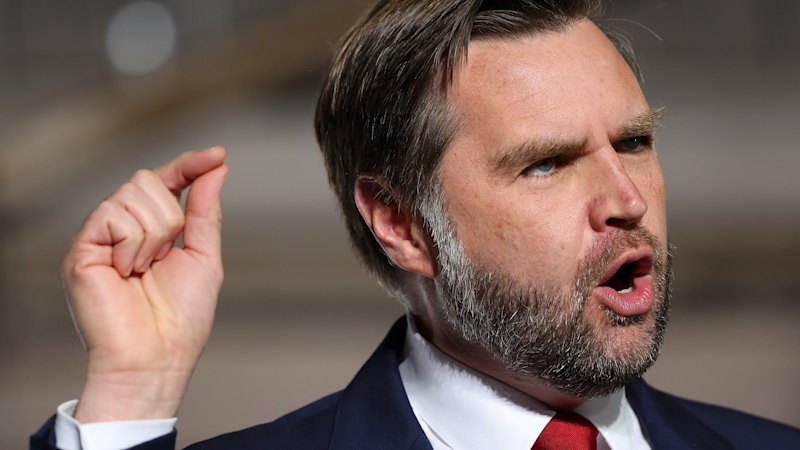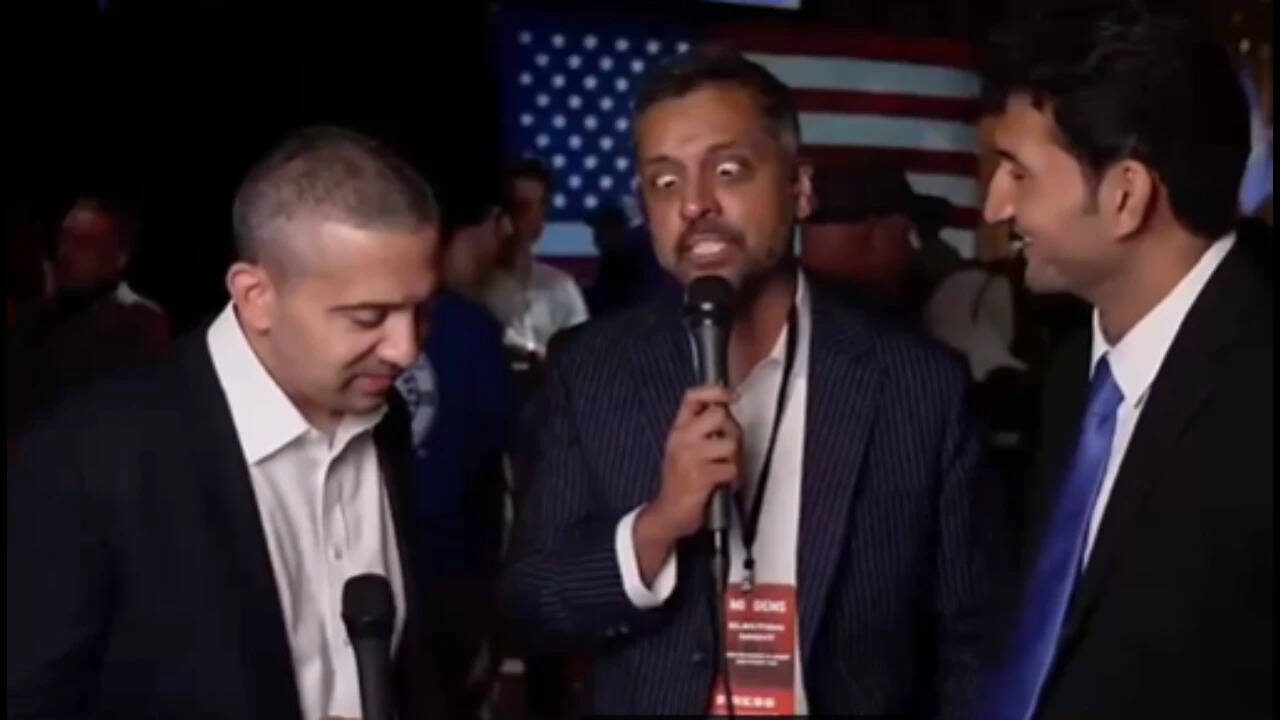
Political media algorithms reward high-arousal moral outrage over substantive policy analysis, creating a predictable incentive structure where intra-group gatekeeping generates massive engagement spikes. When author and commentator Wajahat Ali directed pointed, racially charged remarks at political figures Vivek Ramaswamy and Kash Patel—referencing skin-lightening products and questioning their acceptance within conservative coalitions—the resulting viral cycle followed an established behavioral and economic blueprint. Understanding this incident requires stripping away partisan framing to analyze the mechanics of identity policing, algorithmic amplification, and asymmetric coalition dynamics.
The Mechanics of Intra-Group Gatekeeping
Political discourse involving minority figures who align with conservative movements frequently triggers a specific sociological mechanism known as intra-group policing. Within any demographic cohort, social cohesion often relies on shared political narratives. When prominent individuals deviate from the dominant political consensus of their demographic group, commentators aligned with that consensus frequently deploy boundary-enforcement rhetoric.
This rhetoric operates through three distinct mechanisms:
- Authenticity Invalidation: Critics frame the dissident individual's political alignment not as a genuine ideological choice, but as a transactional or pathological attempt to gain proximity to a dominant majority. Invoking cultural signifiers—such as skin-lightening creams—serves as a shorthand accusation of assimilationism and self-rejection.
- Coalitional Futility Framing: The argument asserts that the out-group coalition will never fully accept the minority figure regardless of their loyalty. By predicting inevitable rejection, the speaker attempts to raise the perceived social cost of ideological defection for both the public figure and potential followers.
- Status Defense: Public commentators whose professional authority derives from representing a specific demographic perspective face a direct threat to their market share when alternative voices gain mainstream traction. Discrediting the alternative voice protects the commentator's epistemic monopoly.
The limitation of this gatekeeping strategy lies in its empirical miscalculation of modern voter behavior. Data from recent American election cycles demonstrates increasing ideological sorting across racial and ethnic lines, driven by economic priorities, cultural conservatism, and institutional skepticism rather than strict demographic solidarity. Rhetoric designed to enforce conformity often alienates undecided observers who view the policing itself as illiberal.
The Algorithmic Engine of Viral Outrage
A commentary clip does not achieve viral velocity solely on the strength of its argument; it requires structural amplification through social media engagement mechanics. Standard news coverage typically describes a viral moment as an organic explosion of public interest, missing the underlying reward functions of attention-economy platforms.
Content distribution algorithms optimize for engagement velocity—the rate at which users reply, quote-post, and share within the first sixty minutes of publication. Statements that combine taboo themes, racial signifiers, and recognizable political figures generate maximum friction.
- Out-Group Indignation: Opponents of the speaker amplify the clip to demonstrate hypocrisy, arguing that progressive commentators engage in the exact racial essentialism they claim to oppose.
- In-Group Defense: Supporters of the speaker engage to contextualize the remarks as a critique of political opportunism rather than a literal racial attack, driving thread depth.
- Algorithmic Neutrality to Sentiment: Ranking models do not distinguish between positive endorsement and furious condemnation. Both signals register as high-value user attention, pushing the content into adjacent feeds and mainstream news cycles.
Traditional media outlets then ingest these high-velocity social media artifacts to produce low-cost aggregation articles. By framing the event around the virality itself ("goes viral"), legacy and digital publishers capture search traffic without conducting original reporting. This creates a closed feedback loop where social media friction dictates editorial prioritization.
Asymmetric Standards and Narrative Framing
The controversy surrounding Ali's remarks highlights a persistent structural asymmetry in how political speech is evaluated across ideological lines. In modern media ecosystems, the acceptability of racialized commentary depends heavily on the perceived power dynamics between the speaker and the target.
Within critical race frameworks widely adopted in progressive media circles, prejudice is defined as bias combined with institutional power. Under this definition, a minority commentator critiquing another minority figure for aligning with a predominantly white political movement is categorized by defenders as "punching up" against a dominant power structure, even when the language mirrors traditional racial tropes.
Conversely, conservative media ecosystems operate under a colorblind individualist framework—at least rhetorically—which evaluates speech based on facial neutrality. Under this standard, any invocation of skin color or ethnic authenticity constitutes a per se violation of acceptable discourse, regardless of the speaker's background or structural intent.
When these two incompatible interpretive frameworks collide over a single viral clip, resolution becomes impossible. Each side evaluates the identical artifact using mutually exclusive definitions of harm:
- Framework A (Structural/Intent-Based): Evaluates whether the speech reinforces or challenges perceived systemic hierarchies.
- Framework B (Textual/Rule-Based): Evaluates whether the speech violates uniform standards against racial categorization.
Because neither side accepts the foundational premises of the other, public debate devolves into accusations of bad faith. Observers outside both ideological bubbles are left with a fragmented information environment where basic definitions of acceptable speech are contested in real time.
Coalition Dynamics and Political Signaling
For figures like Vivek Ramaswamy and Kash Patel, high-profile attacks from progressive commentators function as strategic assets rather than political liabilities. In populist political movements, hostility from established media or cultural figures serves as primary validation of authenticity.
When a critic claims that a conservative coalition will never truly accept minority leaders, the coalition's base instinctively rallies around those leaders to disprove the premise. This dynamic produces three measurable political outcomes:
- Increased Base Cohesion: Shared opposition to a common critic overrides internal policy disagreements within the coalition.
- Earned Media Multiplication: The targeted figures receive sympathetic coverage across conservative broadcast and digital networks, expanding their name recognition without campaign expenditure.
- Narrative Reinforcement: The incident provides concrete evidence for the conservative argument that progressive elites rely on racial division to maintain political control.
The strategic error made by commentators who deploy identity-based attacks is assuming their audience is limited to their immediate ideological peers. In an open digital network, every message reaches multiple audiences simultaneously. Rhetoric calibrated to score points within an insular progressive space functions as recruitment material when intercepted by an opposing coalition.
Limitations of Current Media Analysis
Evaluating the long-term impact of viral political controversies requires acknowledging significant analytical blind spots. First, social media metrics severely distort actual public opinion. Platforms like X over-index for highly engaged, ideologically extreme users who represent a small fraction of the electorate. Treating viral engagement as a proxy for broad voter sentiment leads to systematic forecasting errors.
Second, attribution of intent remains speculative. Analysts can observe the textual content of a statement and measure its downstream engagement, but determining whether a commentator acted out of genuine ideological conviction, emotional impulsivity, or calculated self-promotion is impossible without internal behavioral data.
Third, the half-life of digital outrage is contracting. The sheer volume of daily controversies desensitizes audiences, meaning that individual viral incidents rarely alter long-term voting behavior unless they connect to a sustained, multi-month narrative campaign.
Strategic Play for Political Communicators and Media Operators
Navigating high-friction identity controversies requires shifting from reactive outrage cycles to disciplined structural communication. Political strategists and media operators dealing with asymmetric viral attacks must execute three specific protocols:
1. Reframe from Defense to Principle
Targeted figures must avoid defending their personal racial or cultural authenticity, as doing so validates the premise that authenticity is a legitimate metric for political participation. Responses should immediately pivot to universal principles—such as meritocracy, ideological freedom, or constitutional governance—forcing the critic to argue against broadly popular concepts rather than debating personal identity.
2. Exploit the Amplification Asymmetry
When an opposing commentator uses exclusionary or essentialist language, rapid amplification without editorial embellishment is the highest-leverage play. Allowing the raw clip to circulate among moderate and independent voters inflicts far greater reputational damage on the speaker than heavy-handed partisan commentary, which triggers defensive polarization.
3. Decouple Editorial Strategy from Algorithmic Velocity
Media organizations seeking sustainable audience trust must establish strict editorial thresholds before covering social media controversies. Coverage should only be greenlit when a viral statement correlates with measurable institutional consequences—such as formal censure, donor withdrawal, or shifts in polling data—rather than treating raw engagement numbers as news in themselves. Organizations that continue to chase short-term algorithmic spikes will accelerate audience fatigue and cede credibility to primary-source analysts.