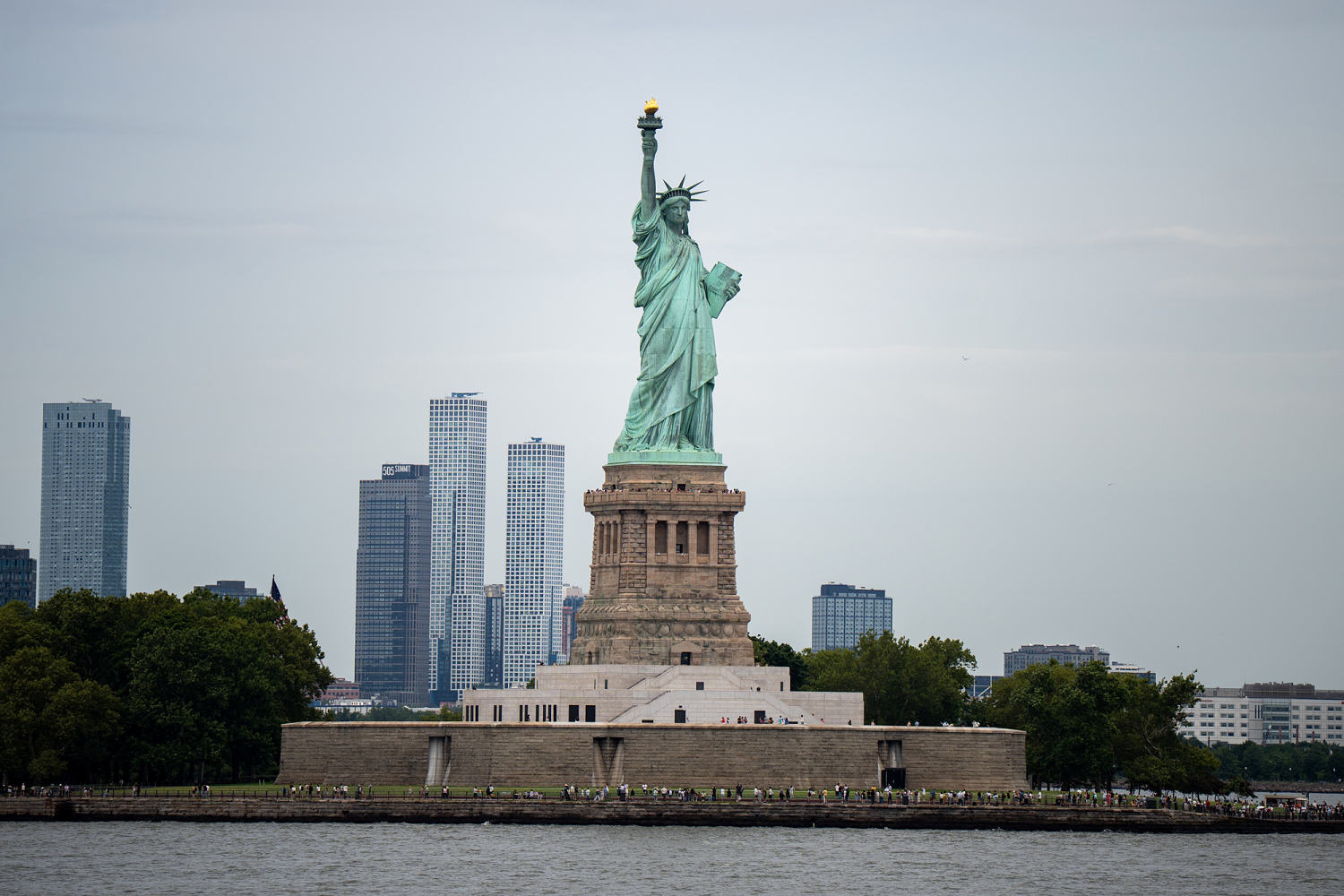
Marine accidents rarely stem from a single catastrophic point of failure. Instead, maritime disasters function as a cascading sequence of systemic breakdowns involving vessel stability, operator cognition, regulatory oversight, and environmental dynamics. When a vessel capsizes in congested urban waterways such as New York Harbor near the Statue of Liberty, the event exposes the underlying vulnerabilities inherent in commercial and recreational water transport operations. Analyzing such incidents requires stripping away sensationalized narratives and applying rigorous operational frameworks to isolate the exact mechanisms of failure.
Understanding why vessels overturn under specific conditions demands an examination of three primary variables: hydrodynamic forces, human decision-making under stress, and load distribution economics. Navigational safety in restricted waterways relies on predictable vessel behavior. When a vessel departs from expected operational envelopes, the margin for error narrows rapidly. By examining the structural factors that govern marine stability, we can deconstruct the physical and procedural breakdown points that lead to fatal outcomes on the water.
The Hydrodynamics of Restricted Waterways
New York Harbor represents a high-density operational theater characterized by complex tidal currents, commercial shipping lanes, wind-driven chop, and heavy wake generation from high-speed ferries and commercial tugs. These environmental inputs create a volatile hydrodynamic profile for smaller vessels.
When a vessel operates in restricted channels, it encounters two primary physical phenomena that threaten stability:
- Interaction with displacement waves generated by larger commercial vessels, which produce sudden, multi-directional rolling moments.
- Tidal velocity differentials across the length of a hull, which can induce unexpected yaw and reduce steering responsiveness.
A vessel's stability is governed by the relationship between its center of gravity and its metacenter. As external forces—such as a sharp turn executed at speed or an abrupt beam wave—act upon the hull, the center of gravity shifts. If this shift exceeds the righting arm of the vessel, capsizing becomes mathematically inevitable. In many urban harbor incidents, operators underestimate the energy transferred by secondary wakes. A wake that appears manageable in open water amplifies significantly when channeled through sea-walls or shallow areas, creating localized turbulence that overwhelms low-freeboard vessels.
The Economics of Commercial and Recreational Overloading
Economic pressures heavily influence operational decisions in the maritime sector. Whether operating under commercial charters or private recreational frameworks, operators frequently face incentives to maximize passenger capacity or minimize transit times. This operational pressure alters the fundamental risk equation.
Adding passengers changes the mass distribution of a vessel. If the additional weight is placed above the main deck without proportional ballast adjustment, the vertical center of gravity rises. A higher center of gravity drastically reduces the vessel's initial stability, rendering it vulnerable to the rolling forces common in busy harbors. Furthermore, passenger movement aboard small vessels creates dynamic weight shifts. When multiple occupants move to one side to view a landmark such as the Statue of Liberty, they introduce an uncompensated listing moment.
Operating under economic constraints often leads to deferred maintenance, inadequate crew training, and insufficient safety briefings. The cost function of safety is frequently miscalculated by marginal operators who view regulatory compliance as an administrative overhead rather than an essential operational constraint. When safety margins are compressed to increase throughput or reduce fuel consumption, the system operates on the edge of failure, where minor environmental anomalies trigger disproportionate disasters.
Human Factors and Cognitive Tunneling Under Stress
Operational failures at sea almost universally feature a human error component. In high-stress or time-critical environments, operators experience cognitive tunneling—a psychological phenomenon where attention narrows to a single objective, causing the individual to ignore critical peripheral data such as weather warnings, instrument readings, or changing traffic patterns.
The cognitive load on a vessel operator in a congested harbor is immense. The operator must simultaneously manage collision avoidance, monitor engine telemetry, account for passenger behavior, and interpret local navigational rules. When an unexpected variable is introduced—such as an engine stutter or an approaching commercial freighter—the operator's working memory reaches saturation.
Under cognitive overload, decision-making degrades from rational analysis to heuristic-based guessing. An operator might execute a high-speed turn to correct a minor navigational error without calculating the centrifugal force generated by the maneuver. Combined with an elevated center of gravity from passenger load, this evasive action converts a minor course correction into a catastrophic capsize event. The failure is rarely a lack of basic skill, but rather a failure of situational awareness and risk prioritization under pressure.
Regulatory Enforcement and the Accountability Gap
The oversight framework governing small passenger vessels and recreational craft relies heavily on self-regulation and periodic inspections. However, this model contains structural loopholes that allow substandard operators to function outside rigorous safety parameters.
Regulatory enforcement faces several systemic limitations:
- Resource constraints within maritime oversight agencies limit the frequency of random dockside inspections.
- Ambiguities in vessel classification distinguish commercial charters from private rentals, creating gray areas in safety equipment mandates and operator licensing requirements.
- Punitive measures often focus on post-incident prosecution rather than proactive prevention, offering little deterrence against day-to-day risk-taking.
When oversight relies on reactive enforcement, accountability is established only after lives are lost. A robust maritime safety architecture requires continuous monitoring, mandatory safety management systems even for small-scale operators, and strict enforcement of passenger manifest limits. Without these controls, the regulatory framework acts as a passive observer rather than an active deterrent against operational negligence.
Strategic Interventions for Maritime Risk Mitigation
Mitigating the risk of vessel capsizing in high-traffic waterways demands a systemic overhaul of how operational safety is managed at the micro-level. Relying on individual vigilance is insufficient; safety must be engineered into the operational workflow.
Operators must implement mandatory stability briefings that restrict passenger movement during transits through high-wake zones. Vessel design standards should incorporate real-time load sensors that alert operators when weight distribution approaches critical thresholds. Furthermore, navigational training programs must prioritize stress inoculation and hazard identification over basic handling, ensuring operators can maintain broad situational awareness under pressure. Regulatory bodies must transition from paper-based compliance checks to telemetry-driven oversight, utilizing mandatory tracking and stability monitoring for all vessels operating in commercial passenger service. The elimination of maritime fatalities requires treating vessel stability not as a static certification, but as a dynamic variable managed through continuous calculation and strict operational discipline.